
Winhycare Pharma · Hyderabad, India
Peptide API, R&D and Lyophilisation Partner for Europe and the USA
Winhycare Pharma is a life-sciences and pharmaceutical solutions company with a strong focus on pharmaceutical R&D, peptide APIs, lyophilisation and GMP-oriented support, alongside WinHyCare’s medical and laboratory equipment capabilities.
We supply peptide APIs (Semaglutide, Tirzepatide, Retatrutide, Cagrilintide and BPC-157) to pharmaceutical companies, supply our peptide range and custom peptides for research use only, and take client-supplied peptide APIs through lyophilisation to finished vials.
- APIs we supply
- 5 peptide APIs
- API purity target
- ≥99%
- Dossier support
- US-DMF / CTD Module 3 (semaglutide)
- Markets
- EU, UK, Switzerland, USA
What Winhycare Pharma does
Four areas of work, run from Hyderabad for pharmaceutical, biotech and research clients in Europe, the USA and worldwide.
- 01
Pharmaceutical R&D support
Peptide process and analytical development, method validation packages and technology transfer, run as a CRDMO engagement around your programme.
CRDMO services → - 02
Peptide APIs and research peptides
Semaglutide, tirzepatide, retatrutide, cagrilintide and BPC-157 are supplied as APIs to pharmaceutical manufacturers and developers. Our full peptide range, plus custom peptide synthesis, is supplied for research use only to research organisations and individual researchers.
Peptide APIs → - 03
Peptide lyophilisation CMO
You supply the peptide or biosimilar; through our manufacturing partner we take it through lyophilisation and vial filling to finished vials. Projects start with engineering or pilot batches.
Lyophilisation services → - 04
GMP-oriented support
GMP documentation and batch records, regulatory dossier support (US-DMF / CTD Module 3) and qualification and validation of injectable facilities.
Documentation and validation → - +
Sister capability: WinHyCare’s medical and laboratory equipment business supplies ultra-low temperature freezers, biomedical freezers, blood bank refrigerators and platelet incubators.
Contract manufacturing
From peptide API to research-ready lyophilised vials
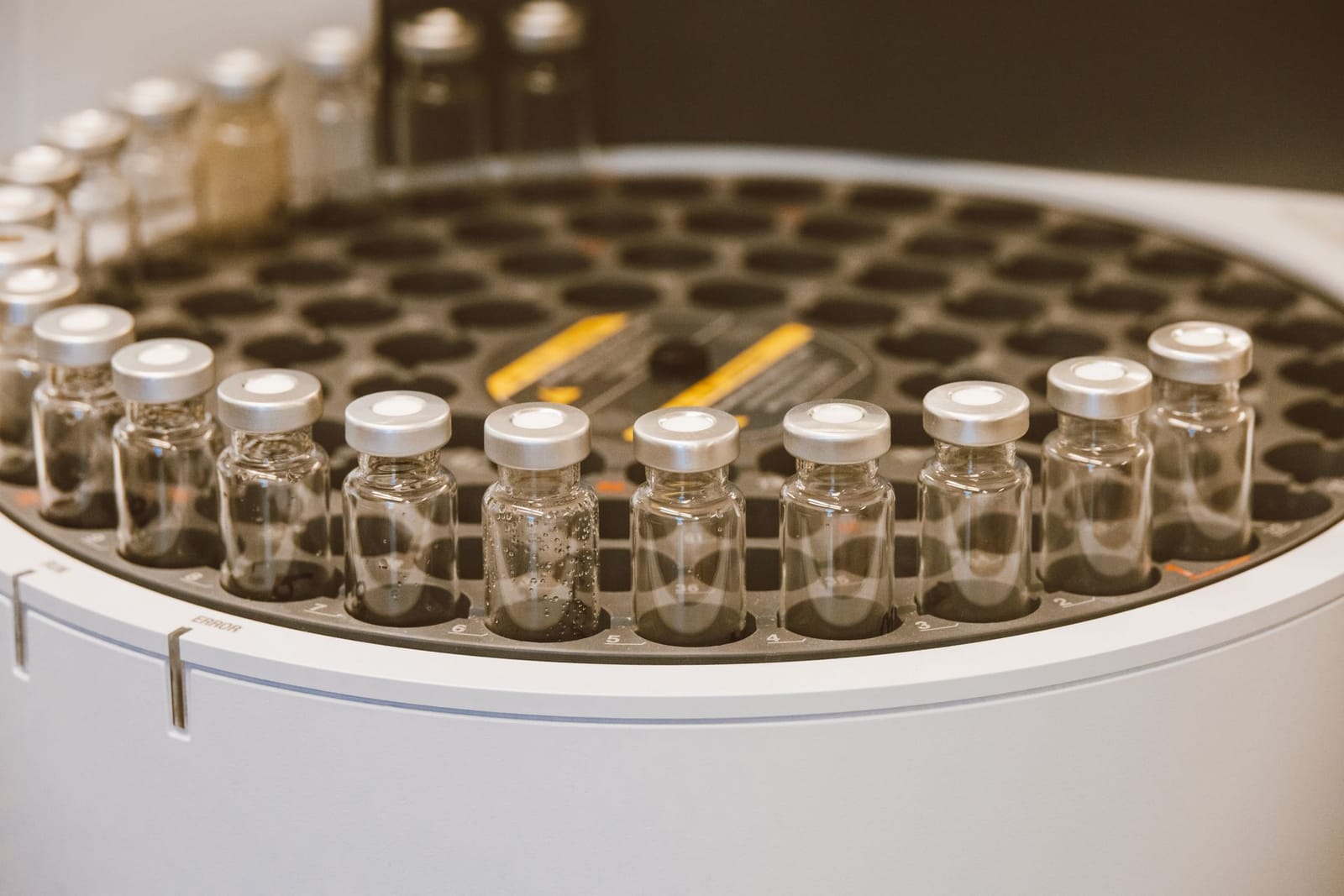
Through our manufacturing partner, we lyophilise and fill peptides and biosimilars into vials: cycle development and optimisation, engineering, pilot and commercial batches, controlled freezing and drying, residual moisture and reconstitution optimisation, and product-specific vial configurations, with dedicated project management.
- Your peptide or biosimilar
- Lyophilisation & vial filling (manufacturing partner)
- Lyophilised vials
Sourcing peptide API from India for Europe or the USA
Importing an active substance into the EU or the US brings its own documentation and GMP obligations. Our buyer guides set them out, with the primary sources linked.
- Peptide API supplier for Europe, the UK and Switzerland →
Written confirmation under Directive 2011/62/EU, EU GMP Part II, ASMF and CEP routes, and what the QP needs.
- Peptide API supplier for the USA →
Type II DMFs, ICH Q7, FDA’s July 2026 peptide guidance changes and establishment registration.
Therapeutic peptide classes
Peptides we supply for research use only, grouped by class. Five of them are also supplied as peptide APIs.
GLP-1 & Incretin Multi-Agonists
GLP-1, GIP and glucagon receptor agonists for metabolic and weight-management research and manufacturing.
Amylin & Co-Agonists
Amylin analogues and co-agonists used alongside incretin therapies for weight management programmes.
Growth & Metabolism
Growth-hormone secretagogues and metabolic peptides for endocrine and metabolic applications.
Regenerative & Repair
Tissue-repair and regenerative research peptides.
Gastrointestinal
Peptides targeting GI indications such as short bowel syndrome and IBS-C.
Peptide API and research peptides (RUO)
Every peptide below is supplied for research use only, to research organisations and individual researchers. The five marked API + RUO are also supplied as peptide APIs to pharmaceutical manufacturers. For a sequence that is not listed, see custom peptide synthesis; for GMP programmes, our CRDMO services.
| Compound | CAS Number | Indication / Area | Class | Link |
|---|---|---|---|---|
| AmycretinRUO | 3005889-81-3 | Obesity & type 2 diabetes | GLP-1 & Incretin Multi-Agonists | View peptide → |
| AOD-9604RUO | 221231-10-3 | Obesity / lipolysis (research) | Growth & Metabolism | View peptide → |
| BPC-157API + RUO | 137525-51-0 | Tissue repair / GI (research) | Regenerative & Repair | View API → |
| CagrilintideAPI + RUO | 1415456-99-3 | Obesity & weight management | Amylin & Co-Agonists | View API → |
| CJC-1295RUO | 863288-34-0 | Growth-hormone modulation (research) | Growth & Metabolism | View peptide → |
| EloralintideRUO | 2883634-40-8 | Obesity & weight management | Amylin & Co-Agonists | View peptide → |
| LinaclotideRUO | 851199-59-2 | IBS-C & chronic constipation | Gastrointestinal | View peptide → |
| MazdutideRUO | 2259884-03-0 | Obesity & type 2 diabetes | GLP-1 & Incretin Multi-Agonists | View peptide → |
| RetatrutideAPI + RUO | 2381089-83-2 | Obesity & type 2 diabetes | GLP-1 & Incretin Multi-Agonists | View API → |
| SemaglutideAPI + RUO | 910463-68-2 | Type 2 diabetes & chronic weight management | GLP-1 & Incretin Multi-Agonists | View API → |
| SermorelinRUO | 86168-78-7 | Growth-hormone axis research | Growth & Metabolism | View peptide → |
| SurvodutideRUO | 2805997-46-8 | Obesity & MASH (NASH) | GLP-1 & Incretin Multi-Agonists | View peptide → |
| TB-500 (Thymosin Beta-4)RUO | 77591-33-4 | Tissue-repair research (preclinical) | Regenerative & Repair | View peptide → |
| TeduglutideRUO | 197922-42-2 | Short bowel syndrome | Gastrointestinal | View peptide → |
| TesamorelinRUO | 218949-48-5 | HIV-associated lipodystrophy | Growth & Metabolism | View peptide → |
| TirzepatideAPI + RUO | 2023788-19-2 | Obesity & type 2 diabetes | GLP-1 & Incretin Multi-Agonists | View API → |
RUO = research use only: not for human or veterinary use, and not for use in medicinal products. The five API + RUO peptides are also supplied as APIs for pharmaceutical manufacturing and R&D.
Leadership and expertise
Nisar Mohammed
Founder & Managing Director, WinHyCare
Founder and managing director of WinHyCare, which he built with co-founder Moqtar Mohammed. Before founding the company he spent 28 years and 8 months at Dr. Reddy’s Laboratories. He reviews Winhycare Pharma’s technical articles.
Kareem Ahmed Basha
Director & Chief Scientific Officer, Winhycare Pharma
Peptide subject-matter expert at Winhycare Pharma in Hyderabad. He writes the division’s technical content on peptide APIs and lyophilisation and supports client projects.
Peptide Research Library
All peptide guides →-
Amycretin: what it is, how it works and what studies have found
Amycretin (INN zenagamtide) explained: unimolecular GLP-1 and amylin receptor agonist, 68-residue structure, phase 1 and 2 data, and the AMAZE phase 3 status.
-
Amylin analogues explained: amylin receptors and the peptides that target them
Amylin analogues and amylin receptor agonists explained: amylin biology, AMY1-3 receptors, pramlintide, cagrilintide, petrelintide, eloralintide and amycretin.
-
AOD-9604: what it is, how it works and what studies have found
AOD-9604 is Tyr-hGH(177-191), a 16-residue growth hormone fragment analogue. Sequence, mechanism, obesity trials, safety data and AOD-9604 vs hGH 176-191.
-
Aseptic fill finish explained: how sterile peptide vials are filled, closed and released
How aseptic fill finish works for peptide vials: terminal sterilisation vs aseptic, filtration, PUPSIT, Grade A/B, isolators vs RABS, media fills, CCI.
-
BPC-157: what it is, how it is thought to work and what studies have found
BPC-157 evidence review: sequence, molecular weight, proposed mechanisms, the rodent studies, the three small human reports, FDA and WADA status, and synthesis.
-
BPC-157 vs TB-500: how the two peptides differ in structure, evidence and regulatory status
BPC-157 vs TB-500 compared: origin, sequence, mass, proposed mechanisms, study counts by evidence level, FDA and WADA status, identity testing and storage.
-
Cagrilintide: what it is, how it works and what studies have found
Cagrilintide explained: long-acting lipidated amylin analogue, sequence, amylin and calcitonin receptor agonism, half-life, and REDEFINE trial findings.
-
CJC-1295: what it is, how it works and what studies have found
CJC-1295 is a GHRH(1-29) analogue; with DAC it binds albumin. Sequence, molecular weight, half-life, human studies, WADA status and the no-DAC form explained.
-
What is a drug master file? DMF, ASMF and CEP for a peptide API, with the CTD Module 3 sections
What DMF stands for, how a Type II DMF works for a peptide API, CTD Module 3 section 3.2.S, GDUFA completeness assessment, LOAs, ASMF and CEP.
-
Eloralintide: what it is, how it works and what studies have found
Eloralintide (LY3841136) explained: selective amylin receptor agonist structure, AMY1R selectivity, half-life, phase 1 and phase 2 data, and ENLIGHTEN phase 3.
-
Endotoxin testing for peptides: LAL, recombinant factor C, limits and interference
Endotoxin testing for peptides explained: how the LAL test works, LAL vs rFC vs MAT, EU/mg limits and MVD, interference, sterility and bioburden tests.
-
What is EU GMP Annex 1? The 2022 sterile manufacturing rules explained, clause by clause
What EU GMP Annex 1 requires: the 2022 revision and its 2023/2024 dates, contamination control strategy, cleanroom grade tables, PUPSIT, lyophilization and APS.
-
FDA-approved peptide drugs: a list by INN, approval year, target and length
FDA-approved peptide drugs listed by INN with first approval year, target and length, plus how FDA defines a peptide, 2020-2026 approvals and trends.
-
GLP-1 receptor agonists explained: how they work, the full list, and where research is heading
How GLP-1 receptor agonists work, a list by INN with FDA approval years, single vs dual vs triple agonists, half-life extension and research directions.
-
GMP peptides explained: what GMP grade means, GLP vs GMP, and research grade vs GMP grade
What GMP grade means for a peptide API under ICH Q7, GLP vs GMP, research grade vs GMP vs pharmacopoeial grade, and when GMP material is needed.
-
How to read a peptide COA: every test explained, red flags and how to verify it
How to read a peptide certificate of analysis line by line: MS identity, HPLC purity, peptide content, water, TFA, solvents, endotoxin, red flags and checks.
-
HPLC method validation under ICH Q2(R2) and Q14: a practical guide for peptide purity and assay methods
HPLC method validation under ICH Q2(R2) and Q14 for peptide purity and assay: specificity, range, accuracy, precision, LOD/LOQ, robustness and SST.
-
What is ICH Q11? Starting materials, control strategy and Q6A/Q6B specifications for peptide drug substances
What ICH Q11 is, how starting materials and control strategy are set for synthetic peptides, where ICH Q6A and Q6B apply, and FDA and EMA peptide guidance.
-
ICH Q7 explained: GMP for active pharmaceutical ingredients, chapter by chapter, with peptide APIs in focus
ICH Q7 explained for peptide APIs: scope, where GMP starts, all 20 chapters, the 2015 Q&A, how FDA and EU inspectors use it, and Q7 vs 21 CFR 211.
-
Linaclotide: what it is, how it works and what studies have found
Linaclotide explained: 14-residue sequence and three disulfides, GC-C and cGMP mechanism, minimal absorption, phase 3 trials, safety and disulfide synthesis.
-
Lyophilization services: how to choose a contract lyophilization CMO, and what to send them
How to choose contract lyophilization services: what to send, cycle development and scale-up, batch and vial formats, release tests and CMO questions.
-
Mazdutide: what it is, how it works and what studies have found
Mazdutide (IBI362, LY3305677) explained: GLP-1/glucagon dual agonist structure, sequence, half-life, GLORY and DREAMS trial data and 2025 China NMPA approvals.
-
Net peptide content vs HPLC purity: how amino acid analysis and mass balance measure the peptide in the vial
Net peptide content vs HPLC purity vs gross weight: amino acid analysis, nitrogen and CHN analysis, Karl Fischer water, counter-ions and stock concentrations.
-
What is a peptide bond? Formation, structure, hydrolysis and laboratory synthesis
What a peptide bond is, how it forms by condensation, why it is planar, cis vs trans, hydrolysis, and how chemists make peptide bonds with coupling reagents.
-
Shipping peptides in the cold chain: packaging, dry-ice rules, receiving checks, excursions and long-term storage
Shipping peptides: lyophilized vs solution, gel packs, dry ice, data loggers, IATA dry-ice rules, receiving checks, excursions and −80 °C storage.
-
Peptide counter-ions: TFA vs acetate vs hydrochloride, and why the salt form changes your results
Why TFA stays on synthetic peptides, how counter-ions change assays and cells, how to exchange them, and what the salt form does to net peptide content.
-
How do peptides degrade? Degradation pathways, warning signs and stability testing
How peptides degrade: deamidation, Asp isomerisation, oxidation, disulfide scrambling, hydrolysis, DKP, pyroglutamate, aggregation and forced degradation.
-
Peptide mass spectrometry: how ESI, MALDI, MS/MS and LC-MS confirm a peptide's identity
Peptide mass spectrometry explained: ESI vs MALDI, charge states, monoisotopic vs average mass, b/y ions, CID/HCD/ETD, peptide mapping and LC-MS reports.
-
Peptide modifications for stability and half-life: lipidation, PEGylation, Aib, cyclisation and fusion
How peptides are engineered for half-life and stability: fatty acid acylation, PEGylation, Aib, D-amino acids, cyclisation, stapling and albumin binding.
-
Peptide purification: preparative HPLC, ion exchange and the yield versus purity trade-off
How peptides are purified: preparative RP-HPLC, ion exchange, mixed-mode, MCSGP, the yield-purity trade-off, salt exchange and lyophilization of the pool.
-
Peptide purity testing: how HPLC, mass spectrometry and amino acid analysis work together
How peptide purity is tested: RP-HPLC columns, TFA vs formic acid, 214 nm detection, LC-MS identity, net peptide content, amino acid analysis and ICH Q2(R2).
-
Peptide synthesis: how peptides are made, from the first resin bead to a purified kilogram
How peptide synthesis works: the Fmoc SPPS cycle, LPPS, fragment condensation, recombinant and enzymatic routes, scale-up, purification, cost drivers and PMI.
-
How to reconstitute lyophilized peptides in the lab: solvent choice, stock solutions, storage and troubleshooting
Peptide reconstitution for in-vitro work: pick a solvent from the sequence, make a molar assay stock, aliquot, store, and fix peptides that won't dissolve.
-
Retatrutide: what it is, how it works and what studies have found
Retatrutide explained: triple GIP, GLP-1 and glucagon receptor agonist, sequence and C20 di-acid, 6-day half-life, phase 2 and TRIUMPH phase 3 findings.
-
Retatrutide vs tirzepatide: how the triple and dual agonists compare
Retatrutide vs tirzepatide: triple vs dual agonism, sequence and linker differences, TRIUMPH vs SURMOUNT and SURPASS results side by side, safety and status.
-
Semaglutide: what it is, how it works and what studies have found
Semaglutide explained: sequence, C18 fatty di-acid side chain, GLP-1 receptor mechanism, one-week half-life, and the SUSTAIN, STEP and SELECT findings.
-
Sermorelin: what it is, how it works and what studies have found
Sermorelin is GHRH(1-29) amide, a 29-residue GHRH analogue. Sequence, molecular weight, GHRH receptor mechanism, FDA history, studies and comparisons.
-
Survodutide: what it is, how it works and what studies have found
Survodutide (BI 456906) explained: glucagon/GLP-1 dual agonist structure, sequence, mechanism, phase 2 and SYNCHRONIZE phase 3 data, MASH studies and status.
-
TB-500: what it is, how it works and what studies have found
TB-500 explained: the Ac-LKKTETQ fragment vs full thymosin beta-4, actin biology, metabolism, published thymosin beta-4 trials, FDA and WADA status.
-
Teduglutide: what it is, how it works and what studies have found
Teduglutide explained: the [Gly2] GLP-2 analogue sequence, GLP-2 receptor biology, half-life, the STEPS trials, safety warnings and regulatory approvals.
-
Tesamorelin: what it is, how it works and what studies have found
Tesamorelin is a 44-residue GHRH analogue with an N-terminal trans-3-hexenoyl group. Structure, half-life, phase 3 trials, NAFLD research and FDA status.
-
Tirzepatide: what it is, how it works and what studies have found
Tirzepatide explained: GIP-based sequence, C20 di-acid, dual GIP and GLP-1 receptor mechanism, 5-day half-life, and SURPASS and SURMOUNT trial findings.
-
What is a lyophilized peptide? Freeze-drying explained, from the three stages to the finished cake
What lyophilized means, the three stages of freeze-drying, lyophilized vs liquid peptides, what a good cake looks like and how GMP sites make them.
-
What is a peptide? Definition, types, functions and how peptides are made
What a peptide is, how it differs from a protein, dipeptides to polypeptides, what peptides do in the body, how they are made, and what research use only means.
-
What is WHO-GMP certification? Who issues it, what it covers and how buyers verify it
What WHO-GMP certification means: WHO GMP texts, the Certification Scheme and COPP, who issues it in India, Schedule M, prequalification, verification.
-
CDMO vs CMO vs CRDMO: what is the difference, and which one does a pharma buyer need?
What CMO, CDMO and CRDMO mean in pharma, how their scope differs, what GMP rules apply to every contract manufacturer, and which model a buyer needs.
-
Generic semaglutide: EU and US regulatory pathways, and what API makers must show
How generic semaglutide is filed in the EU and US: generic vs hybrid, 8+2+1 protection, ANDA vs 505(b)(2), synthetic vs recombinant API, API maker duties.
-
How to qualify a peptide API supplier: a documentation and audit checklist for EU and US buyers
A documentation and audit checklist for qualifying a peptide API supplier for EU and US filings: written confirmation, DMF/ASMF, GMP audit, impurities and agreements.
-
Lyophilized (lyophilised) peptide stability and storage: how long a peptide API lasts and how to keep it
How long a lyophilized peptide API lasts, what degrades it, which storage temperatures ICH Q1A(R2) defines, how stability is tested and how to ship it safely.
-
Peptide API impurities and specifications: thresholds, tests and what regulators expect in 2026
How peptide API impurities are classified and controlled: why ICH Q3A does not apply, Ph. Eur. 0.1/0.5/1.0% thresholds, FDA's 2026 peptide guidance and what a specification covers.
-
Peptide lyophilization (lyophilisation): a practical guide to freeze-drying peptide APIs
How peptide lyophilization (freeze-drying) works: freezing, primary and secondary drying, Tg′ and collapse temperature, excipients, cycles and vials.
-
How to read a semaglutide API certificate of analysis (COA)
A test-by-test guide to a semaglutide API COA: identity, assay, purity, peptide content, water, acetate, residual solvents, endotoxin and the specs behind them.
-
Semaglutide patent expiry by country: dates, status and what it means for API buyers
When semaglutide's compound protection ends in India, China, Canada, Brazil, the US, EU, UK and Japan, with primary sources, and what it means for API buyers.
-
Semaglutide vs tirzepatide vs liraglutide: how the three peptide APIs compare
How semaglutide, tirzepatide and liraglutide APIs differ: backbone, length, lipid chain, receptors, half-life basis, molecular weight, CAS and approval.
-
SPPS vs LPPS vs hybrid: how peptide APIs are manufactured, and why the route matters to buyers
Solid-phase, liquid-phase and hybrid peptide synthesis compared for API buyers: chemistry, length limits, impurities, scale, solvent use and regulatory impact.
-
What is a peptide API? API vs drug substance explained
A peptide API is the active ingredient of a peptide medicine. How ICH, FDA and EU law define API, drug substance and active substance, and where peptides fit.
Discuss a peptide API or lyophilisation project
Tell us the molecule, quantity and documentation you need, or the API you want lyophilised. Our team will come back to you directly.
Email [email protected] · WhatsApp +91 90005 85863 or +91 88848 99909