Winhycare Pharma · Research Use Only
Custom Peptide Synthesis Services
Research-grade peptides made to your sequence, quality-controlled and documented, and lyophilised in vials if you need them.
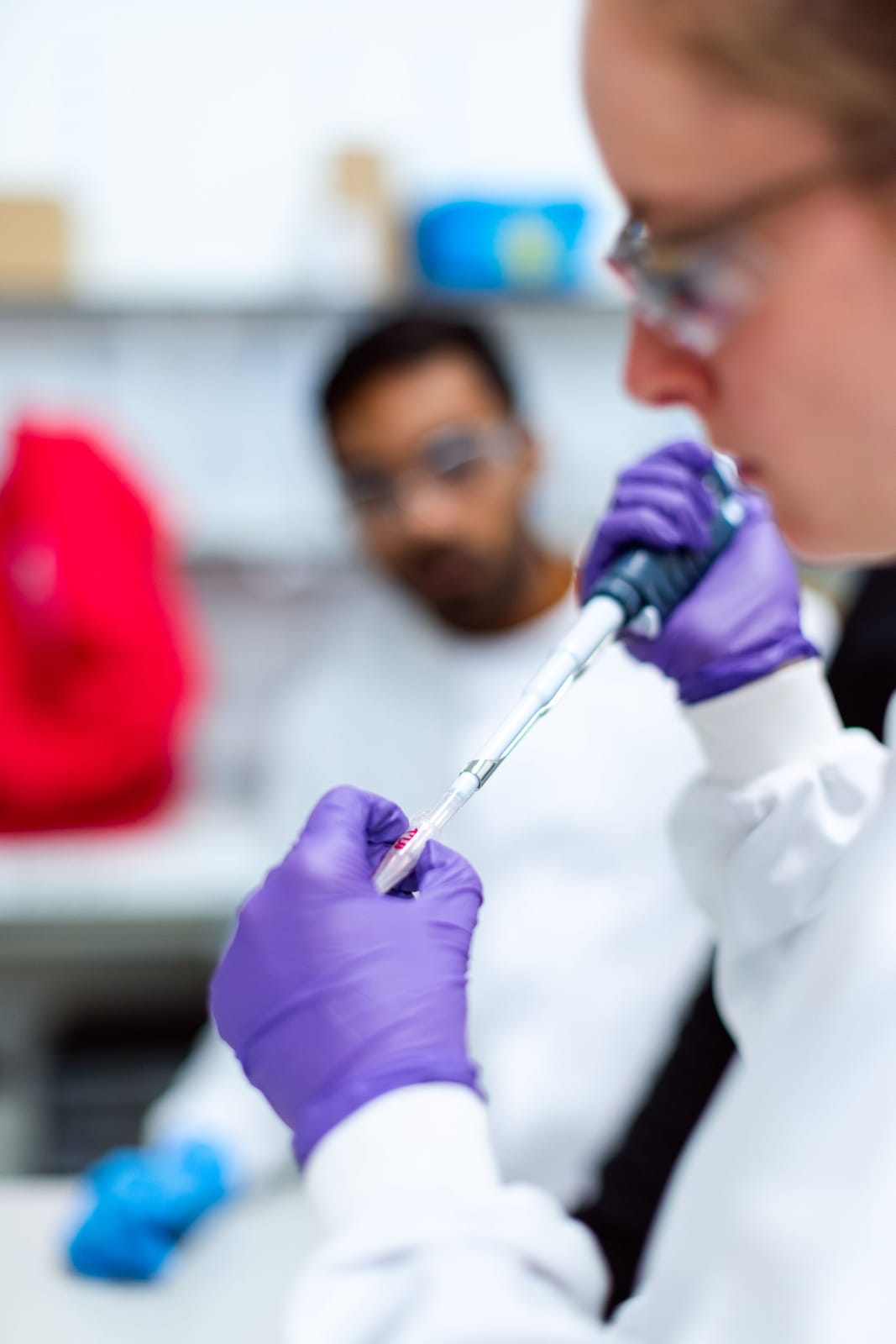
Winhycare Pharma offers custom peptide synthesis for research use only. You send the sequence and your requirements; we review feasibility, quote, and supply research-grade peptide with quality control and documentation, lyophilised in vials if required. Custom peptides sit alongside our research peptide range and are supplied to research organisations and individual researchers. They are not for human or veterinary use.
What every custom peptide comes with
- Research-grade material
- Made for laboratory research and development. Our research peptide range is supplied at high purity (>99%); the purity target for a custom sequence is agreed in the quote after feasibility review.
- Quality control and documentation
- Each lot goes through quality control and is supplied with documentation. Tell us at enquiry which documents your lab needs.
- Secure packaging and global logistics
- Packed for transit and shipped to research customers internationally.
- Technical assistance
- Dedicated technical assistance from the first enquiry through to dispatch.
What to send for a quote
The more of this you include in the first message, the fewer rounds of questions before we can quote. If you are unsure about a point, such as purity or salt form, say so and we will discuss it during feasibility review.
Send your sequence- Sequence
- One-letter or three-letter code, N- to C-terminus.
- Modifications, if any
- Describe each modification and where it sits in the sequence.
- Purity target
- The purity your experiment needs.
- Quantity
- Amount per lot, and whether you need it split across vials.
- Salt form or counter-ion
- Only if your work requires a specific one.
- Documentation needed
- For example a certificate of analysis or analytical data.
- Delivery country
- So we can plan packaging and shipping.
- Intended research use
- A short description of the research application.
How a custom synthesis project runs
- 01
Enquiry
You send the sequence and the details listed above.
- 02
Feasibility review
The sequence, any modifications and the purity target are reviewed, and we come back with questions if anything needs clarifying.
- 03
Quote
Scope, purity target, quantity and documentation are set out in a written quote.
- 04
Synthesis and purification
The peptide is synthesised, then purified towards the agreed purity target.
- 05
QC and documentation
The lot is tested and the agreed documentation is prepared.
- 06
Lyophilisation and vialling, if required
Peptide can be lyophilised and filled into vials through our lyophilisation service.
- 07
Dispatch
Securely packed and shipped to your delivery country.
Research grade vs GMP
Custom peptides from this service are research grade. They are made and documented for laboratory research and development, and are not manufactured or released as a GMP active pharmaceutical ingredient. That means they cannot be used in a medicinal product, and a regulator would not accept them as the API in a clinical or commercial filing.
If your programme is heading towards clinical or commercial supply, a GMP API is a separate assessment covering process development, analytical methods and regulatory documentation. We look at those programmes case by case through our peptide CRDMO services. For what supplier qualification involves, see how to qualify a peptide API supplier.
Background reading
- SPPS vs LPPS: how peptides are synthesisedSolid-phase, liquid-phase and hybrid routes, and why chain length matters.
- Peptide impurities and specificationsDeletion sequences, related substances and how purity is reported.
- What is a peptide API?How regulators define an API, and why it differs from research-grade material.
Frequently asked questions
What is custom peptide synthesis?
Custom peptide synthesis means making a peptide to a sequence the customer specifies, rather than choosing from a catalogue. Winhycare Pharma offers custom peptides alongside its research peptide range, for research use only.
What do you need from me to quote a custom peptide?
The sequence, any modifications, your purity target, the quantity, a salt form or counter-ion if your work requires one, the documentation you need, the delivery country and a short description of the intended research use.
Can custom peptides be supplied lyophilised in vials?
Yes. If you need vials, the peptide can be lyophilised and filled through our peptide lyophilisation service. Say so in your enquiry so it is included in the quote.
Are your custom peptides GMP grade or suitable for clinical use?
No. Custom peptides are research grade and supplied for research use only, not for human or veterinary use. A GMP API for clinical or commercial supply is a separate programme that we assess case by case through our peptide CRDMO services.
Who can order custom peptides?
Research organisations and individual researchers, worldwide, for laboratory research only. We ask every customer to state the intended research use with the enquiry.
Request a custom peptide quote
Winhycare Pharma, Hyderabad, India. Send the sequence and requirements and we will come back with feasibility questions or a quote.
- Kareem Ahmed Basha, Director & Chief Scientific Officer
[email protected] - Nisar Mohammed, Founder & Managing Director
[email protected]
More from Winhycare Pharma · Peptide APIs
Products & services
- Peptide APIs & CMO services
- Peptide API supplier (5 APIs)
- Semaglutide API supplier
- Tirzepatide API supplier
- Research peptides (RUO), >99% purity
- GLP-1 research peptides
- Custom peptide synthesis
- Peptide lyophilisation (lyophilization) services
- Biosimilar and protein lyophilisation
- Lyophilisation for European companies
- Peptide CDMO & contract manufacturing
- Peptide API supplier for Europe
- Peptide API supplier for the USA
Guides
Peptide Research Library →- Amycretin: what it is, how it works and what studies have found
- Amylin analogues explained: amylin receptors and the peptides that target them
- AOD-9604: what it is, how it works and what studies have found
- BPC-157: what it is, how it is thought to work and what studies have found
- BPC-157 vs TB-500: how the two peptides differ in structure, evidence and regulatory status
- Cagrilintide: what it is, how it works and what studies have found
- CJC-1295: what it is, how it works and what studies have found
- What is a drug master file? DMF, ASMF and CEP for a peptide API, with the CTD Module 3 sections
- Eloralintide: what it is, how it works and what studies have found
- Endotoxin testing for peptides: LAL, recombinant factor C, limits and interference
- FDA-approved peptide drugs: a list by INN, approval year, target and length
- GLP-1 receptor agonists explained: how they work, the full list, and where research is heading
- GMP peptides explained: what GMP grade means, GLP vs GMP, and research grade vs GMP grade
- How to read a peptide COA: every test explained, red flags and how to verify it
- HPLC method validation under ICH Q2(R2) and Q14: a practical guide for peptide purity and assay methods
- What is ICH Q11? Starting materials, control strategy and Q6A/Q6B specifications for peptide drug substances
- ICH Q7 explained: GMP for active pharmaceutical ingredients, chapter by chapter, with peptide APIs in focus
- Linaclotide: what it is, how it works and what studies have found
- Mazdutide: what it is, how it works and what studies have found
- Net peptide content vs HPLC purity: how amino acid analysis and mass balance measure the peptide in the vial
- What is a peptide bond? Formation, structure, hydrolysis and laboratory synthesis
- Peptide counter-ions: TFA vs acetate vs hydrochloride, and why the salt form changes your results
- How do peptides degrade? Degradation pathways, warning signs and stability testing
- Peptide mass spectrometry: how ESI, MALDI, MS/MS and LC-MS confirm a peptide's identity
- Peptide modifications for stability and half-life: lipidation, PEGylation, Aib, cyclisation and fusion
- Peptide purification: preparative HPLC, ion exchange and the yield versus purity trade-off
- Peptide purity testing: how HPLC, mass spectrometry and amino acid analysis work together
- Peptide synthesis: how peptides are made, from the first resin bead to a purified kilogram
- Retatrutide: what it is, how it works and what studies have found
- Retatrutide vs tirzepatide: how the triple and dual agonists compare
- Semaglutide: what it is, how it works and what studies have found
- Sermorelin: what it is, how it works and what studies have found
- Survodutide: what it is, how it works and what studies have found
- TB-500: what it is, how it works and what studies have found
- Teduglutide: what it is, how it works and what studies have found
- Tesamorelin: what it is, how it works and what studies have found
- Tirzepatide: what it is, how it works and what studies have found
- What is a peptide? Definition, types, functions and how peptides are made