Aseptic fill finish explained: how sterile peptide vials are filled, closed and released
How aseptic fill finish works for peptide vials: terminal sterilisation vs aseptic, filtration, PUPSIT, Grade A/B, isolators vs RABS, media fills, CCI.
- Written by
- Kareem Ahmed BashaDirector & Chief Scientific Officer
- Reviewed by
- Nisar MohammedFounder & Managing Director
Published · Updated · 15 min read · 18 references
On this page
Short answer
Aseptic fill finish is the manufacture of a sterile product from components that were sterilised separately: the solution is sterile-filtered, filled into sterilised vials and closed in a Grade A zone, because the product cannot be sterilised in its final container. Regulators accept it when terminal sterilisation would degrade the product, as is usual for peptides.
Key facts
- FDA's 2004 aseptic processing guidance states that sterile drugs should be manufactured by aseptic processing only when terminal sterilisation is not feasible, and that aseptic processing involves more variables than terminal sterilisation.
- EMA's 2025 synthetic peptides guideline accepts sterile filtration plus aseptic processing for a peptide product only if terminal sterilisation under the least stressful conditions that achieve SAL ≤10⁻⁶ causes significant degradation.
- EU GMP Annex 1 (2022) requires sterile filtration through a validated sterilising-grade filter of maximum nominal pore size 0.22 µm, integrity testing before use (PUPSIT) and a non-destructive integrity test after use.
- Grade A is the critical zone for filling, stoppering and lyophilizer loading. Its limit for particles ≥0.5 µm is 3,520 per m³ at rest and in operation, and the target for viable contamination is no growth.
- Media fills (aseptic process simulations) are run as three consecutive successful runs at initial validation and then about every six months per line and shift; the target is zero contaminated units.
- Annex 1 states that visual inspection is not an acceptable container closure integrity test, and that vials sealed under vacuum must be tested for maintenance of vacuum.
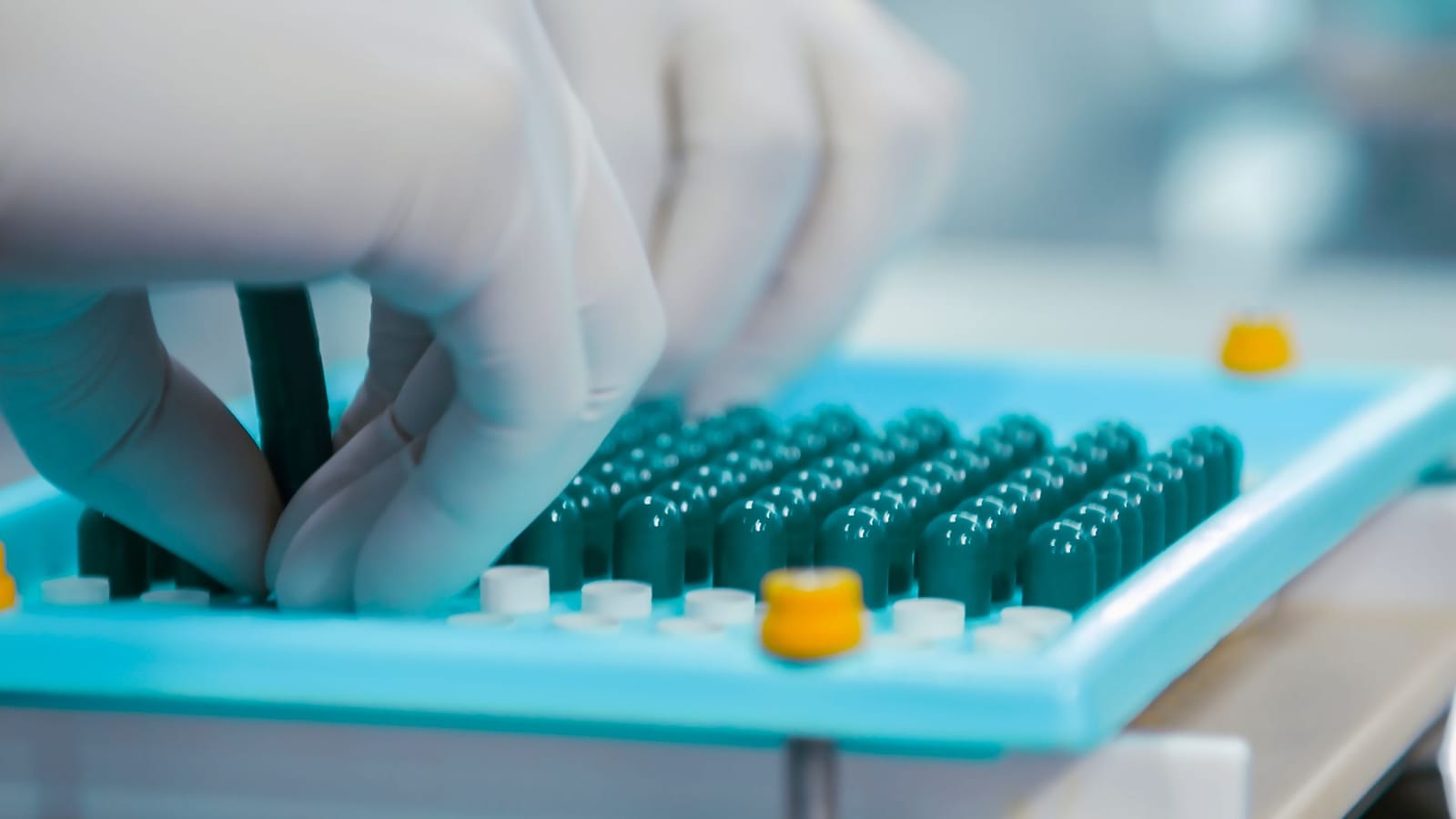
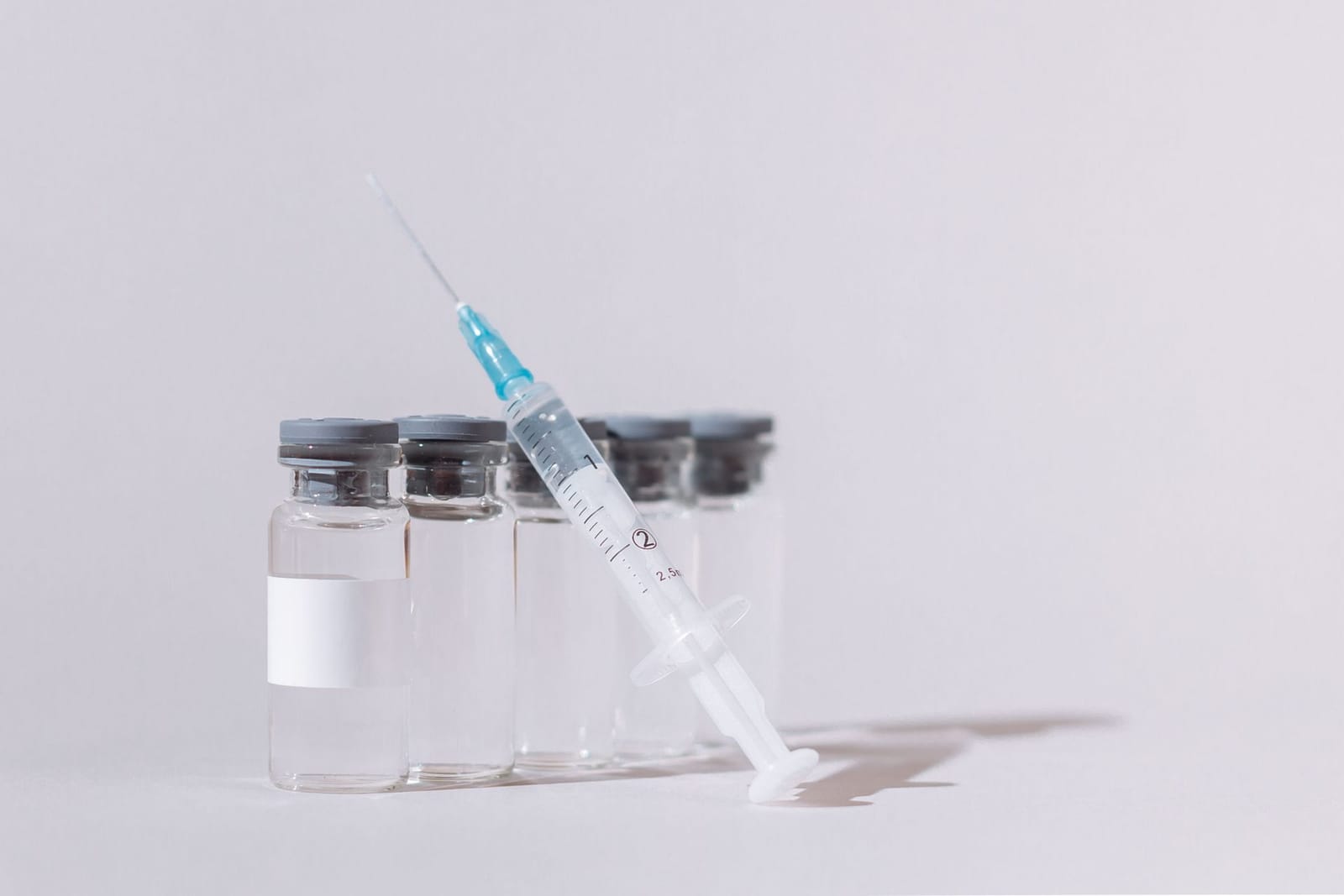
Aseptic fill finish is how most sterile peptide vials are made. The peptide solution is sterilised by filtration, the vials, stoppers and filling equipment are sterilised separately, and everything meets in a Grade A zone where the vials are filled and closed. Nothing kills microorganisms after that point, so sterility depends on keeping them out. That is why aseptic processing carries more rules than any other step in pharmaceutical manufacturing.
This guide explains what “aseptic fill finish”, “sterile fill finish” and “fill finish manufacturing” mean, why peptides are usually filled aseptically rather than terminally sterilised, the steps from compounding to inspection, how cleanroom grades, isolators and RABS fit together, and how media fills and container closure integrity testing prove the process works. It draws on FDA’s 2004 aseptic processing guidance, EU GMP Annex 1 (2022) and the peer-reviewed literature. For the drying science, see our peptide lyophilization guide; for a plain-language introduction, see what is a lyophilized peptide.
What is aseptic fill finish?
“Fill finish” is the last manufacturing stage of an injectable product: the bulk solution becomes individual sealed containers. “Sterile fill finish” covers any route to a sterile filled product. “Aseptic fill finish” is the specific route in which the product is not sterilised in its final container. FDA describes it this way: in aseptic processing, the drug product, container and closure are first subjected to sterilisation methods separately and then brought together, and “because there is no process to sterilize the product in its final container, it is critical that containers be filled and sealed in an extremely high-quality environment” [1].
US regulations require written procedures to prevent microbiological contamination of products purporting to be sterile, and those procedures “shall include validation of all aseptic and sterilization processes” (21 CFR 211.113(b)) [2]. In the EU, the detailed expectations sit in Annex 1 of the EU GMP Guide, revised in 2022 and published as Commission document C(2022) 5938 [3]. PIC/S published an identical revised Annex 1 (with very minor editorial differences), and WHO’s 2022 sterile GMP text was revised in collaboration with the EU and PIC/S [4] [5]. In practice, the EU, PIC/S and WHO sterile texts now set largely the same expectations.
Terminal sterilisation vs aseptic processing: which do regulators prefer?
Regulators prefer terminal sterilisation. FDA states: “It is a well-accepted principle that sterile drugs should be manufactured using aseptic processing only when terminal sterilization is not feasible,” and adds that “aseptic processing involves more variables than terminal sterilization” [1]. EMA’s sterilisation guideline explains why: terminal sterilisation “is lethal to micro-organisms and a reliable sterility assurance level (SAL) is possible to calculate, validate and control”, whereas for sterile filtration followed by aseptic processing “accidental contamination caused by inadequate technique cannot be reliably eliminated by monitoring and control” [6].
| Feature | Terminal sterilisation | Aseptic processing |
|---|---|---|
| When sterilisation happens | After filling and sealing, in the final container | Before filling: product, containers and closures sterilised separately |
| Typical method | Moist heat; Ph. Eur. reference condition ≥121 °C for ≥15 min [6] | Filtration through a sterilising-grade filter of maximum nominal pore size 0.22 µm [3] |
| Sterility assurance | SAL of 10⁻⁶ or better can be calculated and validated [3] [6] | Depends on preventing contamination; verified by process design, monitoring and media fills [3] |
| Filling environment | Grade C for filling of products, Grade A when unusually at risk [3] | Grade A, with Grade B background unless in an isolator [3] |
| Regulatory position | Method of choice whenever possible [6] | Accepted when terminal sterilisation is not feasible [1] |
Annex 1 defines terminal sterilisation as applying a lethal agent “to a product in its final container to achieve a predetermined sterility assurance level (SAL) of 10⁻⁶ or better”, meaning a probability of one viable microorganism in a million units or less [3].
Why are peptides usually aseptically filled?
Peptide products are mostly injectables, and many peptides do not survive a full heat cycle. EMA’s 2025 guideline on synthetic peptides, in effect since 1 June 2026, notes that “most of the medicinal product formulations containing synthetic peptides as active substance are for parenteral use” and that the general sterilisation decision trees apply to them [7].
The guideline does not treat aseptic processing as automatic. It says terminal sterilisation “should be the method of choice unless demonstrated unsuitable”, and that sterile filtration plus aseptic processing “is only acceptable if the applicant demonstrates that the use of a terminal sterilisation process under the least stressful conditions (achieving the required SAL ≤ 10-6) causes significant degradation” [7]. It also asks developers to consider formulation optimisation (pH, buffer, osmolality) and container choice early, to give terminal sterilisation a chance [7]. For proteins and other heat-labile biological substances “where it is well known that terminal sterilisation is not possible”, EMA’s sterilisation guideline accepts a scientific rationale without further justification [6].
Lyophilized peptides add a second reason. Freeze-drying happens after filling but before the vial is sealed, so the process has to stay sterile through the dryer. Annex 1 treats this explicitly: lyophilization “is a critical process step and all activities that can affect the sterility of the product or material need to be regarded as extensions of the aseptic processing of the sterilised product” [3].
The aseptic fill finish process, step by step
Annex 1 Table 4 gives examples of the cleanroom grade expected for each aseptic operation [3]. The sequence below is typical for a lyophilized peptide in vials; liquid products skip the drying step.
| Step | Where (Annex 1 grade) | Key control | Ref |
|---|---|---|---|
| 1. Component preparation | Grade D for cleaning and assembly before sterilisation | Validated cleaning of vials and stoppers for particles, endotoxin and bioburden | [3] |
| 2. Compounding | Grade C for preparation of solutions to be filtered | Bioburden limit before the sterilising filter | [3] [6] |
| 3. Sterile filtration | Filter and downstream path sterilised | 0.22 µm sterilising-grade filter, validated for bacterial retention | [3] [6] |
| 4. Filter integrity testing | In place, preferably closed system | Pre-use (PUPSIT) and post-use integrity test | [3] |
| 5. Filling and partial stoppering | Grade A | Interventions limited, listed and recorded | [3] |
| 6. Transfer and lyophilizer loading | Grade A | Partially stoppered vials kept under Grade A at all times | [3] |
| 7. Lyophilization and stoppering in the chamber | Sterilised, leak-tested lyophilizer | Leak rate checked at the start of every cycle | [3] |
| 8. Capping | Aseptic, or clean process with Grade A air until crimped | Particle control at the crimping station | [3] |
| 9. 100% inspection and integrity | Qualified manual or automated inspection | Defect library; vacuum maintenance tested for vacuum-sealed vials | [3] |
| 10. Release testing | QC laboratory | Sterility, endotoxin, bioburden record and product tests | [3] [8] |
Compounding
The peptide, buffer and excipients are dissolved to the target concentration. Annex 1 lists “preparation of solutions to be filtered including sampling and dispensing” as a Grade C activity [3]. FDA asks manufacturers to characterise the bioburden and endotoxin content of each component and set acceptance limits, noting that “endotoxin load data are significant because parenteral products are intended to be nonpyrogenic” [1]. EMA’s guideline says that in most situations a bioburden limit of “NMT 10 CFU/100 ml (TAMC)” before sterile filtration would be acceptable [6], and Annex 1 requires bioburden to be tested on each batch of aseptically filled product [3]. For the endotoxin side, see endotoxin testing for peptides.
Sterile filtration
Where the product cannot be sterilised in its final container, Annex 1 requires filtration “through a sterile sterilising grade filter (with a nominal pore size of a maximum of 0.22 µm that has been appropriately validated to obtain a sterile filtrate)” and aseptic filling “into a previously sterilised container” [3]. Because sterile filtration carries additional risk compared with other sterilisation methods, a second sterilising filter “as close to the point of fill as possible” should be considered [3]. Validation uses the actual product where possible [3]; EMA expects a retention challenge of at least 10⁷ CFU/cm² with a justified indicator organism [6], and FDA names Brevundimonas diminuta (ATCC 19146), about 0.3 µm in mean diameter, as a common challenge organism for 0.2 µm rated filters [1].
Filter integrity testing and PUPSIT
Annex 1 clause 8.87 asks for the sterilised filter assembly to be integrity tested “before use (pre-use post sterilisation integrity test or PUPSIT)” and for the filter to undergo “a non-destructive integrity test post-use prior to removal of the filter from its housing” [3]. Bubble point, diffusive flow, water intrusion and pressure hold are named as example tests. Annex 1 accepts that PUPSIT may not always be possible, for example when filtering very small volumes, but only with “a thorough risk assessment” and compensating controls [3].
The reason for PUPSIT is filter masking. Gupta and colleagues filtered four clogging-prone fluids through 0.2 µm filters from four manufacturers and found that some streams raised post-use bubble point values, which “can camouflage a possible flaw in sterilizing filters”; they recommended deciding on PUPSIT case by case during filter validation [9]. A 2025 PDA review proposes a risk framework, built on the January 2023 revision of ICH Q9, for judging when an alternative to PUPSIT is acceptable [10].
Filling and partial stoppering
Filling, stoppering, transfer of open or partially stoppered vials and loading a lyophilizer are all Grade A operations [3]. The main risk is people. A 2022 PDA analysis calls operator interventions “a key source of microbiological contamination of sterile biopharmaceutical products, irrespective of the type of manufacturing system used” [11]. Annex 1 therefore requires an authorised list of qualified interventions, evaluated through risk management and media fills, and every intervention or stoppage to be recorded in the batch record with time, duration and operators involved [3].
For lyophilized products, stoppers are seated only part way so that vapour can escape. Annex 1 requires “the transfer of partially closed containers to a lyophilizer” to be “undertaken under grade A conditions at all times”, using conveyors, clean-air transfer carts or validated closed trays [3]. FDA makes the same point: “a partially closed sterile product should be transferred only in critical areas” [1]. The loading pattern itself can change cycle performance; a LyoHUB case study on loading showed rejection rates that varied with shelf position and indexing during loading [12].
Lyophilization, stoppering and capping
The lyophilizer is sterilised on a validated schedule; manually loaded dryers with no barrier separation “should be sterilised before each load”, a requirement (clause 8.123) that came into force a year after the rest of Annex 1 [3]. Air leakage into the chamber must be “specified and checked at the start of every cycle” [3]. At the end of the cycle the stoppers are pressed home inside the chamber.
Capping can be an aseptic step with sterilised caps, or a clean process outside the aseptic area, in which case stoppered vials stay under “a grade A air supply until the cap has been crimped” [3]. Crimping can shed particles, so Annex 1 suggests a separate station with air extraction [3]. The capping step also sets the residual seal force that holds the stopper in place; micro-CT work found that serum stoppers failed integrity testing when residual seal force fell below 15.8 N, while lyophilization stoppers passed even at 0 N because of their valve seal [13].
Inspection and release
Annex 1 requires that “all filled containers of parenteral products should be inspected individually for extraneous contamination or other defects”, supported by a defect library, annual qualification of manual inspectors and validated automated systems that are “equal to, or better than, manual inspection methods” [3]. Visible particles are one of the top ten reasons for recalls of parenteral products, according to a 2012 review that also notes how little human data exists on their clinical risk [14].
In the US, each batch purporting to be sterile or pyrogen-free must undergo “appropriate laboratory testing to determine conformance to such requirements” (21 CFR 211.167(a)) [8]. Annex 1 stresses that “monitoring or testing alone does not give assurance of sterility” [3]; the sterility test samples a batch, so the process design and the media fill carry most of the assurance.
Cleanroom grades A, B, C and D for aseptic filling
Annex 1 defines four grades. Grade A is “the critical zone for high-risk operations (e.g. aseptic processing line, filling zone, stopper bowl, open primary packaging…)”. Grade B is the background for Grade A where it is not an isolator. Grades C and D handle less critical stages or serve as isolator backgrounds [3].
| Grade | Typical aseptic use | Max particles ≥0.5 µm/m³ at rest | In operation | Viable air action limit (CFU/m³) |
|---|---|---|---|---|
| A | Filling, stoppering, lyophilizer loading | 3,520 | 3,520 | No growth |
| B | Background to Grade A (not isolators) | 3,520 | 352,000 | 10 |
| C | Preparing solutions to be filtered | 352,000 | 3,520,000 | 100 |
| D | Cleaning and assembling components | 3,520,000 | Not predetermined | 200 |
Particle limits from Annex 1 Table 1; viable limits from Table 6 [3]. FDA’s 2004 guidance uses ISO terms: the critical area is “Class 100 (ISO 5)”, with 3,520 particles ≥0.5 µm per m³, which FDA describes as approximately equal to EU Grade A [1]. Airflow targets differ slightly: FDA cites 0.45 m/s with a range of plus or minus 20% around the setpoint [1], while Annex 1 gives a guidance range of 0.36–0.54 m/s at the working position [3]. The full grade tables, including 5 µm limits and monitoring frequencies, are covered in our EU GMP Annex 1 guide.
Isolators vs RABS: what is the difference?
Both are barrier systems that keep operators out of the Grade A zone. Annex 1 says their use “should be considered in the CCS” and that “any alternative approaches to the use of RABS or isolators should be justified” [3].
| Feature | Isolator | RABS |
|---|---|---|
| Annex 1 definition | Enclosure with reproducible interior bio-decontamination and a Grade A work zone with “uncompromised, continuous isolation” from the surrounding room [3] | “Enclosed, but not fully sealed” rigid-wall enclosure with integrated gloves, meeting Grade A [3] |
| Background room | Open isolator: generally at least Grade C; closed isolator: at least Grade D, justified in the CCS [3] | At least Grade B [3] |
| Decontamination | Automated, validated sporicidal bio-decontamination, for example in vaporised form [3] | Routine validated application of a sporicidal agent to all interior surfaces [3] |
| Glove testing | Leak testing generally at the beginning and end of each batch or campaign [3] | Gloves sterilised before installation; integrity tested at periodic intervals [3] |
| Pressure | Positive pressure; negative pressure only when product containment is essential [3] | Positive airflow from the critical zone to the background [3] |
FDA’s isolator appendix says a well-designed positive-pressure isolator “offers tangible advantages over traditional aseptic processing, including fewer opportunities for microbial contamination during processing” [1]. Isolators have their own product risk: the vaporised hydrogen peroxide used to decontaminate them can reach the product. In one monoclonal antibody filling study, protein oxidation was seen above 100 ng/mL of hydrogen peroxide, with silicone tubing and open filled vials identified as the main routes of uptake [15]. For oxidation-prone peptides, the same uptake routes belong in the risk assessment.
What is a media fill (aseptic process simulation)?
A media fill replaces the product with sterile growth medium, runs the line exactly as in production, and incubates every filled container. Annex 1 calls it the aseptic process simulation (APS) and makes three points about it [3]:
- It verifies; it does not validate on its own. The APS “should not be considered as the primary means to validate the aseptic process”; design, quality system, training and monitoring do that.
- Frequency. Initial validation needs “at least three consecutive satisfactory simulation tests that cover all working shifts”, and revalidation is normally “twice a year (approximately every six months) for each aseptic process, each filling line and each shift”. Each operator should take part in at least one successful APS a year.
- Size and acceptance. Typically a minimum of 5,000 to 10,000 units are filled; for batches under 5,000 units, at least the production batch size. “The target should be zero growth”, and any contaminated unit fails the APS and triggers investigation, normally three repeat runs and quarantine of product made since.
FDA’s 2004 criteria are expressed by run size. Below 5,000 units, “no contaminated units should be detected”; one contaminated unit is cause for revalidation after investigation. Between 5,000 and 10,000 units, one contaminated unit triggers investigation and two are cause for revalidation [1].
Lyophilized products need a tailored simulation, because freezing and vacuum can kill or mask contaminants. Annex 1 asks that the APS cover filling, transport, loading, “a representative duration of the chamber dwell”, unloading and sealing, but avoid “boiling-over or actual freezing of the solution”, use air rather than nitrogen to break vacuum, and replicate the longest hold times and loading durations [3].
Container closure integrity for lyophilized vials
Container closure integrity (CCI) means the vial, stopper and cap keep microorganisms out until the product is used. Annex 1 requires vials sealed under vacuum to be “tested for maintenance of vacuum after an appropriate pre-determined period prior to certification/release and during shelf life”, and CCI validation to consider shipping stresses “e.g. by decompression or extreme temperatures” [3]. It also states that “visual inspection is not considered as an acceptable integrity test method” [3]. FDA notes that failure to detect vials fractured by faulty machinery or mishandling “has led to drug recalls” [1].
There is no single gold-standard method. A European industry white paper concluded that “there is currently no gold standard for CCI test methods or for the generation of artificial leaks”, and listed choices such as deterministic (helium leak) versus probabilistic (microbial ingress) methods and liquid versus lyophilized product [16]. Two published methods for freeze-dried vials show the range: a validated vacuum decay method detected laser-drilled holes of about 5 µm and larger [17], while a headspace oxygen model detected leaks of 0.2 µm within hours of stoppering in standard vial sizes [18].
What to ask a fill-finish partner
The documents and answers below separate a well-run sterile operation from a weak one:
- Sterilisation route and rationale. Terminal sterilisation or aseptic processing, and the data behind the choice [6] [7].
- Contamination control strategy. How the site’s CCS covers your product, including barrier technology [3].
- Filter validation and PUPSIT. Bacterial retention with your product or a justified surrogate, and the integrity-test approach [3] [9].
- Media fill history. Recent APS results for the line, container format and shifts you will use [3].
- Lyophilizer controls. Sterilisation frequency, leak-rate checks and the loading system [3].
- CCI and inspection. The CCI method, its detection limit and the inspection defect library [3] [16].
Commercial considerations, tech transfer and batch formats are covered in our guide to choosing lyophilization services.
How Winhycare Pharma supports fill finish
Winhycare Pharma offers lyophilisation and vial filling of peptides and biosimilars at WHO-GMP certified manufacturing partners in India, with projects managed from Hyderabad. Clients can bring their own peptide for a standalone lyophilisation and vial-filling project. The partner’s process details, including the sterilisation approach and the supporting validation data relevant to your product, are shared per project. See peptide lyophilisation services, biosimilar lyophilisation or send a lyophilisation enquiry. Winhycare Pharma also supplies research-use-only peptides (purity ≥99%, as stated in our brochure); see research peptides.
For laboratory research use only. Not for human or veterinary use.
Frequently asked questions
What is aseptic fill finish?+
It is the final stage of making a sterile injectable product when the product cannot be sterilised in its container. The solution is sterilised by filtration, and the vials, stoppers and equipment are sterilised separately; they are then brought together and closed in a Grade A environment. For lyophilized products, freeze-drying sits inside this aseptic chain.
What is the difference between aseptic processing and terminal sterilisation?+
Terminal sterilisation fills and seals the product first and then sterilises it in its final container, for example with heat or irradiation, so a sterility assurance level of 10⁻⁶ or better can be calculated and validated. Aseptic processing sterilises the parts separately and assembles them in a controlled environment, so sterility depends on preventing contamination rather than killing it afterwards.
Why are peptides aseptically filled instead of terminally sterilised?+
Most peptide products are parenteral, and many peptides degrade under the heat of a full terminal sterilisation cycle. EMA's synthetic peptides guideline still makes terminal sterilisation the default and accepts aseptic processing only when the applicant shows that terminal sterilisation under the least stressful conditions causes significant degradation.
What is PUPSIT?+
PUPSIT is the pre-use post-sterilisation integrity test of a sterilising-grade filter. EU GMP Annex 1 expects the sterilised filter assembly to be integrity tested before use to detect damage caused during preparation, and tested again non-destructively after use. Where PUPSIT is not possible, Annex 1 allows an alternative only with a thorough risk assessment and compensating controls.
What is the difference between an isolator and a RABS?+
An isolator is a sealed enclosure with a Grade A interior that can be bio-decontaminated reproducibly, usually with a vaporised sporicidal agent, and can sit in a Grade C or D background. A RABS is an enclosed but not fully sealed system with glove ports that must sit in a Grade B background and relies on validated sporicidal disinfection.
What is a media fill?+
A media fill, or aseptic process simulation, runs the aseptic process with sterile growth medium in place of product, then incubates every filled container to see whether any became contaminated. Annex 1 calls for three consecutive successful runs at initial validation and repeat runs about every six months for each line and shift, with a target of zero growth.
How many units are filled in a media fill?+
Annex 1 says the number should be justified in the contamination control strategy and that typically a minimum of 5,000 to 10,000 units are filled; for batches under 5,000 units, the media fill should at least equal the production batch size. FDA's 2004 guidance sets acceptance criteria by run size, with no contaminated units expected below 5,000.
What is container closure integrity testing?+
It is testing that the vial, stopper and crimp cap together keep microorganisms out for the product's life. Methods include deterministic tests such as vacuum decay, helium leak and headspace gas analysis, and probabilistic tests such as microbial ingress. Annex 1 does not accept visual inspection as an integrity test.
Is lyophilization part of aseptic processing?+
Yes, for sterile products. EU GMP Annex 1 says lyophilization is a critical process step and that all activities that can affect sterility are extensions of aseptic processing, from filling through to completion of the cycle. Partially stoppered vials must be transferred and loaded under Grade A conditions.
Sources
- Guidance for Industry: Sterile Drug Products Produced by Aseptic Processing, Current Good Manufacturing Practice (September 2004), US Food and Drug Administration
- 21 CFR 211.113: Control of microbiological contamination, Electronic Code of Federal Regulations
- EudraLex Volume 4, Annex 1: Manufacture of Sterile Medicinal Products, C(2022) 5938 final, European Commission
- WHO good manufacturing practices for sterile pharmaceutical products. WHO Technical Report Series No. 1044, Annex 2 (2022), World Health Organization
- Publication of revised PIC/S Annex 1 (September 2022), Pharmaceutical Inspection Co-operation Scheme (PIC/S)
- Guideline on the sterilisation of the medicinal product, active substance, excipient and primary container (EMA/CHMP/CVMP/QWP/850374/2015), European Medicines Agency
- Guideline on the Development and Manufacture of Synthetic Peptides (EMA/CHMP/CVMP/QWP/367182/2025), European Medicines Agency
- 21 CFR 211.167: Special testing requirements, Electronic Code of Federal Regulations
- Gupta VS, Jindal J, Gupta A, et al. Preuse/poststerilization integrity testing (PUPSIT): to do or not to do? PDA J Pharm Sci Technol 2020;74:301–308, PDA Journal of Pharmaceutical Science and Technology (PubMed)
- Waldron K, McFarland A, Baseman H, et al. A risk assessment and risk-based approach review of pre-use/post-sterilization integrity testing (PUPSIT). PDA J Pharm Sci Technol 2025;79:88–97, PDA Journal of Pharmaceutical Science and Technology (PubMed)
- Baseman H, Chakraborty S, Long MA, et al. Interventions risk evaluation and management in aseptic manufacturing. PDA J Pharm Sci Technol 2022;76:485–496, PDA Journal of Pharmaceutical Science and Technology (PubMed)
- Jameel F, Alexeenko A, Bhambhani A, et al. Recommended best practices for lyophilization validation 2021 Part II: process qualification and continued process verification. AAPS PharmSciTech 2021;22:266, AAPS PharmSciTech (open access, PMC)
- Ovadia R, Lam P, Tegoulia V, et al. Quantifying the vial-capping process: reexamination using micro-computed tomography. PDA J Pharm Sci Technol 2020;74:171–184, PDA Journal of Pharmaceutical Science and Technology (PubMed)
- Doessegger L, Mahler HC, Szczesny P, et al. The potential clinical relevance of visible particles in parenteral drugs. J Pharm Sci 2012;101:2635–2644, Journal of Pharmaceutical Sciences (PubMed)
- Hubbard A, Roedl T, Hui A, et al. Vapor phase hydrogen peroxide decontamination or sanitization of an isolator for aseptic filling of monoclonal antibody drug product: hydrogen peroxide uptake and impact on protein quality. PDA J Pharm Sci Technol 2018;72:348–366, PDA Journal of Pharmaceutical Science and Technology (PubMed)
- Brown H, Mahler HC, Mellman J, et al. Container closure integrity testing: practical aspects and approaches in the pharmaceutical industry. PDA J Pharm Sci Technol 2017;71:147–162, PDA Journal of Pharmaceutical Science and Technology (PubMed)
- Patel J, Mulhall B, Wolf H, et al. Vacuum decay container closure integrity leak test method development and validation for a lyophilized product-package system. PDA J Pharm Sci Technol 2011;65:486–505, PDA Journal of Pharmaceutical Science and Technology (PubMed)
- Hede JO, Fosbøl PL, Berg SW, et al. Container closure integrity testing: method development for freeze-dried products using laser-based headspace oxygen analysis. PDA J Pharm Sci Technol 2019;73:170–180, PDA Journal of Pharmaceutical Science and Technology (PubMed)
About the author
Kareem Ahmed Basha
Director & Chief Scientific Officer, Winhycare Pharma
Kareem Ahmed Basha is a director and the chief scientific officer of Winhycare Pharma in Hyderabad, India, and writes and reviews the division’s technical content on peptides, peptide APIs and lyophilisation.
He has nearly two decades of pharmaceutical quality experience, including 11 years 8 months at Dr. Reddy’s Laboratories in India and Mexico and earlier roles at Biocon and Anthem Biosciences.
- Pharmaceutical quality assurance (cGMP, GLP)
- Vendor qualification and CMO audits
- Deviations, CAPA and change control
- Data integrity and LIMS
- Technology transfer
- Peptide APIs
- Peptide lyophilisation
Reviewed by Nisar Mohammed, Founder & Managing Director, on .