In short
- Buyers range from pharmaceutical and biotech manufacturers (GMP API for medicines and clinical trials) to CDMOs, universities, research institutes, CROs, diagnostics developers and research-peptide distributors (research-grade peptides for laboratory work). The rules follow the end use, not the type of buyer.
- FDA does not approve APIs separately. A Type II DMF lets the API manufacturer submit confidential chemistry and manufacturing data that FDA reviews when your application references it; DMFs are neither approved nor disapproved.
- For ANDAs, a Type II API DMF must pass a GDUFA completeness assessment and its one-time fee ($109,899 for FY2027) must be paid before FDA lists it as available for reference.
- API manufacture must follow CGMP, for which FDA uses ICH Q7 as guidance. Foreign API sites must register with FDA, list their products and appoint a US agent (21 CFR Part 207).
- On 28 July 2026 FDA withdrew its 2021 synthetic peptide ANDA guidance and revised the semaglutide product-specific guidance: report impurities above 0.1%, identify above 0.5%, with a 1.0% benchmark for common and new impurities.
- Winhycare Pharma supplies peptide APIs (Semaglutide, Tirzepatide, Retatrutide, Cagrilintide and BPC-157), research peptides and custom synthesis, and lyophilisation and vial filling through its manufacturing partner. Document availability is confirmed per programme during qualification.
Who buys peptides from India, and what each needs
The requirements depend on what the peptide will be used for. Once a peptide becomes the active ingredient of a drug or of a clinical-trial product, the CGMP and FDA filing chain described below applies. For laboratory research it does not, but the buyer still needs reliable identity, purity and documentation.
| Buyer | Typical use | Grade | Key requirements |
|---|---|---|---|
| Pharmaceutical manufacturers and generic developers | API for an ANDA or NDA product, and development batches for the application | GMP API | CGMP to ICH Q7, FDA registration and listing, Type II DMF and letter of authorisation (covered in this guide) |
| Biotech and drug-development companies | Investigational new drugs for clinical trials | GMP API | IND under 21 CFR Part 312 and CGMP appropriate to the phase (FDA guidance on CGMP for Phase 1 investigational drugs) |
| CDMOs, CMOs and fill-finish companies | API sourced for a client’s product, or a client’s API taken into vials | GMP API or client-supplied | The client’s specification and a written quality agreement (FDA guidance on contract manufacturing quality agreements) |
| Animal drug manufacturers | Active ingredient of an animal drug | GMP API | Regulated by FDA’s Center for Veterinary Medicine; CGMP and establishment registration also apply |
| Universities, hospital and biomedical research institutes | In-vitro and preclinical laboratory research | Research grade (RUO) | Certificate of analysis with identity (mass spectrometry) and purity (HPLC), counter-ion and peptide content where needed, and an end-use statement |
| CROs and analytical laboratories | Method development, impurity identification, in-house working standards | Research grade or custom | Full characterisation data; official reference standards still come from USP |
| Diagnostics and assay developers | Peptides as antigens, calibrators or controls | Research grade or custom | Supplier qualification by the device maker; research-phase IVD products are labelled “For Research Use Only. Not for use in diagnostic procedures.” (21 CFR 809.10(c)) |
| Research-peptide brands and distributors | Resale to laboratories, often in lyophilised vials | Research grade (RUO) | Batch certificates of analysis, “research use only, not for human or veterinary use” labelling, and no promotion for human use, which FDA treats as drug marketing |
Research-grade material cannot be upgraded later: a peptide bought for laboratory research cannot become the API of a drug or a clinical-trial product. Tell us the end use in your first enquiry so we quote the right grade and documents.
What a US pharmaceutical buyer needs in place
In the US, responsibility for the API sits with the applicant whose ANDA or NDA uses it, but several obligations fall directly on the foreign manufacturer. All of them need to be in place before FDA will accept the API in an application.
| Requirement | Basis | Who holds it | What to ask the supplier for |
|---|---|---|---|
| CGMP for API manufacture | FD&C Act §501(a)(2)(B); ICH Q7 (FDA guidance, 2016) | API manufacturer | Quality system overview, inspection history, audit access |
| Establishment registration and drug listing | 21 CFR Part 207 | API manufacturer, through a US agent | Registration and listing details, US agent contact |
| Chemistry, manufacturing and controls data | 21 CFR 314.420 (Type II DMF), or data in the application | DMF holder; referenced by the applicant | DMF number, completeness-assessment status, letter of authorisation |
| Supplier qualification and incoming testing | 21 CFR Part 211 (finished-product CGMP, §211.84) | Applicant / finished-product manufacturer | Certificates of Analysis, method transfer support, audit access |
Type II Drug Master Files
A Type II DMF holds confidential information on a drug substance, its intermediates and the materials used to make them. Under 21 CFR 314.420, FDA “ordinarily neither independently reviews drug master files nor approves or disapproves submissions to a drug master file”. The DMF is reviewed when an application references it, using a letter of authorisation from the holder. FDA’s own guidance page adds that DMFs are not required by statute or regulation: an applicant can include the API data directly instead, but most API manufacturers use a DMF to keep process details confidential.
For generic applications, the Generic Drug User Fee Amendments (GDUFA) add two steps. The DMF holder pays a one-time DMF fee, $109,899 for fiscal year 2027 (1 October 2026 to 30 September 2027), and FDA runs a completeness assessment. DMFs that pass are published on FDA’s list as available for reference. Under GDUFA III, FDA can also begin an early assessment of a Type II API DMF up to six months before an ANDA is submitted.
The public list is also a market signal. FDA’s current DMF list shows 95 active Type II DMFs whose subject names semaglutide, covering the drug substance, process variants and intermediates. Being listed is not an FDA quality endorsement; it means the file exists and is active.
CGMP: ICH Q7 for API manufacturing
A drug, including an API, is adulterated under section 501(a)(2)(B) of the FD&C Act if it is not made in conformity with current good manufacturing practice. FDA does not have API-specific CGMP regulations; it uses ICH Q7, issued as FDA guidance in September 2016, as its expectation for API manufacture. ICH Q7 covers APIs made by chemical synthesis, extraction, cell culture or fermentation, so it applies to synthetic peptides.
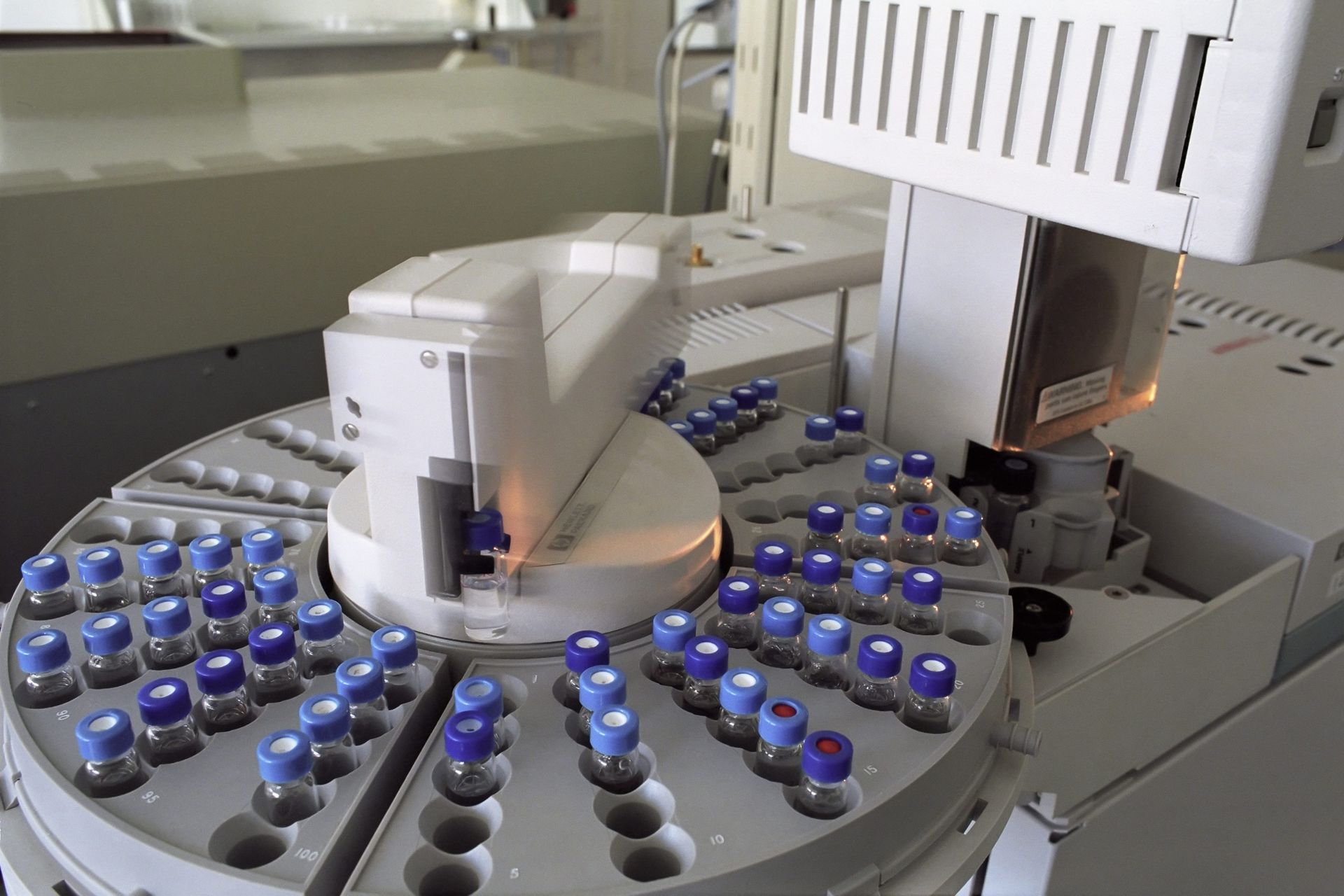
The applicant’s finished-product site then qualifies the supplier under 21 CFR Part 211. Section 211.84 allows a Certificate of Analysis to replace full incoming testing only if at least one specific identity test is performed and the reliability of the supplier’s results is established and periodically checked.
Peptide ANDAs after July 2026
The reference semaglutide injection product is made from a peptide backbone “produced by yeast fermentation” and then chemically modified, according to its prescribing information. Generic versions can be recombinant, synthetic or semi-synthetic, which is why FDA’s guidance on impurities matters so much to API choice.
In May 2021, FDA issued guidance on ANDAs for certain highly purified synthetic peptides that refer to listed drugs of rDNA origin. It named glucagon, liraglutide, nesiritide, teriparatide and teduglutide; new impurities above 0.5% were not acceptable, and those between 0.10% and 0.5% had to be identified, characterised and justified, including through comparative immunogenicity risk assessment.
On 28 July 2026, FDA withdrew that guidance because it “no longer reflects FDA’s current scientific thinking”, published 17 revised draft product-specific guidances (PSGs), and said it plans to revise the general guidance. The revised draft PSG for semaglutide injection (RLD NDA 209637) applies to recombinant, synthetic and semi-synthetic product:
| Element | Draft PSG recommendation (July 2026) |
|---|---|
| Reporting | Report active-ingredient-related impurities above 0.1% of the drug substance |
| Identification | Identify impurities above 0.5% |
| Impurities common with the RLD | Not greater than the RLD level or 1.0%, whichever is greater |
| New impurities | Efforts should be made to reduce them below 1.0% |
| Total impurities | Not greater than the RLD; all impurities above 0.1% summed |
| Higher levels | Do not preclude an ANDA, but are subject to scientific review and justification |
The PSG also recommends comparative characterisation to support active-ingredient sameness and assessment of aggregates and non-peptide impurities as part of the immunogenicity evaluation. For the analytical side, see peptide API impurities and specifications.
Registration, listing and import
- Registration: under 21 CFR 207.17, every foreign establishment that manufactures a drug imported or offered for import into the US must register with FDA.
- US agent: 21 CFR 207.69(b) requires a foreign registrant to designate a single US agent, who must be physically present in the US and helps FDA schedule inspections.
- Annual update and listing: registration is renewed each year between 1 October and 31 December (207.29), and products are listed under 207.41, electronically through eDRLS.
- Import: FDA screens drug entries through its import program and can examine, detain or refuse shipments. Prior notice under 21 CFR 1.277 applies to food, not drugs.
Semaglutide in the US: the patent timeline
FDA’s Orange Book lists US patent 8,129,343 for semaglutide, covering the drug substance and product, with an expiry of 5 December 2031. Novo Nordisk reports US compound patent expiry as 2032. Novo Nordisk has settled patent litigation with several ANDA filers on confidential terms, so no public early-entry date is available. Development work and the generation of data for FDA submissions fall under the safe harbour of 35 U.S.C. 271(e)(1); commercial launch is a separate question for your patent counsel. Our article on semaglutide patent expiry by country compares markets.
Where Winhycare Pharma fits
- Peptide APIs: Semaglutide, Tirzepatide, Retatrutide, Cagrilintide and BPC-157, supplied B2B to licensed pharmaceutical manufacturers and developers with a Certificate of Analysis, and US-DMF / CTD Module 3 documentation support for Semaglutide.
- Peptide CRDMO services: process and analytical development and technology transfer for your own peptide programme.
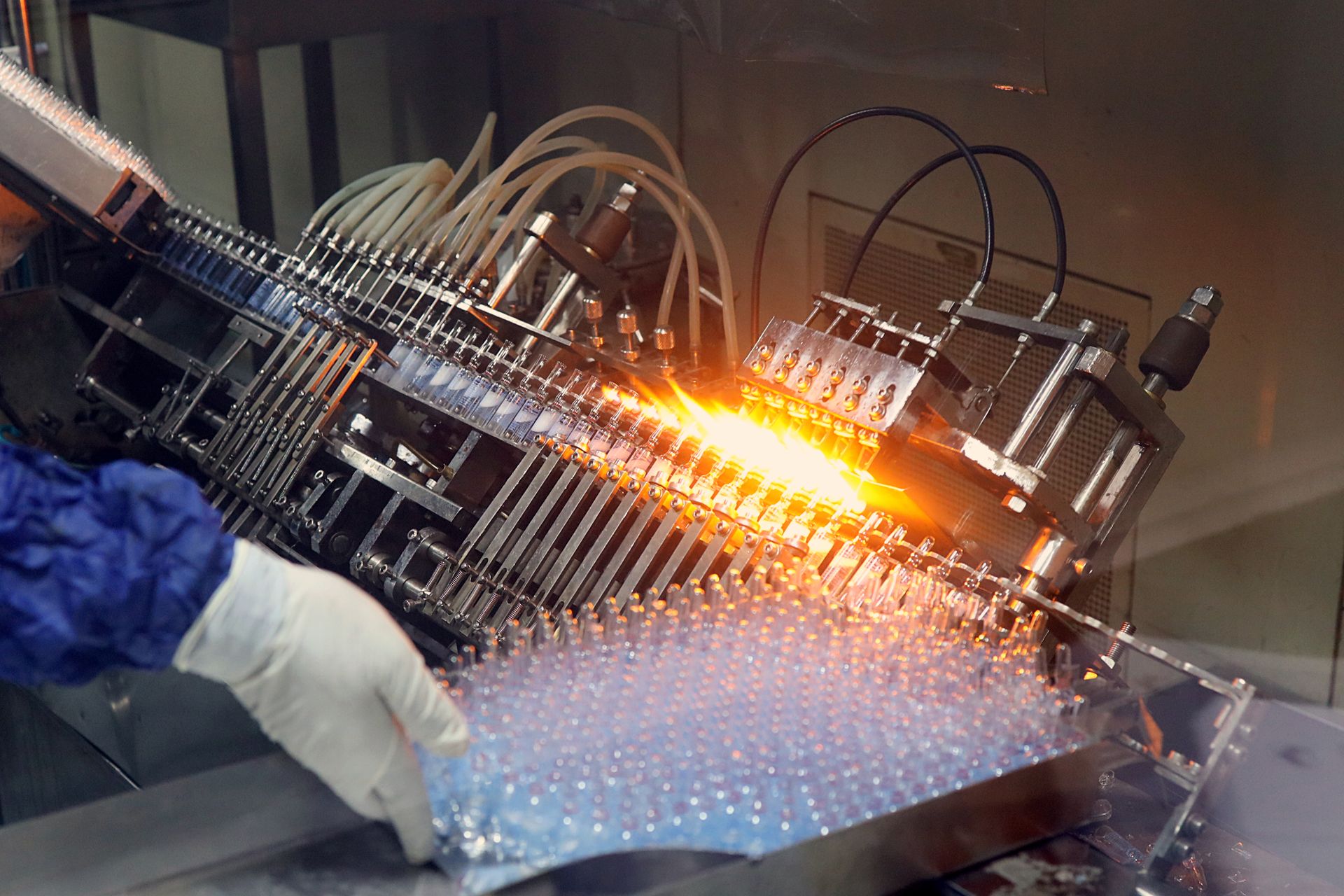
- Peptide lyophilisation and vial filling: peptides and biosimilars lyophilised and filled into vials through our manufacturing partner, starting with engineering or pilot batches.
- Research peptides and custom peptide synthesis: 16 research peptides at >99% purity and custom sequences for universities, research institutes, CROs, diagnostics developers and distributors, supplied for research use only and not as GMP API.
We will tell you plainly which documents exist today for your molecule and target market, and which would need to be generated, before you commit to an audit. Peptide APIs are supplied to licensed manufacturers and developers. Research-grade peptides are supplied for research use only and cannot be qualified as the active substance of a medicinal product.
How to start
- Send an enquiry with the molecule, quantity, intended use (laboratory research, development, clinical or commercial) and the documents your quality or regulatory team needs.
- Sign a mutual NDA.
- Review technical and quality documentation and complete your supplier questionnaire.
- Evaluate samples, or run a pilot for lyophilisation projects.
- Audit the site with your QA team or a contracted auditor.
- Agree the quality agreement and supply terms.
Frequently asked questions
Does the FDA approve API suppliers or Drug Master Files?
No. Under 21 CFR 314.420, FDA ordinarily neither independently reviews nor approves or disapproves submissions to a DMF. A Type II DMF is reviewed when an application such as an ANDA or NDA references it, and the API manufacturing site can be inspected as part of that review.
What has to happen before an ANDA can reference a Type II API DMF?
The DMF holder pays the one-time GDUFA DMF fee and the DMF passes FDA’s completeness assessment, after which it appears on FDA’s list as available for reference. The FY2027 fee, effective 1 October 2026, is $109,899. The holder then issues a letter of authorisation to the applicant.
Does FDA’s 2021 guidance on synthetic peptide ANDAs still apply?
No. On 28 July 2026 FDA withdrew the May 2021 guidance on ANDAs for highly purified synthetic peptides referencing rDNA-origin products, saying it no longer reflects current scientific thinking, and published 17 revised draft product-specific guidances, including one for semaglutide injection. FDA has said it plans to revise the guidance.
What impurity thresholds does FDA’s draft semaglutide guidance set?
Report active-ingredient-related impurities above 0.1% and identify them above 0.5%. Impurities also found in the reference product should not exceed the reference level or 1.0%, whichever is greater; new impurities should be reduced below 1.0%; and total impurities should not exceed the reference product. Higher levels do not by themselves preclude an ANDA but are subject to scientific review.
Does a foreign API manufacturer need to register with FDA?
Yes. Under 21 CFR Part 207, foreign establishments that manufacture drugs, including APIs, imported or offered for import into the US must register, list their products, designate a US agent and update registration annually between 1 October and 31 December.
What does Winhycare Pharma supply to US buyers?
Peptide APIs (Semaglutide, Tirzepatide, Retatrutide, Cagrilintide and BPC-157) supplied B2B to licensed pharmaceutical manufacturers and developers; peptide CRDMO services; and lyophilisation and vial filling of peptides and biosimilars through our manufacturing partner. Which documents are available for a given molecule and market is confirmed during supplier qualification. Our 16 research peptides and custom peptides are supplied for research use only; that research-grade material is not GMP API and cannot be used in a medicinal product.
Can universities, CROs and diagnostics companies buy from Winhycare Pharma?
Yes. Universities, hospital and biomedical research institutes, CROs, analytical laboratories, diagnostics developers and research-peptide distributors can buy research-grade peptides for laboratory research, with QC documentation. DMF, registration and CGMP requirements apply when a peptide becomes the API of a drug or clinical-trial product, which needs GMP API.
Sources
- 21 CFR 314.420, Drug master files, eCFR
- Drug Master Files (DMFs), US Food and Drug Administration
- List of Drug Master Files (DMFs), including Type II API DMFs available for reference, US Food and Drug Administration
- Completeness Assessments for Type II API DMFs Under GDUFA, guidance for industry, US Food and Drug Administration
- Generic Drug User Fee Rates for Fiscal Year 2027 (FR Doc. 2026-15343), Federal Register
- GDUFA III Drug Master File review enhancements, US Food and Drug Administration
- Q7 Good Manufacturing Practice Guidance for Active Pharmaceutical Ingredients (September 2016), US Food and Drug Administration
- 21 U.S.C. 351, Adulterated drugs and devices, Legal Information Institute, Cornell Law School
- 21 CFR Part 211, Current good manufacturing practice for finished pharmaceuticals, eCFR
- 21 CFR Part 207, Registration of producers of drugs and listing of drugs, eCFR
- Electronic Drug Registration and Listing System (eDRLS), US Food and Drug Administration
- 21 CFR 1.277, scope of prior notice (food only), eCFR
- FDA Import Program, US Food and Drug Administration
- FDA publishes revised draft product-specific guidances for certain generic peptide products (28 July 2026), US Food and Drug Administration
- Draft product-specific guidance: semaglutide subcutaneous solution, RLD NDA 209637 (revised July 2026), US Food and Drug Administration
- FDA presentation on the 2021 guidance for synthetic peptide ANDAs referencing rDNA-origin products, US Food and Drug Administration
- Prescribing information for the semaglutide injection reference product (section 11, description), DailyMed, US National Library of Medicine
- Orange Book data files (patent listing for US 8,129,343), US Food and Drug Administration
- 21 CFR Part 312, Investigational New Drug Application, eCFR
- Current Good Manufacturing Practice for Phase 1 Investigational Drugs (guidance), US Food and Drug Administration
- Contract Manufacturing Arrangements for Drugs: Quality Agreements (guidance), US Food and Drug Administration
- 21 CFR 809.10, labeling for in vitro diagnostic products, eCFR
- Novo Nordisk Annual Report 2025 (compound patent expiry table, p. 25), Novo Nordisk A/S
- Novo Nordisk Form 20-F for the year ended 31 December 2025 (patent litigation and settlements), US Securities and Exchange Commission
- 35 U.S.C. 271(e)(1), safe harbour for development and submission of information to FDA, Legal Information Institute, Cornell Law School
This page summarises public regulatory texts for B2B buyers. It is not legal advice; confirm requirements with your regulatory affairs team and the competent authority.