In short
- Buyers range from pharmaceutical and biotech manufacturers (GMP API for medicines and clinical trials) to CDMOs, universities, research institutes, CROs, diagnostics developers and research-peptide distributors (research-grade peptides for laboratory work). The rules follow the end use, not the type of buyer.
- Active substances imported into the EU must be made under GMP at least equivalent to EU standards (EU GMP Part II, aligned with ICH Q7) and, for India, arrive with a written confirmation from CDSCO.
- The marketing authorisation dossier needs the active substance data: in full, through an ASMF, or via a CEP where a Ph. Eur. monograph exists. There is no CEP for semaglutide today.
- The EU manufacturing authorisation holder must audit the API manufacturer, and its Qualified Person signs a declaration of GMP compliance.
- EMA’s synthetic peptides guideline has applied since 1 June 2026, with peptide impurity thresholds of 0.1% (report), 0.5% (identify) and 1.0% (qualify).
- Winhycare Pharma supplies peptide APIs (Semaglutide, Tirzepatide, Retatrutide, Cagrilintide and BPC-157), research peptides and custom synthesis, and lyophilisation and vial filling through its manufacturing partner. Document availability is confirmed per molecule and market during qualification.
Who buys peptides from India, and what each needs
The requirements depend on what the peptide will be used for. Once a peptide becomes the active substance of a medicine or of a clinical-trial product, the full GMP chain described below applies. For laboratory research it does not, but the buyer still needs reliable identity, purity and documentation.
| Buyer | Typical use | Grade | Key requirements |
|---|---|---|---|
| Pharmaceutical manufacturers and generic developers | Active substance of an authorised medicine; development batches for a generic or hybrid application | GMP API | Written confirmation, EU GMP Part II, ASMF or full Module 3.2.S data, supplier audit and QP declaration (covered in this guide) |
| Biotech and drug-development companies | Investigational medicinal products for clinical trials | GMP API | Clinical Trials Regulation (EU) No 536/2014, GMP for investigational medicinal products (Delegated Regulation (EU) 2017/1569) and certification of each batch by a Qualified Person |
| CDMOs, CMOs and fill-finish companies | API sourced for a client’s product, or a client’s API taken into vials | GMP API or client-supplied | The client’s specification and quality agreement; EU GMP Part I and Annex 1 for sterile filling |
| Veterinary medicine manufacturers | Active substance of a veterinary medicine | GMP API | Regulation (EU) 2019/6 and its own GMP and import rules for active substances |
| Universities, hospital and biomedical research institutes | In-vitro and preclinical laboratory research | Research grade (RUO) | Certificate of analysis with identity (mass spectrometry) and purity (HPLC), counter-ion and peptide content where needed, and an end-use statement |
| CROs and analytical laboratories | Method development, impurity identification, in-house working standards | Research grade or custom | Full characterisation data; official pharmacopoeial reference standards still come from EDQM or USP |
| Diagnostics and assay developers | Peptides as antigens, calibrators or controls | Research grade or custom | Supplier qualification by the device manufacturer under the IVD Regulation (EU) 2017/746, and lot-to-lot consistency |
| Research-peptide brands and distributors | Resale to laboratories, often in lyophilised vials | Research grade (RUO) | Batch certificates of analysis, “research use only, not for human or veterinary use” labelling, and compliance with national rules on what may be sold and how |
Research-grade material cannot be upgraded later: a peptide bought for laboratory research cannot become the active substance of a medicine or a clinical-trial product. Tell us the end use in your first enquiry so we quote the right grade and documents.
What an EU pharmaceutical buyer needs in place
Four obligations sit between an Indian API manufacturer and an EU marketing authorisation. They fall on different parties, and a missing one stops the supply chain regardless of how good the material is.
| Requirement | Legal basis | Who holds it | What to ask the supplier for |
|---|---|---|---|
| GMP at least equivalent to EU GMP | Art 46b(2)(a), Directive 2001/83/EC; EU GMP Part II / ICH Q7 | API manufacturer | Site master file, GMP inspection history, agreement to audits |
| Written confirmation | Art 46b(2)(b) | Issued by CDSCO to the manufacturer | Current confirmation naming the site and the active substance |
| Active substance documentation | Module 3.2.S of the dossier; ASMF guideline; CEP procedure | MA applicant, with the ASMF holder | ASMF Applicant’s Part and letter of access, or full 3.2.S data |
| QP declaration based on audit | Art 46(f); EMA QP declaration template | QP of each EU manufacturing authorisation holder using the API | Audit access and a quality agreement |
The EU importer of the active substance also has to be registered with its national competent authority at least 60 days before starting the activity (Article 52a), and registrations are published in EudraGMDP.
Written confirmation for active substances made in India
Since 2 July 2013, Article 46b(2) of Directive 2001/83/EC has allowed active substances to be imported only if they are made to GMP standards at least equivalent to the Union’s and are accompanied by a written confirmation from the competent authority of the exporting country. The confirmation states that the exporting authority applies equivalent GMP standards, that the plant is subject to regular, strict and transparent controls including repeated and unannounced inspections, and that non-compliance findings will be reported to the Union without delay. The Commission publishes a template for it.
Countries assessed as equivalent are listed under Article 111b and need no written confirmation. The current list (Implementing Decision 2012/715/EU as amended) has nine entries: Australia, Brazil, Canada, Israel, Japan, the Republic of Korea, Switzerland, Taiwan and the United States. India is not on it, so APIs made in India need a written confirmation from the Central Drugs Standard Control Organisation (CDSCO).
Article 46b(4) provides a narrow waiver: exceptionally, and where needed to ensure availability of medicines, a Member State that has inspected the plant may waive the confirmation for no longer than the validity of its GMP certificate. It is not a routine sourcing route.
Practical checks: the confirmation must name the specific manufacturing site and the specific active substance, and it must be valid on the date of import. A written confirmation is a statement about the exporting authority’s oversight; it is not a substitute for your own audit.
GMP: EU GMP Part II and ICH Q7
EU GMP Part II sets the basic requirements for active substances used as starting materials. It began as Annex 18 to the EU GMP Guide in 2000, reflecting the EU’s adoption of ICH Q7. For a synthetic peptide, GMP applies from the introduction of the API starting materials, and EMA’s synthetic peptides guideline states that ICH Q11 principles on starting material selection apply. Protected L-amino acid derivatives are generally acceptable as starting materials; short peptide fragments may be acceptable when justified.
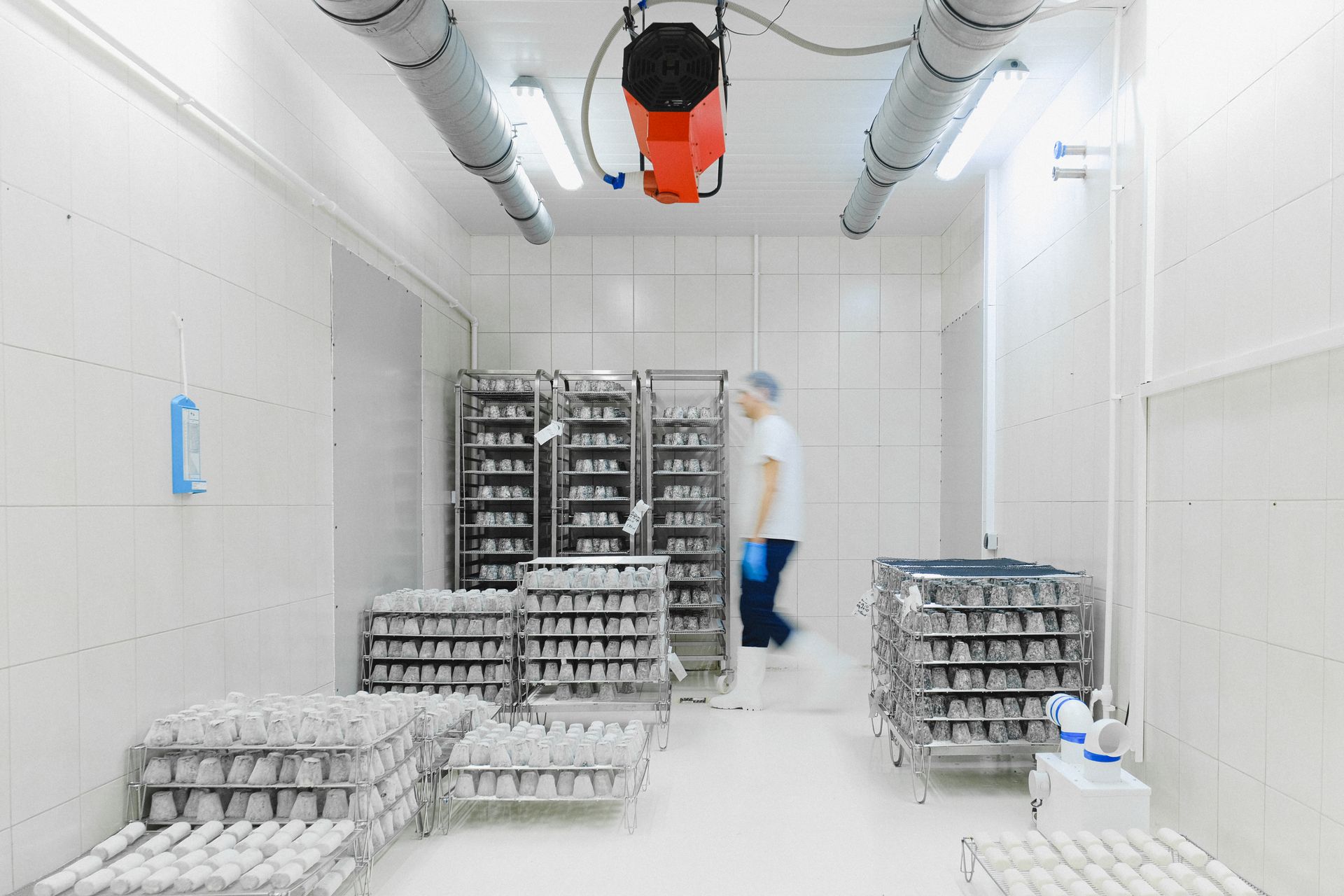
Filling a peptide into vials for a medicinal product is a finished-product step and falls under EU GMP Part I and, for sterile products, Annex 1. That distinction matters if you plan to combine API supply with fill-finish or lyophilisation by the same partner.
Choosing the dossier route: full data, ASMF or CEP
| Route | When it is available | What the MA applicant sees | Notes |
|---|---|---|---|
| Full data in Module 3.2.S | Always | Everything | Requires the manufacturer to share confidential process details with you |
| Active Substance Master File (ASMF) | Any active substance | The Applicant’s Part only | The Restricted Part (process know-how) goes straight to the authority; a letter of access links the ASMF to your application |
| Certificate of Suitability (CEP) | Only where a Ph. Eur. monograph exists | The CEP and its annexes | EDQM assesses the data; the CEP replaces most of 3.2.S |
The ASMF procedure is set out in EMA guideline CHMP/QWP/227/02 Rev 4. CEPs are issued by the EDQM against European Pharmacopoeia monographs, so they cannot exist for a substance without one. A search of the EDQM certification database for semaglutide returned no record on 11 October 2026, which leaves the ASMF or full data as the routes for semaglutide today.
The QP declaration and supplier audits
Article 46(f) of Directive 2001/83/EC requires every manufacturing authorisation holder to use only active substances manufactured in accordance with GMP and distributed in accordance with GDP, and to verify this by audits at the manufacturing and distribution sites. The Qualified Person confirms it in the QP declaration, using the EMA template, which records whether the audit was carried out on site, when, and by whom. Third-party audits are permitted under the conditions set out in EMA’s guidance and Q&A.
For buyers, the consequence is simple: an API supplier that will not accept audits by you or your contracted auditor cannot be used in an EU medicinal product. Ask about audit access at the first conversation, not after technical evaluation.
Synthetic peptides: what EMA expects
EMA’s guideline on the development and manufacture of synthetic peptides (EMA/CHMP/CVMP/QWP/367182/2025) was adopted in December 2025 and came into effect on 1 June 2026. Its main points for API buyers:
- Synthetic peptides are fully or partly excluded from ICH Q3A/B, Q6A/B and M7, so peptide-specific expectations apply instead.
- Peptide-related impurities follow the Ph. Eur. general monograph thresholds: reported above 0.1%, identified above 0.5% and qualified above 1.0%.
- The specification typically covers identity, purity, high-molecular-weight impurities such as aggregates, assay, counter-ion content, residual TFA, water, residual solvents, endotoxins and microbiological purity.
- For a synthetic version of a recombinant reference product, the biosimilar pathway is not available. EMA expects a full comparison of the peptide-related impurity profile at 0.1–0.5% against the EU reference product, with a quantification limit of 0.1%.
For semaglutide specifically, EMA has published a draft product-specific bioequivalence guidance (EMA/106257/2026, consultation to 31 October 2026) stating that semaglutide substance sameness should be shown before a bioequivalence study. See our article on peptide API impurities and specifications for the analytical detail.
United Kingdom and Switzerland
Great Britain kept the written-confirmation model after leaving the EU. Regulation 450 of the Human Medicines Regulations 2012 requires a written confirmation from the exporting country’s competent authority unless the manufacturer is in an approved country. The MHRA list of approved countries for active substances covers the EU/EEA, Australia, Brazil, Israel, Japan, the Republic of Korea, Switzerland and the USA. India is not on it, so a CDSCO written confirmation is needed for GB imports as well.
Switzerland is on the EU’s Article 111b list, so Swiss-made APIs need no written confirmation for EU import. Swiss rules on importing active substances into Switzerland are set by Swissmedic; confirm the current requirements with Swissmedic or your Swiss regulatory contact.
Semaglutide in Europe: the patent timeline
Semaglutide’s compound protection in Europe runs to 2031 through supplementary protection certificates, according to Novo Nordisk’s 2025 annual report. Commercial supply of generic semaglutide into EU markets therefore waits for expiry, but development and regulatory work for a generic application is covered in principle by the Bolar provision of Article 10(6) of Directive 2001/83/EC. National implementations differ, particularly on whether third-party API supply for that work is covered, so take patent advice for each market. Our article on semaglutide patent expiry by country sets out the dates.
Where Winhycare Pharma fits
- Peptide APIs: Semaglutide, Tirzepatide, Retatrutide, Cagrilintide and BPC-157, supplied B2B to licensed pharmaceutical manufacturers and developers with a Certificate of Analysis, and CTD Module 3 documentation support for Semaglutide.
- Peptide CRDMO services: process and analytical development and technology transfer for your own peptide programme.
- Peptide lyophilisation and vial filling: peptides and biosimilars lyophilised and filled into vials through our manufacturing partner, starting with engineering or pilot batches.
- Research peptides and custom peptide synthesis: 16 research peptides at >99% purity and custom sequences for universities, research institutes, CROs, diagnostics developers and distributors, supplied for research use only and not as GMP API.
We will tell you plainly which documents exist today for your molecule and target market, and which would need to be generated, before you commit to an audit. Peptide APIs are supplied to licensed manufacturers and developers. Research-grade peptides are supplied for research use only and cannot be qualified as the active substance of a medicinal product.
How to start
- Send an enquiry with the molecule, quantity, target market, intended use (laboratory research, development, clinical or commercial) and the documents your QP, quality or regulatory team needs.
- Sign a mutual NDA.
- Review technical and quality documentation and complete your supplier questionnaire.
- Evaluate samples, or run a pilot for lyophilisation projects.
- Audit the site with your QA team or a contracted auditor.
- Agree the quality agreement and supply terms.
Frequently asked questions
Do active substances imported from India into the EU need a written confirmation?
Yes, in general. Article 46b(2) of Directive 2001/83/EC, inserted by Directive 2011/62/EU, requires imported active substances to be accompanied by a written confirmation from the competent authority of the exporting country. India is not on the Article 111b list of exempt countries, so the confirmation comes from India’s CDSCO. Article 46b(4) allows a limited, time-bound waiver where an EU authority has inspected the site.
Can we get a CEP for semaglutide?
Not at present. A CEP is granted against a European Pharmacopoeia monograph, and a search of the EDQM certification database for semaglutide returned no record on 11 October 2026. For semaglutide, the active substance data is filed through the ASMF procedure or in full in Module 3.2.S.
Who is responsible for confirming GMP at the API manufacturer?
The manufacturing authorisation holder that uses the active substance. Article 46(f) of Directive 2001/83/EC requires it to use only active substances made under GMP and distributed under GDP, verified by audits at the manufacturing and distribution sites. Its Qualified Person signs the QP declaration that accompanies the marketing authorisation application.
Which impurity thresholds apply to a synthetic peptide API in the EU?
Synthetic peptides are outside the scope of ICH Q3A. EMA’s synthetic peptides guideline, in effect since 1 June 2026, points to the Ph. Eur. general monograph Substances for Pharmaceutical Use: peptide-related impurities are reported above 0.1%, identified above 0.5% and qualified above 1.0%. For a synthetic version of a recombinant reference product, EMA expects a full impurity comparison at 0.1–0.5%.
Do UK buyers need a written confirmation too?
Yes, for Great Britain. Regulation 450 of the Human Medicines Regulations 2012 requires a written confirmation from the exporting country’s competent authority unless the manufacturer is in an approved country. The MHRA list covers the EU/EEA, Australia, Brazil, Israel, Japan, the Republic of Korea, Switzerland and the USA; India is not on it.
What does Winhycare Pharma supply to European buyers?
Peptide APIs (Semaglutide, Tirzepatide, Retatrutide, Cagrilintide and BPC-157) supplied B2B to licensed pharmaceutical manufacturers and developers; peptide CRDMO services; and lyophilisation and vial filling of peptides and biosimilars through our manufacturing partner. Which documents are available for a given molecule and market is confirmed during supplier qualification. Our 16 research peptides and custom peptides are supplied for research use only; that research-grade material is not GMP API and cannot be used in a medicinal product.
Can research institutes, CROs and diagnostics companies buy from Winhycare Pharma?
Yes. Universities, hospital and biomedical research institutes, CROs, analytical laboratories, diagnostics developers and research-peptide distributors can buy research-grade peptides for laboratory research, with QC documentation. The written confirmation, ASMF and QP requirements apply only when a peptide becomes the active substance of a medicine or clinical-trial product, which needs GMP API.
Sources
- Directive 2011/62/EU (falsified medicines), amending Directive 2001/83/EC, EUR-Lex
- Directive 2001/83/EC on the Community code relating to medicinal products for human use, EUR-Lex
- Implementing Decision 2012/715/EU, list of third countries under Article 111b (consolidated 30.11.2023), EUR-Lex
- Template for the written confirmation for active substances exported to the EU, European Commission
- Central Drugs Standard Control Organisation (India), CDSCO, Government of India
- EudraLex Volume 4, EU GMP guidelines (Part II: active substances), European Commission
- ICH Q7: Good Manufacturing Practice Guide for Active Pharmaceutical Ingredients, ICH
- Guideline on Active Substance Master File procedure (CHMP/QWP/227/02 Rev 4), European Medicines Agency
- Certification of suitability to the monographs of the European Pharmacopoeia, EDQM, Council of Europe
- EDQM certification database, search for “semaglutide” (no record found, 11 October 2026), EDQM
- QP declaration concerning GMP compliance of active substance manufacture: template and guidance, European Medicines Agency
- EudraGMDP database, European Medicines Agency
- Guideline on the development and manufacture of synthetic peptides (EMA/CHMP/CVMP/QWP/367182/2025), European Medicines Agency
- Product-specific bioequivalence guidance (including the 2026 draft for semaglutide, EMA/106257/2026), European Medicines Agency
- List of approved countries for authorised human medicines (section 4: active substances), MHRA, GOV.UK
- Swissmedic, Swiss Agency for Therapeutic Products, Swissmedic
- Regulation (EU) No 536/2014 on clinical trials on medicinal products for human use, EUR-Lex
- Commission Delegated Regulation (EU) 2017/1569 on GMP for investigational medicinal products, EUR-Lex
- Regulation (EU) 2019/6 on veterinary medicinal products, EUR-Lex
- Regulation (EU) 2017/746 on in vitro diagnostic medical devices, EUR-Lex
- Novo Nordisk Annual Report 2025 (compound patent expiry table, p. 25), Novo Nordisk A/S
This page summarises public regulatory texts for B2B buyers. It is not legal advice; confirm requirements with your regulatory affairs team and the competent authority.