Winhycare Pharma · Peptides & biosimilars
Peptide Lyophilisation (Lyophilization) & Vial Filling Services
Lyophilisation (freeze-drying) and vial filling of peptides and biosimilars at WHO-GMP certified manufacturing partners in India: from formulation and cycle development through engineering and pilot batches, for research and development, and for commercial supply of approved products subject to regulatory approvals.
By Kareem Ahmed Basha, Director & Chief Scientific Officer · Reviewed by Nisar Mohammed · Updated
WHO-GMPCertified manufacturing partners
What is pharmaceutical lyophilisation?
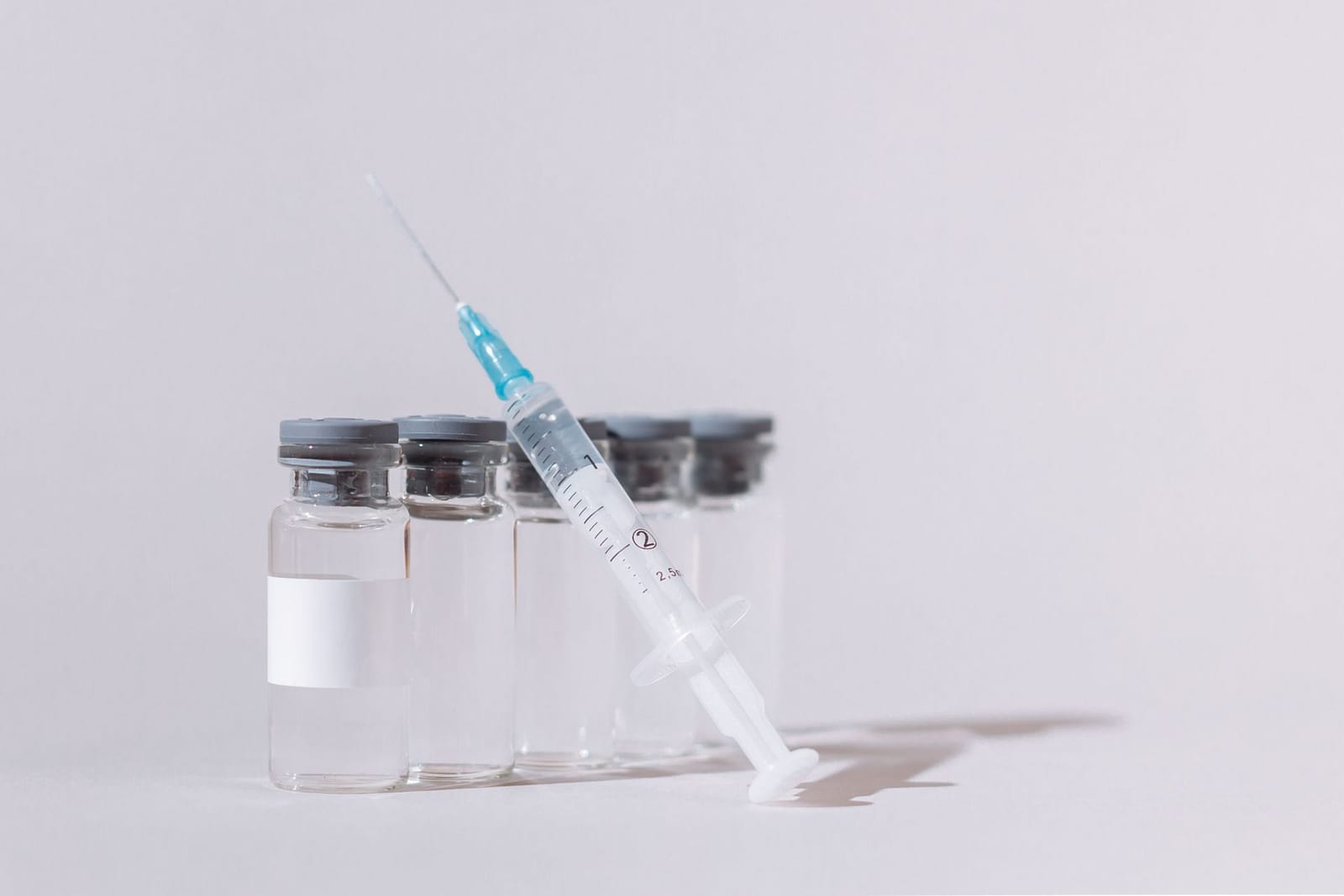
Lyophilisation, also called freeze-drying, removes water from a frozen product under vacuum: the ice turns directly into vapour (primary drying), and remaining bound water is then removed at a higher shelf temperature (secondary drying). The result is a dry solid, a lyophilisate, stored and shipped in sealed vials and reconstituted before use. Many peptides and biologics are unstable in solution, which is why they are supplied this way.
Winhycare Pharma is a service partner for lyophilisation and vial filling of peptides and biosimilars, supporting biotechnology, pharmaceutical and research organisations. Through our manufacturing partner in India we support research and development programmes, and commercial manufacturing of approved products subject to applicable regulatory approvals, manufacturing licences and site authorisations. Services are tailored to your product, from formulation and cycle development to commercial campaigns.
How peptide lyophilisation works, in under two minutes
Read the transcript
Many peptides and biosimilars are unstable in solution. Lyophilisation solves that. The product is filled into vials and frozen. Under vacuum, the ice turns straight to vapour. Then the remaining bound water is removed. What's left is a stable, dry cake, sealed in the vial and ready to reconstitute. Winhycare Pharma lyophilises and fills peptides and biosimilars into vials, at WHO-GMP certified manufacturing partners in India. We develop the freeze-drying cycle for your formulation. We control freezing and drying, optimise residual moisture and reconstitution, and handle nitrogen flushing, stoppering, crimp sealing and documentation. Already have your peptide? Send it to us, and we'll lyophilise it as a standalone service. Or source the peptide and the lyophilisation together, in one project. Every project starts with a technical scope and cycle development, then moves through engineering and pilot batches, to commercial campaigns for approved products. Research-use-only material carries the right designation, and commercial work follows the applicable approvals. We work with companies across Europe, the United Kingdom and the United States. For a proposal, send us your product details, intended use, quantity per vial, batch size, testing needs and timeline. Winhycare Pharma. Peptide and biosimilar lyophilisation, from cycle to vial.
How material moves through the service
- Input
Your product
Your peptide or biosimilar, specification and target presentation.
- Process
Lyophilisation & vial filling
Cycle developed for your product; filling, stoppering and sealing through our manufacturing partners.
- Output
Lyophilised vials
Packaged to your specification, with supporting documentation.
Bring your own peptide
Already have your peptide or biosimilar? We can lyophilise and fill it into vials as a standalone service, without you buying the peptide from us. Share your specification and target presentation first; we confirm the import documents for shipping your material to India and the quantity needed for the engineering batch before you ship.
What the service is built on
- Research peptide brands & distributors
- Lyophilisation and vial filling of research peptides, handled with the appropriate Research Use Only designation.
- Biotech & pharmaceutical companies
- Development programmes and, subject to regulatory approvals and site authorisation, commercial manufacturing of approved products.
- Confidential project handling
- We define the technical and commercial scope around your product’s characteristics, quality requirements and intended application.
- WHO-GMP certified partners
- Processing at WHO-GMP certified manufacturing partners in India, with competitive India-based costs and technical support from enquiry to delivery.
Lyophilisation and vial filling capabilities
- 01
Lyophilisation and vial filling of peptides and biosimilars
Freeze-drying and filling of your product into vials, to the configuration you specify.
- 02
Lyophilisation cycle development and optimisation
A freeze-drying cycle developed and optimised for your product, not taken from a generic recipe.
- 03
Engineering, pilot and commercial batch processing
Start with engineering or pilot batches; commercial campaigns follow for approved products.
- 04
Controlled freezing and drying parameters
Freezing and drying conditions set and controlled for your formulation.
- 05
Residual moisture and reconstitution optimisation
Cycle work aimed at the residual moisture and reconstitution behaviour your product needs.
- 06
Nitrogen flushing and handling, where applicable
Nitrogen flushing and handling for products that require it.
- 07
Product-specific batch sizes and vial configurations
Batch sizes and vial formats defined for your project.
- 08
Stoppering, crimp sealing and packaging
Vial closure, crimp sealing and customised primary and secondary packaging.
- 09
Analytical testing, qualification and documentation
Coordination of analytical testing, qualification and supporting documentation, including batch records.
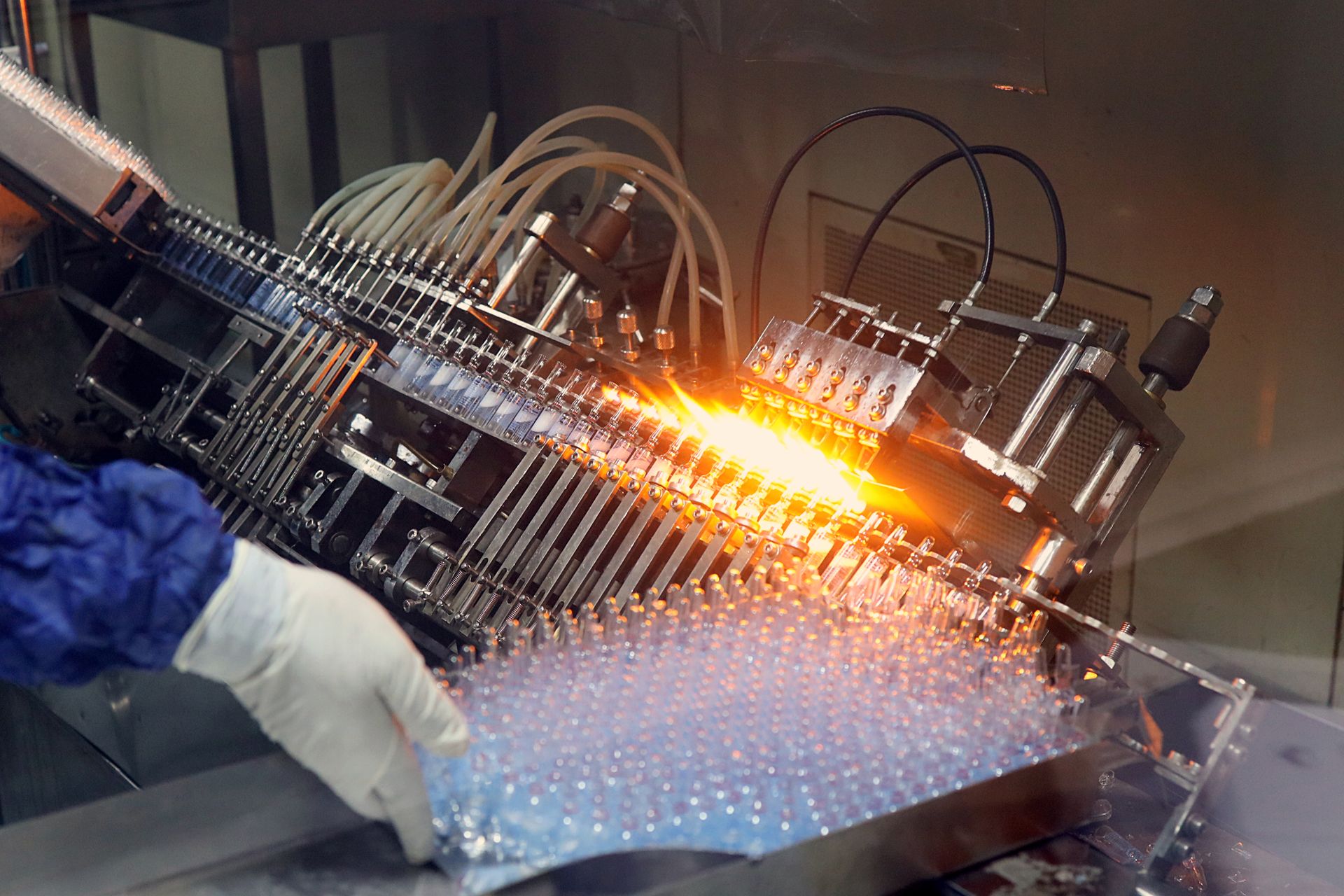
Lyophilisation of biosimilars and other biologics
Alongside peptides, we lyophilise and fill biosimilars into vials through our manufacturing partners. Many biological medicines, including some monoclonal antibodies, enzymes and hormones, are supplied as lyophilised powder because the protein is more stable dry than in solution.
Proteins are sensitive to freezing and drying stresses, so the cycle is developed around the formulation: lyoprotectants such as sucrose or trehalose, the collapse temperature, residual moisture, reconstitution time and aggregation. For a biosimilar, the presentation is normally matched to the reference medicine, and EMA expects any difference in formulation or presentation to be justified.
Biosimilar and protein lyophilisation →From cycle development to commercial campaigns
- Step 1
Project discussion and technical scope
- Step 2
Formulation and cycle development
- Step 3
Engineering batch
- Step 4
Pilot processing
- Step 5
Commercial campaign (approved products)
What we need to prepare a proposal
We first work to understand your product’s characteristics, quality requirements and intended application, then define the technical and commercial scope. Most projects begin with engineering or pilot batches before larger campaigns.
Email your project detailsPlease share
- Product name, specifications and regulatory approval status
- Intended use: research, development or commercial supply
- Target quantity per vial and proposed formulation
- Batch quantity and preferred vial configuration
- Analytical, release testing and documentation requirements
- Target market and expected project timeline
Mutual NDAs can be signed before technical data is shared.
Research, clinical and commercial supply
Our manufacturing partners are WHO-GMP certified. WHO-GMP certification is not an EU GMP certificate or an FDA approval: for clinical or commercial supply, the manufacturing site must also meet the requirements of the target market and be named in the relevant application.
European Union: clinical-trial material is made under GMP for investigational medicinal products and released by a Qualified Person; for authorised medicines made outside the EU, each imported batch is tested in the EU and certified by a Qualified Person, as there is no EU and India mutual recognition agreement. Lyophilisation for European companies.
United States: for clinical or commercial supply, the manufacturing site must meet FDA current good manufacturing practice (21 CFR Parts 210 and 211) and is named in the application, where FDA may inspect it.
Further reading
- Peptide lyophilisation guide: freezing, primary and secondary drying, excipients and vials
- How to qualify a peptide API supplier (EU and US checklist)
- Lyophilisation for European companies: countries, regulators and requirements
- Biosimilar and protein lyophilisation
- Sourcing peptides from India for Europe
- Sourcing peptide API from India for the USA
- Peptide CRDMO services and peptide APIs
Frequently asked questions
What does the lyophilisation and vial filling service include?
Lyophilisation and vial filling of peptides and biosimilars; cycle development and optimisation; engineering, pilot and commercial batch processing; controlled freezing and drying parameters; residual moisture and reconstitution optimisation; nitrogen flushing where applicable; product-specific batch sizes and vial configurations; stoppering, crimp sealing and packaging; and coordination of analytical testing, qualification and documentation.
Do you lyophilise biosimilars as well as peptides?
Yes. The service covers lyophilisation and vial filling of peptides and biosimilars. Commercial processing of approved products is subject to applicable regulatory approvals, manufacturing licences and site authorisations.
Can you process research-use-only (RUO) peptides?
Yes. Research-use-only materials are handled with the appropriate RUO designation. They are not for human or veterinary use.
Can you support commercial manufacturing?
Through our manufacturing partners we support commercial manufacturing of approved products, subject to applicable regulatory approvals, manufacturing licences and site authorisations. Each commercial project is assessed separately against the relevant regulatory and quality requirements.
Where is the processing carried out?
Projects are managed by Winhycare Pharma in Hyderabad, India, and processed at WHO-GMP certified manufacturing partners in India.
Can we bring our own peptide for lyophilisation only?
Yes. If you already have your peptide or biosimilar, we can lyophilise and fill it into vials as a standalone service. You do not need to buy the peptide from us; send us your material, specification and target presentation.
What do you need from us to prepare a proposal?
Product name, specifications and regulatory approval status; Intended use: research, development or commercial supply; Target quantity per vial and proposed formulation; Batch quantity and preferred vial configuration; Analytical, release testing and documentation requirements; Target market and expected project timeline.
Can you also supply the peptide?
Winhycare Pharma supplies a range of research peptides for research use only, and selected peptide APIs to licensed manufacturers. Supplying the peptide and lyophilising it into vials can be discussed together in one project.
Discuss a lyophilisation project
Winhycare Pharma, Hyderabad, India. Tell us about your peptide or biosimilar and we will prepare a proposal.
- Kareem Ahmed Basha, Director & Chief Scientific Officer
[email protected] - Nisar Mohammed, Founder & Managing Director
[email protected] - General enquiries
[email protected] - WhatsApp
+91 88848 99909
More from Winhycare Pharma · Peptide APIs
Products & services
- Peptide APIs & CMO services
- Research peptides (RUO), >99% purity
- GLP-1 research peptides
- Semaglutide API supplier
- Custom peptide synthesis
- Peptide lyophilisation (lyophilization) services
- Biosimilar and protein lyophilisation
- Lyophilisation for European companies
- Peptide CDMO & contract manufacturing
- Peptide API supplier for Europe
- Peptide API supplier for the USA
Guides