Isolation Gown vs Surgical Gown: What Is the Difference, and Which Do You Need?
Isolation gown vs surgical gown: FDA classes, critical zones, AAMI PB70 levels, EN 13795 and which gown suits which task, for Saudi and GCC hospitals.
Published · 8 min read
Key facts
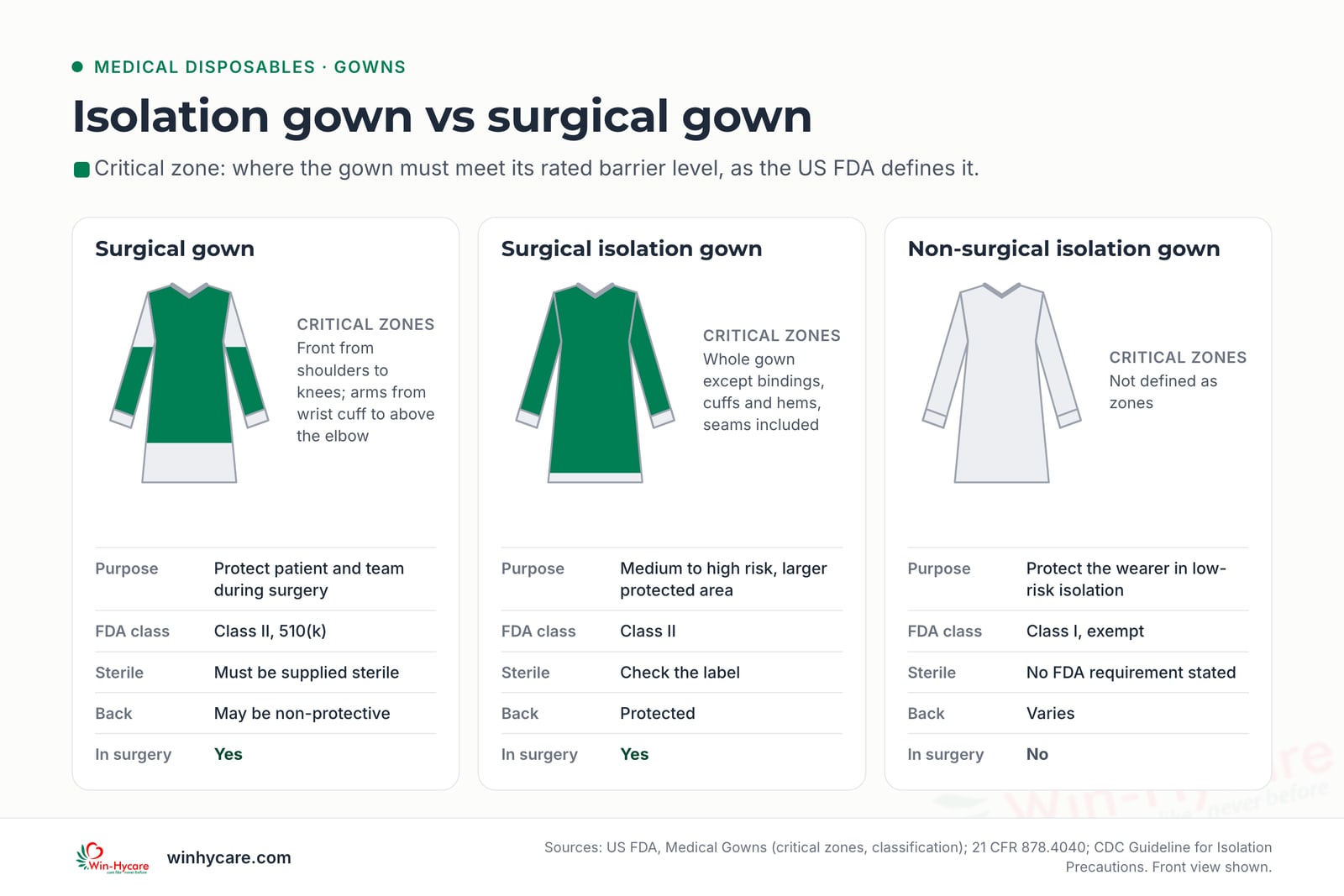
- A surgical gown is worn during surgery to protect both the patient and the surgical team. The US FDA regulates it as a Class II device that must be supplied sterile, with critical zones on the front and sleeves.
- An isolation gown protects the wearer during patient care. Non-surgical isolation gowns are FDA Class I devices for low or minimal-risk situations and must not be worn for surgery or invasive procedures.
- A surgical isolation gown sits between the two: Class II, with every area except bindings, cuffs and hems treated as a critical zone.
- ANSI/AAMI PB70 rates gowns from Level 1 (minimal risk) to Level 4 (high risk); in Europe and many GCC tenders, surgical gowns are specified to EN 13795-1, now in its 2025 edition.
- CDC guidance: wear an isolation gown when contact with blood or body fluids is expected, and on entering a Contact Precautions room.
A surgical gown is a sterile gown worn during surgery to protect both the patient and the surgical team, with its barrier concentrated on the front and sleeves. An isolation gown is worn during patient care to protect the wearer from contact with blood, body fluids and contaminated surfaces, and is usually non-sterile. The two are regulated, tested and priced differently, and a hospital needs both. Our range of surgical and isolation gowns covers each type.
The confusion is understandable. Suppliers use “isolation gown,” “surgical gown” and “surgical isolation gown” loosely, and some product photos look almost identical. The differences show up in where the gown is protective, whether it is sterile, and which standard it is tested to.
What is the difference between an isolation gown and a surgical gown?
The US FDA’s classification is the clearest way to separate them, and GCC tenders often borrow its language.
| Surgical gown | Surgical isolation gown | Non-surgical isolation gown | |
|---|---|---|---|
| Purpose | Protect patient and team during surgery | Medium to high risk, larger protected area | Protect the wearer in low or minimal-risk isolation |
| FDA class | Class II, 510(k) | Class II | Class I, exempt from premarket review |
| Sterile | Must be supplied sterile | Check the label | No FDA sterility requirement stated |
| Protected (critical) zones | Front from shoulders to knees; arms from wrist cuff to above the elbow | Whole gown except bindings, cuffs and hems | Not defined as zones |
| Back of the gown | May be non-protective | Protected | Varies |
| Allowed in surgery or invasive procedures | Yes | Yes | No |
The rows that matter most are the critical zones and the last one. The FDA is explicit that non-surgical gowns “are not worn during surgical procedures, invasive procedures, or when there is a medium to high risk of contamination.”
What is a surgical gown?
The FDA defines a surgical gown as “a personal protective garment intended to be worn by health care personnel during surgical procedures to protect both the patient and health care personnel from the transfer of microorganisms, body fluids, and particulate matter.” Protection runs both ways. The gown keeps the surgeon’s skin flora away from the open wound and keeps the patient’s blood off the surgeon.
That two-way job explains the design. The surgeon faces the sterile field, so the front and forearms take almost all the exposure, and that is where the barrier has to be. The FDA says the back “may be nonprotective.” It also says all surgical gowns must be supplied sterile, which is why our surgical gowns are packed one per sterile pouch while isolation gowns come ten to a bag.
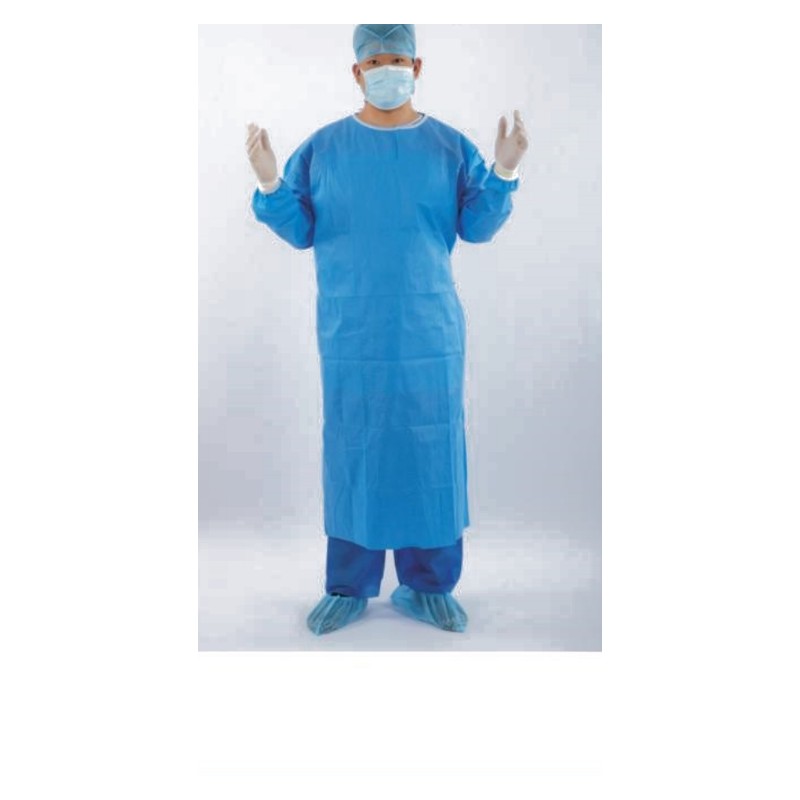
In practice, disposable surgical gowns are made from SMS or SMMS non-woven, often with reinforcement panels on the chest and forearms, knitted cuffs that stay put under gloves, and a wrap-around back closed with ties.
What is an isolation gown?
An isolation gown is the everyday protective gown of the ward. The FDA describes non-surgical isolation gowns as Class I devices “intended to protect the wearer from the transfer of microorganisms and body fluids in low or minimal risk patient isolation situations.”
When should staff wear one? The CDC’s isolation guideline sets two triggers. Under Standard Precautions, “an isolation gown is worn only if contact with blood or body fluid is anticipated.” Under Contact Precautions, staff put on a gown and gloves on entering the room and take them off, with hand hygiene, before leaving. The same guideline says routine gowning on entry to a high-risk unit such as an ICU or NICU “is not indicated.” Over-gowning wastes stock; under-gowning is worse, but neither is solved by buying the most expensive gown for every task.
Isolation gowns range from light PP spunbond, which is breathable but offers limited fluid protection, to PE-coated non-woven and CPE film gowns that block liquid strike-through. Which one you need depends on how wet the task is.

What is a surgical isolation gown?
It is the hybrid, and it is the type most often mislabelled. The FDA describes surgical isolation gowns as gowns “used when there is a medium to high risk of contamination and a need for larger critical zones than traditional surgical gowns.” Every area except the bindings, cuffs and hems counts as a critical zone and must meet the gown’s highest rated barrier level, seams included.
If a tender asks for a “surgical isolation gown,” it is asking for full-coverage barrier performance, not a cheap isolation gown in a sterile pouch.
Which standards apply to each gown?
Three standards come up in Saudi and GCC procurement. Our guide to EN 13795 and AAMI PB70 goes through the test methods in detail; here is how they map to gown types.
ANSI/AAMI PB70 grades liquid barrier performance in four levels and applies to both surgical and isolation gowns. The FDA gives example uses for each:
| PB70 level | Risk | FDA example uses |
|---|---|---|
| Level 1 | Minimal | Basic care, standard isolation, cover gown for visitors |
| Level 2 | Low | Blood draw, suturing, ICU, pathology lab |
| Level 3 | Moderate | Arterial blood draw, inserting an IV line, emergency room, trauma |
| Level 4 | High | Long, fluid-intense procedures, surgery, suspected infectious disease (non-airborne) |
Levels 1 to 3 are tested with water impact and hydrostatic pressure tests (Level 1 with the impact test only); Level 4 adds a pass-or-fail viral penetration test, according to a NIOSH-authored review in the American Journal of Infection Control.
EN 13795-1 covers surgical gowns and drapes. It defines standard and high performance classes and tests critical and less critical product areas for wet and dry microbial penetration, liquid penetration, cleanliness, linting and strength. In the 2019 edition, for example, liquid penetration in the critical area had to be at least 20 cm H₂O for standard performance and at least 100 cm H₂O for high performance, as reproduced in a 2020 ACS Nano review. BSI lists EN 13795-1:2025 as the current edition, published in February 2025, so ask suppliers which edition their test reports cite.
EN 14126 is the European standard for protective clothing against infective agents, harmonised under the PPE Regulation (EU) 2016/425. It is the reference when a gown is placed on the market as personal protective equipment for the wearer rather than as a surgical device.
How do you choose between them?
Start with the task, not the product name.
- Is it surgery or an invasive procedure? Use a sterile surgical gown. If fluid exposure extends beyond the front and sleeves, use a surgical isolation gown.
- Is it patient care with expected contact with blood or body fluids? Use an isolation gown, and pick the barrier level for how wet the task is.
- Is it a visitor, a dry examination, or a Contact Precautions room with minimal fluid? A Level 1-type PP isolation gown is usually enough.
- Check the paperwork. Ask which standard and edition the gown was tested to, whether it is sterile, and how it is sterilised.
In Saudi Arabia, check the regulatory route too. SFDA’s Implementing Regulation of the Law of Medical Devices states that no medical device may be traded in the Kingdom unless it is registered and has SFDA marketing authorisation, so confirm the registration status of the gowns you buy for clinical use.
Which WinHyCare gowns fit which use?
We supply four gown types as a supplier and exporter to hospitals and distributors across Saudi Arabia and the GCC, supplied to ISO 9001 and ISO 13485 quality standards:
- Disposable surgical gown: SMS, SMMS, SMMMS or spunlace non-woven at 30–70 gsm, set-in sleeves with knitted cuffs, velcro neck and four waist ties, ultrasonic and double-stitched seams, sizes S to XXXL, EO sterile or non-sterile as ordered.
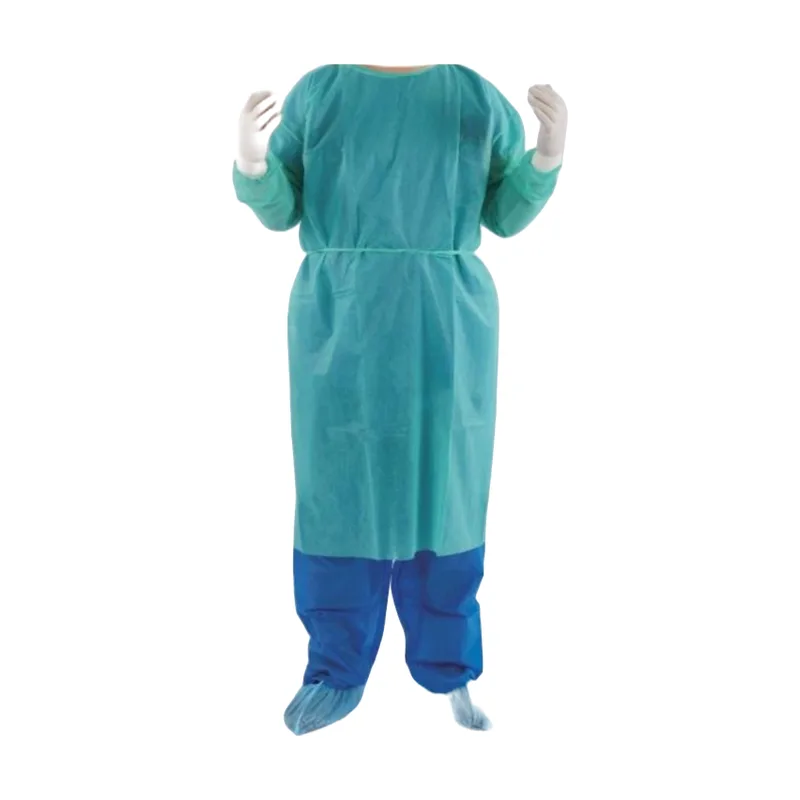
- Non-woven isolation gown: PP spunbond at 16–50 gsm, breathable, for low to moderate splash exposure; non-sterile, EO sterile on request.
- PE-coated isolation gown: PP non-woven laminated with PE film so liquid does not strike through, for fluid-heavy nursing tasks.
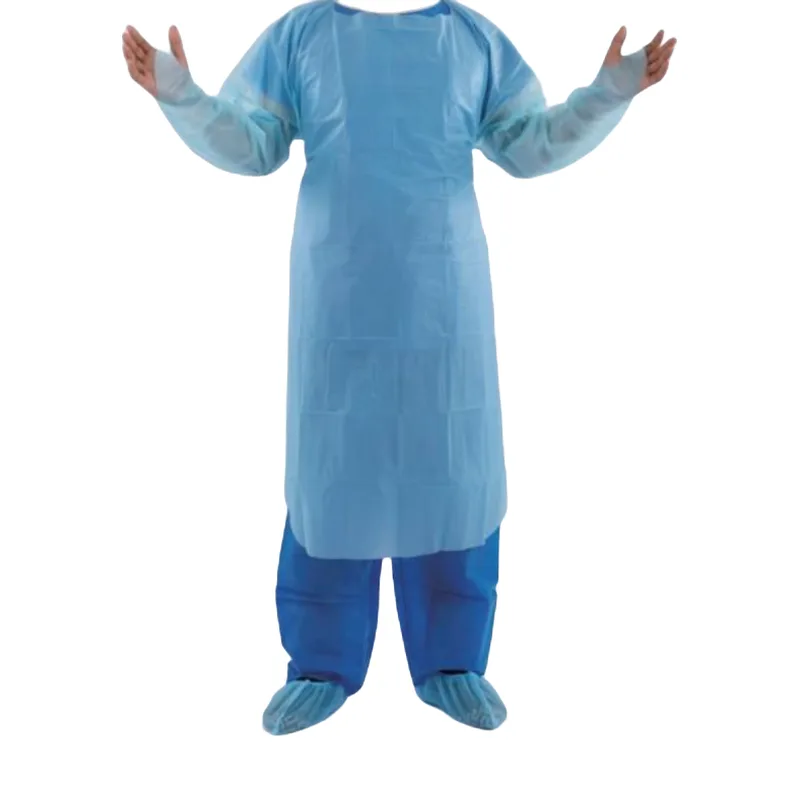
- CPE isolation gown with thumb loops: waterproof CPE film for isolation wards, dialysis and high-contact care.
If your tender names a PB70 level or an EN 13795 performance class, include it in the enquiry and we will confirm which gown meets it and what test documentation is available. The fabric behind each of these is explained in our guide to SMS, SMMS and spunbond non-wovens.
Frequently asked questions
Can an isolation gown be used as a surgical gown?+
No. The FDA states that non-surgical gowns are not worn during surgical procedures, invasive procedures, or when there is a medium to high risk of contamination. Surgery needs a sterile surgical gown, or a surgical isolation gown where larger protected zones are needed.
Are isolation gowns sterile?+
Not necessarily. The FDA requires all surgical gowns to be provided sterile but states no such requirement for non-surgical isolation gowns. WinHyCare's non-woven isolation gowns are supplied non-sterile as standard, with EO-sterile versions on request.
What level isolation gown do I need?+
Match the AAMI PB70 level to the task. The FDA gives examples: Level 1 for basic care, standard isolation and visitor cover gowns; Level 2 for blood draws, suturing, ICU and pathology lab work; Level 3 for arterial blood draws, IV insertion, emergency and trauma; Level 4 for long, fluid-intense procedures, surgery and suspected non-airborne infectious disease.
Why does the back of a surgical gown not need protection?+
In surgery the team faces the sterile field, so exposure comes from the front and the forearms. The FDA defines the critical zones as the front from shoulders to knees and the arms from wrist cuff to above the elbow, and says the back may be non-protective. A surgical isolation gown is used when the whole gown needs barrier protection.
Do I have to put on a gown every time I enter an ICU?+
Not routinely. The CDC's isolation guideline says routine donning of gowns on entering a high-risk unit such as an ICU or NICU is not indicated. Gowns are worn when contact with blood or body fluids is expected, or on entry to a room under Contact Precautions.
Sources
- Medical Gowns, US Food and Drug Administration
- 2007 Guideline for Isolation Precautions: Preventing Transmission of Infectious Agents in Healthcare Settings (Siegel JD et al., updated 2024), US Centers for Disease Control and Prevention / HICPAC
- Isolation gowns in health care settings: Laboratory studies, regulations and standards, and potential barriers of gown selection and use (Kilinc Balci FS. Am J Infect Control 2016;44:104–111), American Journal of Infection Control
- Sustainable Personal Protective Clothing for Healthcare Applications: A Review (Karim N et al. ACS Nano 2020;14:12313–12340), ACS Nano
- BS EN 13795-1:2025 Surgical clothing and drapes. Requirements and test methods. Surgical drapes and gowns, BSI
- Summary list of harmonised standards, Regulation (EU) 2016/425 on personal protective equipment, European Commission
- Implementing Regulation of the Law of Medical Devices, Saudi Food and Drug Authority (SFDA)