Shoe Covers Compared: PE vs CPE vs Non-Woven, Anti-Skid, and When to Use Each
Disposable shoe covers compared: PE and CPE film, PP non-woven, anti-skid and knee-high boot covers, what each is for, and what CDC, OSHA and EU GMP rules say.
Published · 7 min read
Key facts
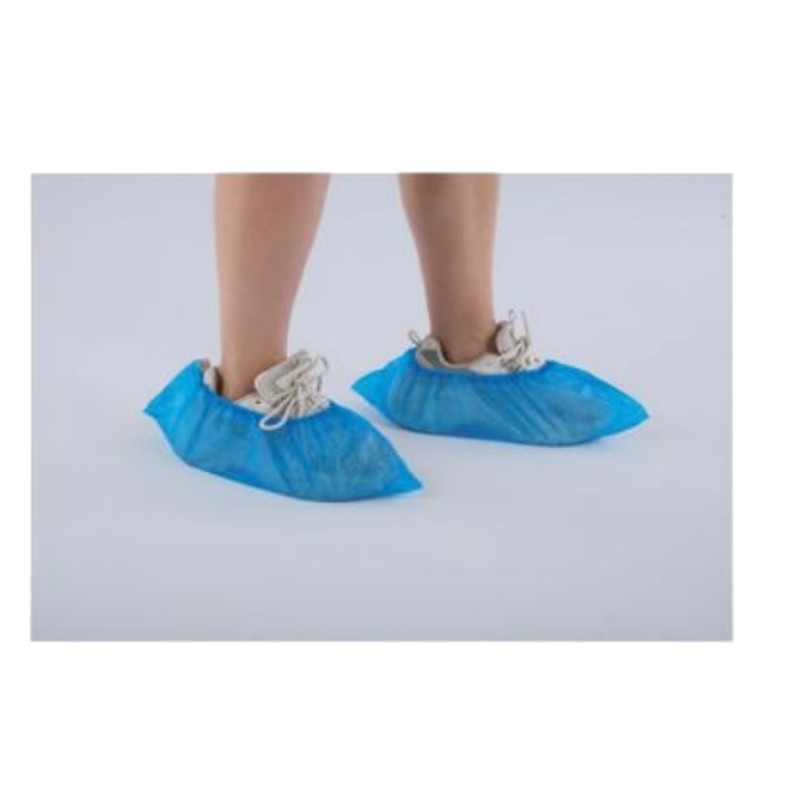
- A shoe cover is a single-use overshoe that keeps dirt and fluids from being tracked across clean floors and keeps contamination off the wearer's shoes. The US FDA lists operating-room shoe covers as Class I surgical apparel.
- Film covers (PE or CPE) are waterproof but do not breathe; PP non-woven covers breathe but resist fluid less; anti-skid versions add a heavier fabric or a coated sole; knee-high boot covers protect the calf and knee.
- Shoe covers are not an infection-control tool for surgery: the CDC's 1999 guideline said they have never been shown to reduce surgical site infection risk or operating room floor bacteria counts, but may protect staff from blood and body fluids.
- US OSHA requires shoe covers or boots where gross contamination can reasonably be anticipated, such as autopsies and orthopaedic surgery.
- EU GMP Annex 1 calls for disinfected shoes or overshoes in Grade C and D cleanrooms and sterilised footwear, such as over-boots, in Grade B.
A shoe cover is a single-use overshoe pulled over footwear to keep dirt, dust and fluids from being tracked across a clean floor, and to keep the floor’s contamination off the wearer’s shoes. There are three main types. PE and CPE film covers are waterproof but do not breathe. PP non-woven covers breathe but resist fluid less. Anti-skid covers add a heavier fabric or a coated sole for grip. For splash-heavy work, knee-high boot covers protect the lower leg as well. Our shoe and boot covers come in each of these constructions.
Pick the wrong one and you either have staff sliding on a polished corridor or a ward floor wet with fluid soaking through to their socks.
What is a shoe cover, and how is it regulated?
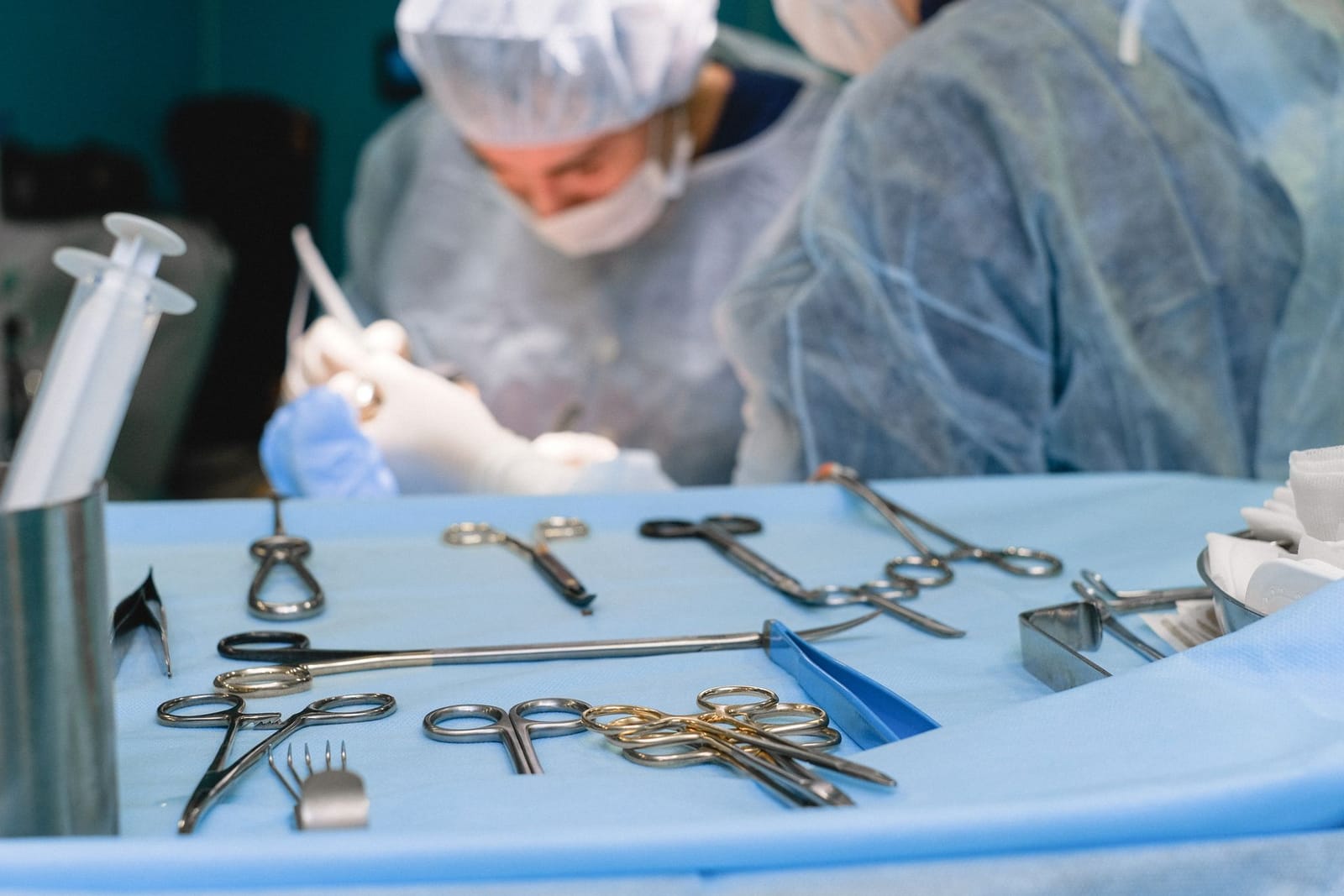
In a hospital, a shoe cover is a medical device, though a simple one. The US FDA’s surgical apparel regulation, 21 CFR 878.4040, lists “operating room shoes and shoe covers” among its examples and places surgical apparel other than gowns and masks in Class I, the lowest-risk class. Outside healthcare, the same product is just protective clothing: worn at cleanroom airlocks, on factory floors, during property viewings and on home service visits.
Whatever the setting, the routine is the same. Put the cover on at the threshold of the clean area, take it off on the way out, and bin it there. A shoe cover worn from the car park to the ward does nothing useful.
PE vs CPE vs non-woven: what is the difference?
The material decides almost everything about how a cover behaves.
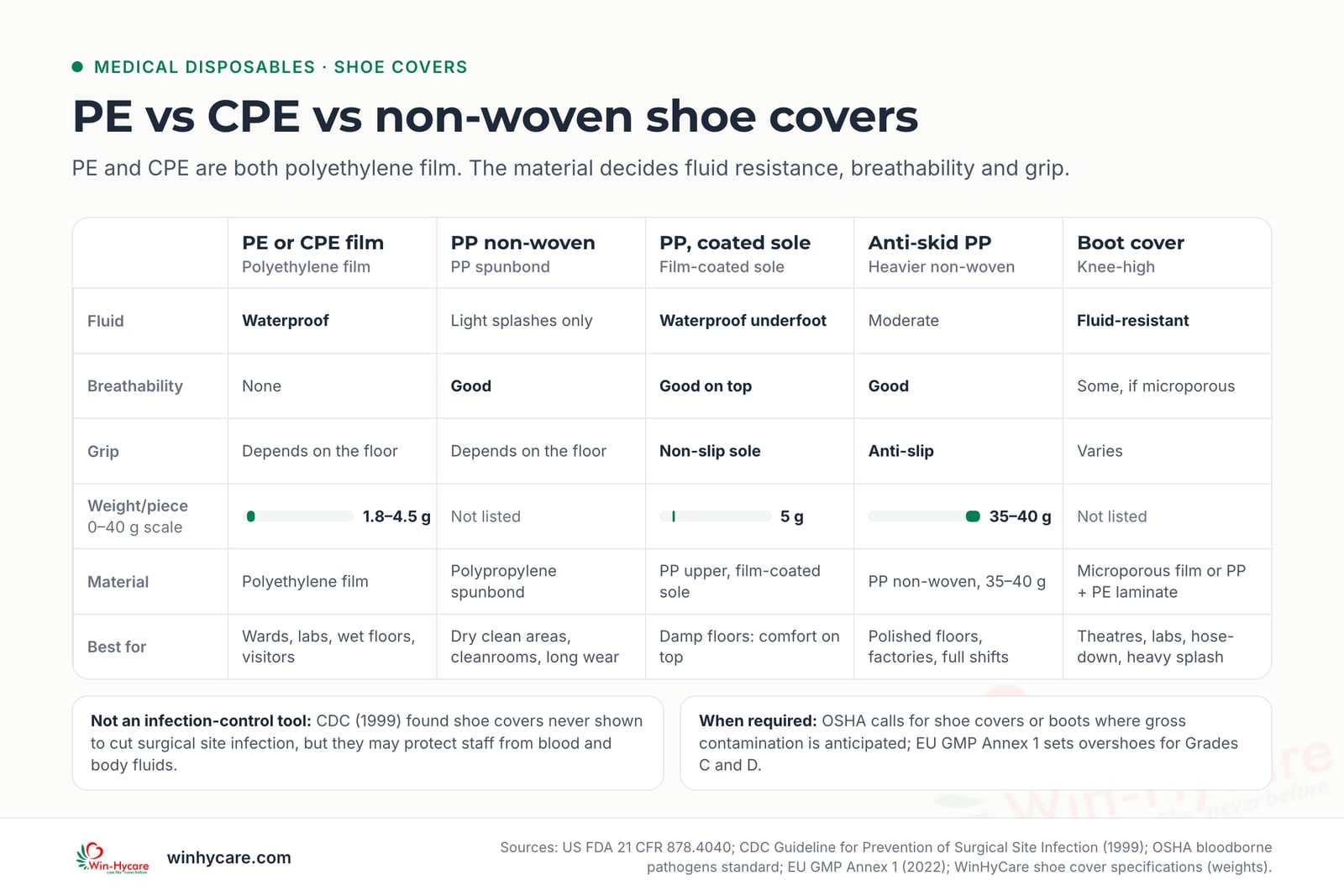
| Type | Material | Fluid | Breathability | Grip | Best for |
|---|---|---|---|---|---|
| PE or CPE film | Polyethylene film | Waterproof | None | Depends on the floor | Wards, labs, wet or dirty floors, visitors, short visits |
| PP non-woven | Polypropylene spunbond | Resists light splashes only | Good | Depends on the floor | Dry clean areas, cleanrooms, long wear |
| PP with coated sole | PP non-woven upper, film-coated sole | Waterproof underfoot | Good on top | Non-slip sole | Mixed use: comfort on top, protection underfoot |
| Anti-skid PP | Heavier PP non-woven (35–40 g) | Moderate | Good | Anti-slip | Smooth or polished floors, factories, repeated walking |
| Boot cover | Microporous film or PP + PE laminate, knee-high | Fluid-resistant | Some (microporous) | Varies | Theatres, labs, hose-down cleaning, splash-heavy work |
PE and CPE. Both are polyethylene film, which is why both are waterproof and neither breathes. The letters are less useful than the numbers: compare weight per piece and size. Our CPE covers weigh 1.8–4.5 g each, come clear or blue in 15 × 35 cm (or to order), and are packed 100 per bag.
PP non-woven. A spunbond polypropylene cover lets air and moisture vapour through, so it is the comfortable choice for staff who wear covers for hours. It resists light splashes but is not waterproof. The fabric is explained in our guide to SMS, spunbond PP and GSM.
Hybrids. Our PP cover with a CPE-coated sole (16 × 42 cm, 5 g) keeps the breathable top and adds a waterproof, non-slip sole, which suits areas where the floor is damp but the shoe is not being splashed.
Do shoe covers prevent infection?
Not in the way many people assume. The CDC’s 1999 guideline on preventing surgical site infection was blunt: “The use of shoe covers has never been shown to decrease SSI risk or to decrease bacteria counts on the operating room floor.” It recommended that staff not wear shoe covers for the purpose of preventing surgical site infection. (CDC has since superseded that guideline with a 2017 update.)
The same guideline gives the real reason to wear them: shoe covers “may, however, protect surgical team members from exposure to blood and other body fluids.” So a shoe cover is protective clothing for the wearer and a floor-cleanliness tool for the facility, not a way to sterilise a corridor.
That has a buying consequence. If the goal is staff protection from fluids, choose for fluid resistance (film, coated sole or boot cover). If the goal is keeping outdoor dirt off a clean floor, a light PP or CPE cover is enough.

When are shoe covers required?
Three sets of rules come up most often.
Bloodborne pathogen exposure. In the US, OSHA’s bloodborne pathogens standard says “surgical caps or hoods and/or shoe covers or boots shall be worn in instances when gross contamination can reasonably be anticipated (e.g., autopsies, orthopaedic surgery).” OSHA is a US rule, but it is a useful benchmark for hospital occupational health policies in the GCC, and knee-high boot covers fit that level of exposure.
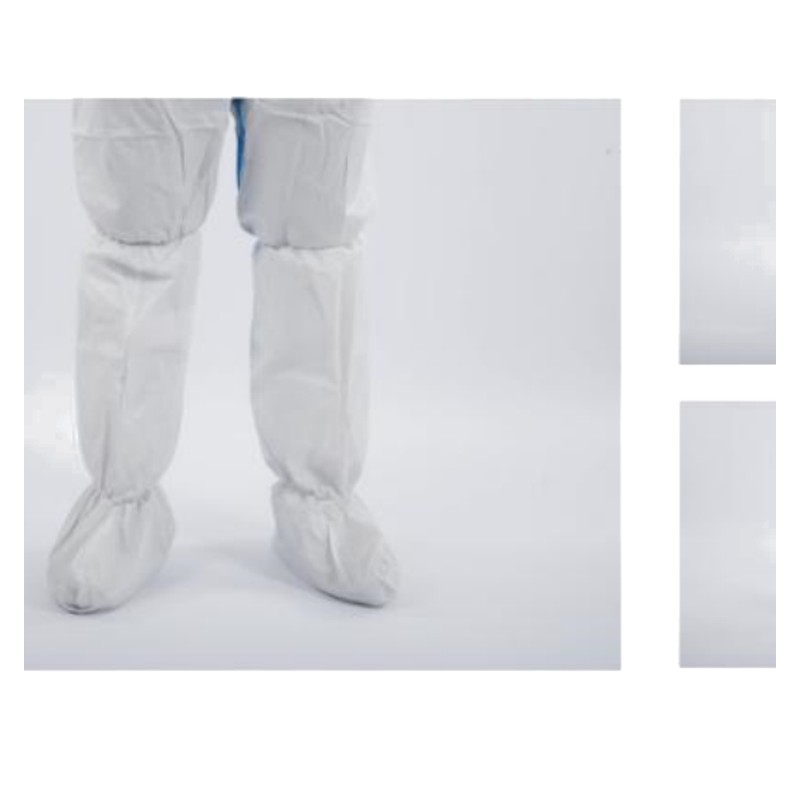
Pharmaceutical cleanrooms. EU GMP Annex 1 (2022) sets footwear by grade. In Grade D and Grade C areas, “appropriately disinfected shoes or overshoes should be worn.” In Grade B, “appropriate sterilised footwear (e.g. over-boots) should be worn,” with trouser legs tucked inside. Confirm sterility with the supplier before ordering any cover for Grade B use.
Facility policy. Clinics, laboratories, dental practices, food plants and sites with finished flooring often require covers by house rule rather than law. Light CPE or PP covers are usually enough there.
What does anti-skid mean, and when do you need it?
Here is the problem in one line: a shoe cover sits between the shoe’s tread and the floor, so whatever grip the shoe had, the cover now decides. NIOSH’s guidance on preventing slips in healthcare recommends slip-resistant shoes for staff. A smooth cover over a slip-resistant shoe can undo that.
Anti-skid covers address it in two ways. One is a heavier non-woven: our non-skid PP covers weigh 35 or 40 g, much more than a film cover, and are built for repeated walking on smooth floors. The other is a coated non-slip sole on a lighter cover. Choose anti-skid for polished hospital corridors, factory floors, wet-process areas and anywhere staff wear covers for a full shift. If your safety policy calls for slip-test data, ask for it with the quote.
Which shoe cover should you use where?
| Setting | Recommended cover | Why |
|---|---|---|
| Wards and visitor entrances | CPE film or PP non-woven | Low cost, quick to put on, keeps outdoor dirt out |
| Operating theatre support, wet procedures | CPE film, or boot covers for heavy splash | Fluid protection for staff |
| Autopsy, orthopaedic or other gross-contamination work | Knee-high boot covers | OSHA’s examples of anticipated gross contamination |
| Laboratories | PP non-woven or CPE | Breathable for long wear, or waterproof for wet benches |
| Pharma cleanrooms, Grade C and D | Low-lint PP overshoes or boot covers | Annex 1 calls for disinfected shoes or overshoes |
| Factories and polished floors | Anti-skid PP | Grip on smooth or oily surfaces |
| Property viewings and home service visits | CPE or PP | Protects finished floors, quick on and off |
How do you work out quantities?
Every entry uses a pair. A clinic with 50 visitors a day uses 100 covers a day before counting staff, which is about one bag at 100 pieces per bag, or roughly 20 to 26 bags a month depending on opening days. CPE covers come 20 bags to a carton and PP covers with a coated sole 10 bags to a carton, so a carton of CPE covers lasts that clinic around three weeks.
WinHyCare is a supplier and exporter of disposable shoe covers and knee-high boot covers to hospitals, laboratories, pharmaceutical plants and facility-management companies in Saudi Arabia and across the GCC, supplied to ISO 9001 and ISO 13485 quality standards. Send us the type, size and monthly quantity for a bulk quote.
Frequently asked questions
What is the difference between PE and CPE shoe covers?+
Both are polyethylene film covers: waterproof, light and not breathable. The abbreviation on its own tells you little about strength or feel, so compare covers by weight per piece, size and film thickness. WinHyCare's CPE covers weigh 1.8–4.5 g each.
Which shoe covers are best for hospitals?+
It depends on the area. Use film (CPE) covers where floors are wet or fluid exposure is likely, PP non-woven covers in dry clean areas where comfort matters, anti-skid covers on smooth floors, and knee-high boot covers for splash-heavy procedures. In operating theatres, shoe covers protect staff from fluids; the CDC found no evidence they reduce surgical site infections.
Are shoe covers slippery?+
A shoe cover sits between the shoe's tread and the floor, so it changes grip. If slips are a concern, choose an anti-skid cover, either a heavier non-woven or a breathable cover with a coated non-slip sole. NIOSH recommends slip-resistant footwear for healthcare workers, and the cover should not undo that.
Do shoe covers reduce infection in operating rooms?+
Not according to the CDC's 1999 surgical site infection guideline, which recommended against wearing shoe covers to prevent surgical site infection. They are still used to protect staff from blood and body fluids, and OSHA requires shoe covers or boots where gross contamination is expected.
How many shoe covers do I need?+
Each entry uses one pair, which is two covers. A clinic with 50 visitors a day needs about 100 covers a day before staff use. WinHyCare packs shoe covers 100 pieces per bag, so that clinic would use roughly one bag a day.
Sources
- Guideline for Prevention of Surgical Site Infection, 1999 (Mangram AJ et al. Infect Control Hosp Epidemiol 1999;20:247–280), US Centers for Disease Control and Prevention / HICPAC
- 29 CFR 1910.1030 Bloodborne pathogens, paragraph (d)(3)(xii), US Occupational Safety and Health Administration (OSHA)
- Slip, Trip, and Fall Prevention for Healthcare Workers, DHHS (NIOSH) Publication No. 2011-123, National Institute for Occupational Safety and Health (NIOSH)
- EudraLex Volume 4, Annex 1: Manufacture of Sterile Medicinal Products, C(2022) 5938 final, section 7.13, European Commission
- 21 CFR 878.4040 Surgical apparel, US Code of Federal Regulations (Cornell Legal Information Institute)