Who Is Required to Wear a Hairnet? Food Hygiene Rules in Saudi Arabia and the UAE, Plus Healthcare and Cleanrooms
Who must wear a hairnet: Saudi restaurant and SFDA rules, the Dubai Food Code, ADAFSA, US Food Code exemptions, beard covers, and theatre and cleanroom rules.
Published · 8 min read
Key facts
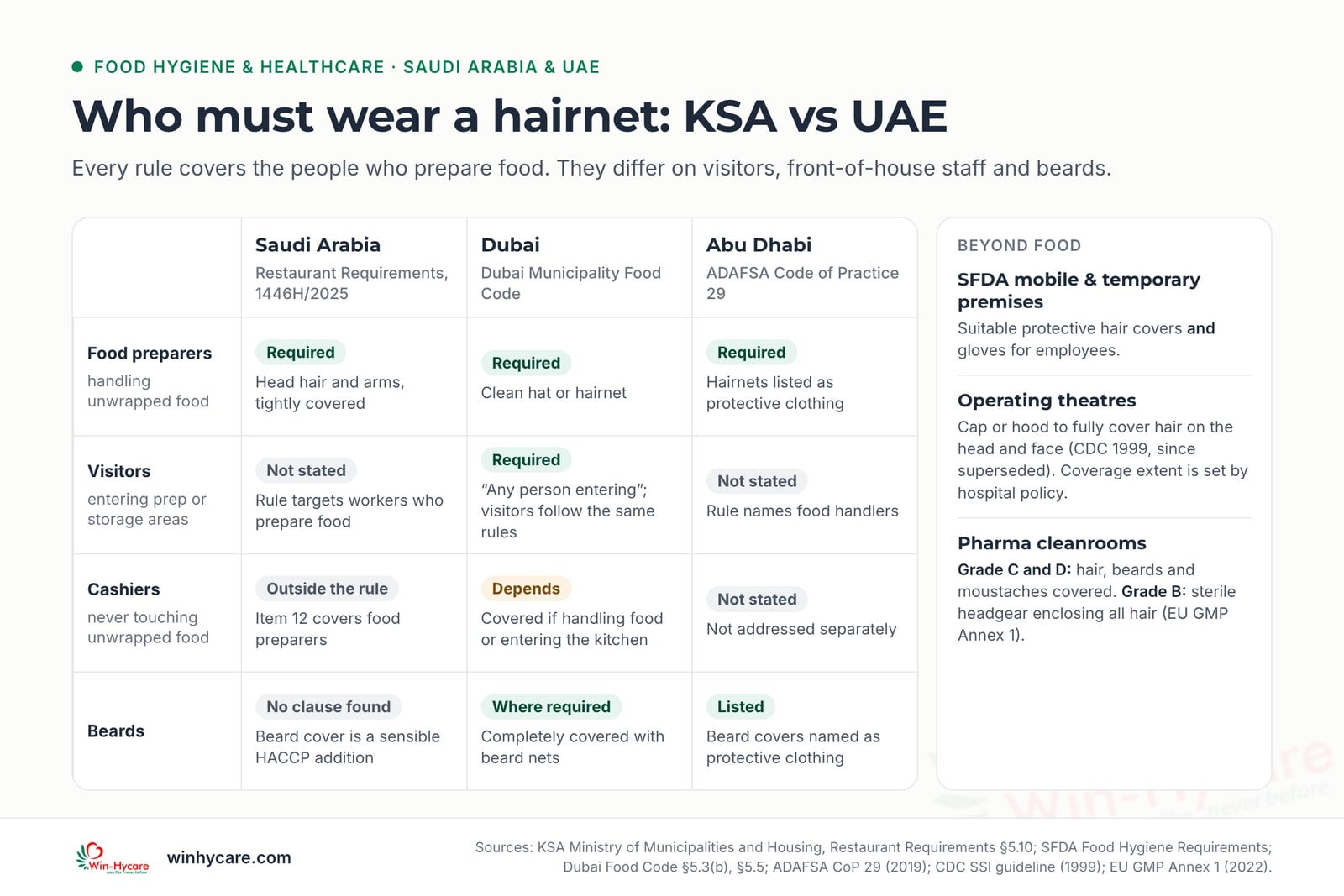
- In Saudi Arabia, the Ministry of Municipalities and Housing's restaurant requirements (1446H/2025) say head hair and arms must be tightly covered for workers who prepare food.
- SFDA's Food Hygiene Requirements require employees in food facilities covered by its mobile and temporary premises chapter to wear suitable protective hair covers and gloves.
- The Dubai Food Code requires hair to be covered with a clean hat or hairnet by anyone handling food or entering a food preparation or storage area, visitors included, and beards to be covered with beard nets where required.
- Abu Dhabi's ADAFSA lists hairnets, gloves, masks and beard covers as protective clothing for food handlers.
- Outside food, operating theatre staff and pharmaceutical cleanroom staff must also cover hair; EU GMP Annex 1 extends this to beards and moustaches in Grade C and D areas.
Anyone who handles unwrapped food, or works in a food preparation area, is required to cover their hair in both Saudi Arabia and the UAE. Saudi Arabia’s restaurant requirements say head hair must be tightly covered for workers preparing food, and the Dubai Food Code extends hair covering to anyone entering a food preparation or storage area, visitors included. Operating theatre staff and pharmaceutical cleanroom staff cover their hair too, under healthcare and GMP rules. If you are stocking a kitchen, plant or clinic, our range of medical caps and hair nets covers each of these uses.
The details differ by emirate, by ministry and by job, and those details decide who in your team needs a hairnet, who needs a beard cover too, and who can go without.
Who is required to wear a hairnet?
Here is what each rule says, side by side.
| Rule | Who it covers | What must be covered | Beards |
|---|---|---|---|
| Saudi Arabia, Ministry of Municipalities and Housing, Restaurant Requirements (1446H/2025) | Workers who prepare food | Head hair and arms, tightly covered | No beard clause found |
| Saudi Arabia, SFDA Food Hygiene Requirements | Employees in food facilities (mobile and temporary premises chapter) | Suitable protective hair covers, plus gloves | Not mentioned |
| Dubai Municipality Food Code (2013) | Anyone handling food or entering a food preparation or storage area; visitors | Hair, with a clean hat or hairnet | Beard nets where required |
| Abu Dhabi, ADAFSA Code of Practice No. 29 (2019) | Food handlers | Protective clothing such as hairnets, gloves, masks | Beard covers listed |
| US FDA Food Code 2022 (reference) | Food employees, with listed exemptions | Hats, hair coverings or nets, clothing covering body hair | Beard restraints |
| Codex General Principles of Food Hygiene (1997 revision) | Food handlers | Head covering, with protective clothing and footwear | Not specified |
Read across the rows and one pattern stands out. Every rule covers the people who prepare food. The differences are at the edges: visitors, front-of-house staff and beards.
What do Saudi Arabia’s rules require?
Two documents apply to most food businesses in the Kingdom.
The restaurant requirements. The Ministry of Municipalities and Housing’s Restaurant Requirements (اشتراطات المطاعم), issued in 1446H/2025, set out worker requirements in section 5.10. Item 12 states that head hair and arms must be tightly covered for workers who prepare food (“يجب تغطية شعر الراس والذراعين بإحكام، للعاملين في إعداد وتحضير الأغذية”). The same section makes protective clothing mandatory, and requires a mask covering the nose and mouth. Elsewhere the document says personal protective equipment, “such as head cover, gloves,” must be suitable for food preparation.
Note the word “tightly.” A loose cap pushed back on the head, with a fringe showing, does not meet it.
SFDA’s Food Hygiene Requirements. SFDA’s document has a general personal hygiene chapter requiring “suitable, clean and, where necessary, protective clothing.” The explicit hair clause sits in the chapter on movable and temporary premises (marquees, market stalls, mobile sales vehicles), which requires employees “to wear suitable protective hair covers and gloves.” Food trucks and event caterers should read that chapter closely.
We found no beard clause in either document. If your team includes bearded staff, a beard cover, or a hood with a built-in mask that handles hair and beard in one item, is a sensible addition to your HACCP plan.
What does the Dubai Food Code require?
Dubai’s rule is the broadest of the three. Section 5.3(b) of the Dubai Municipality Food Code reads: “In the course of handling food and for any person entering a food preparation or storage area, hair should be covered with a clean hat or hair net. Where required, beards should be completely covered with beard nets.”
“Any person entering” matters. A maintenance technician fixing an oven, a supplier checking stock in the cold store and a manager walking through the kitchen are all covered. Section 5.5 removes any doubt about guests: visitors “should observe the same hygiene as food handlers, including hand washing and hair restraint policies.” Keep a box of hairnets at the kitchen door, not in the staff locker room.
What about Abu Dhabi?
ADAFSA’s Code of Practice No. 29 of 2019, Food Hygiene for Retail Business, citing Regulation No. 6 of 2010, says food handlers “shall wear suitable, clean and protective clothing while handling food such as hair nets, gloves, masks, beard covers.” Its good-practice advice adds that long hair should be tied back and/or covered with a suitable head covering, “especially when handling unwrapped food.” ADAFSA updates its regulations and guidelines, so check the current versions that apply to your licence category.
Do waiters and cashiers have to wear hairnets?
Sometimes. The US FDA Food Code, which many international chains use as a benchmark, gives the clearest exemption list. Section 2-402.11 requires food employees to wear hair restraints, but “does not apply to FOOD EMPLOYEES such as counter staff who only serve BEVERAGES and wrapped or PACKAGED FOODS, hostesses, and wait staff if they present a minimal RISK of contaminating exposed FOOD.”
GCC rules are framed differently. Saudi Arabia’s restaurant rule targets workers who prepare food, so a cashier who never touches unwrapped food falls outside item 12. Dubai’s rule turns on handling food or entering a preparation or storage area, so a server who plates desserts or steps into the kitchen to collect orders is covered. When in doubt, cover. A hairnet costs a fraction of what a hair-in-food complaint does.
The FDA’s annex explains the reason behind all of these rules: a hair restraint “keeps dislodged hair from ending up in the food and may deter employees from touching their hair.”
Hairnet, bouffant cap or mob cap: which should you buy?
Regulations ask for hair to be covered; they rarely specify how. Choose by hair length, heat and the coverage your HACCP plan asks for.
| Product | Best for | Notes |
|---|---|---|
| Nylon mesh hairnet | Hot kitchens, bakeries, food lines, short or tied-back hair | Fine, food-grade mesh; very breathable; one size 18–24 inches |
| Bouffant cap | Long or thick hair, food plants, pharma packing | Pleated PP spunbond, 10–21 gsm, full elastic edge |
| Mob (clip) cap | High-volume daily issue, visitors | PP spun 12 gsm, single or double elastic |
| Surgeon cap | Operating theatres, dental and clinic procedures | Close-fitting tie-back, PP or SMS |
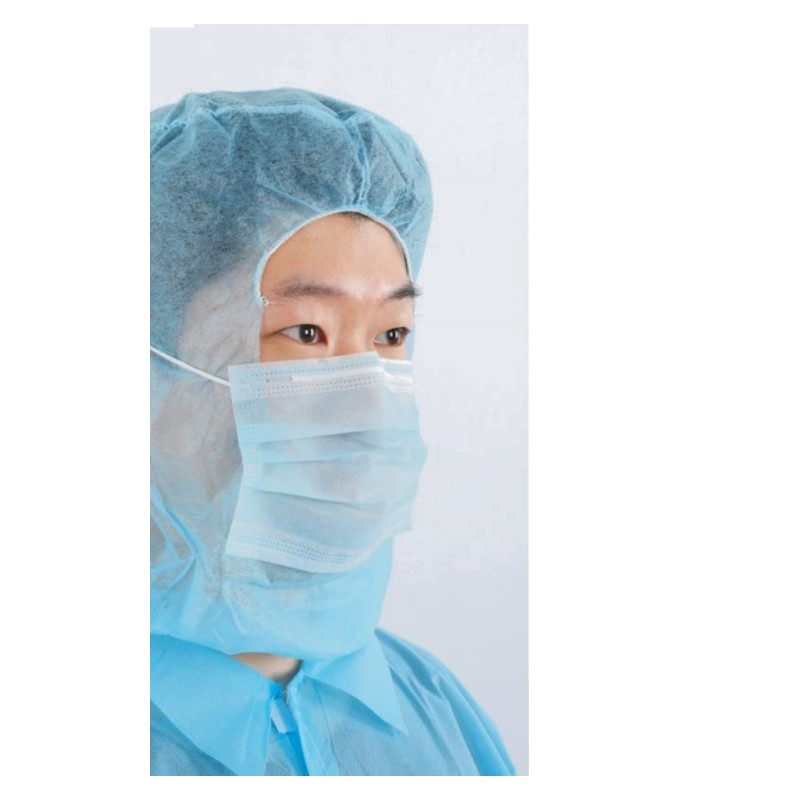
| Balaclava hood | Bearded staff, cleanrooms | Covers head, neck and shoulders with a built-in 2-ply mask |
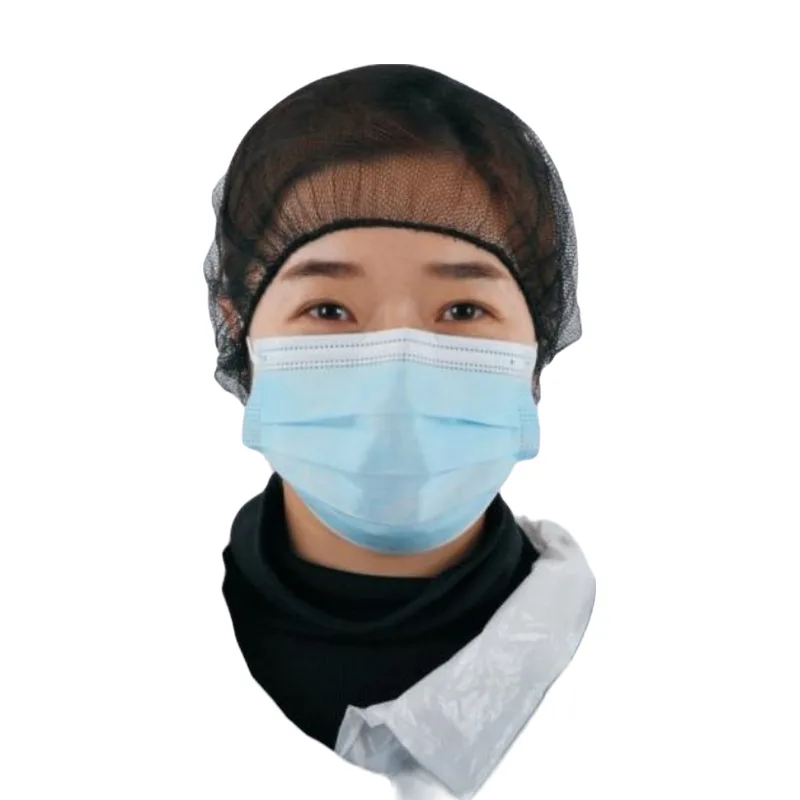
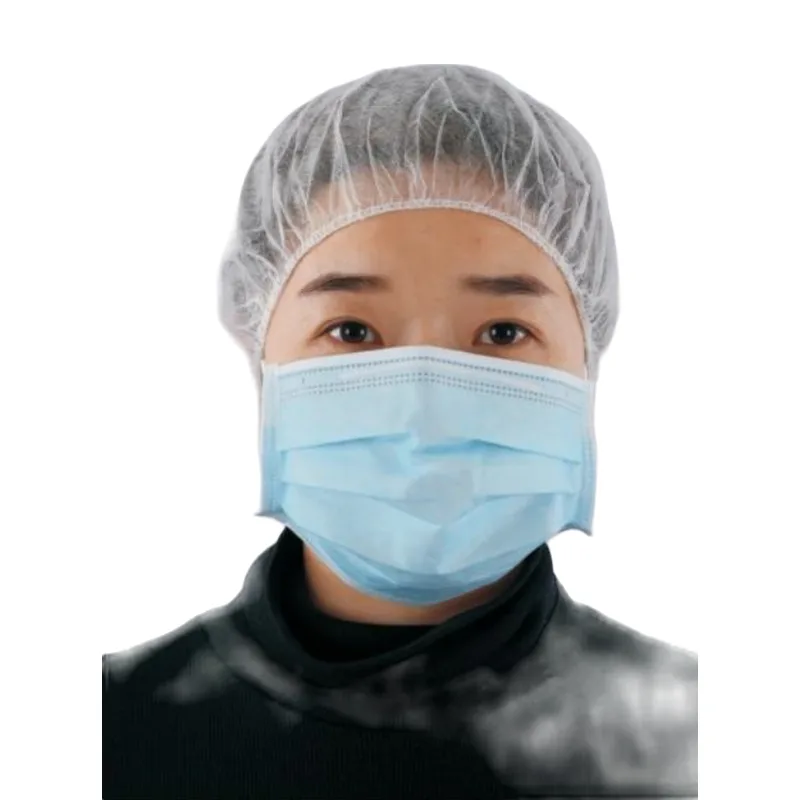
Do healthcare and cleanroom staff have to cover their hair?
Yes, under different rules.
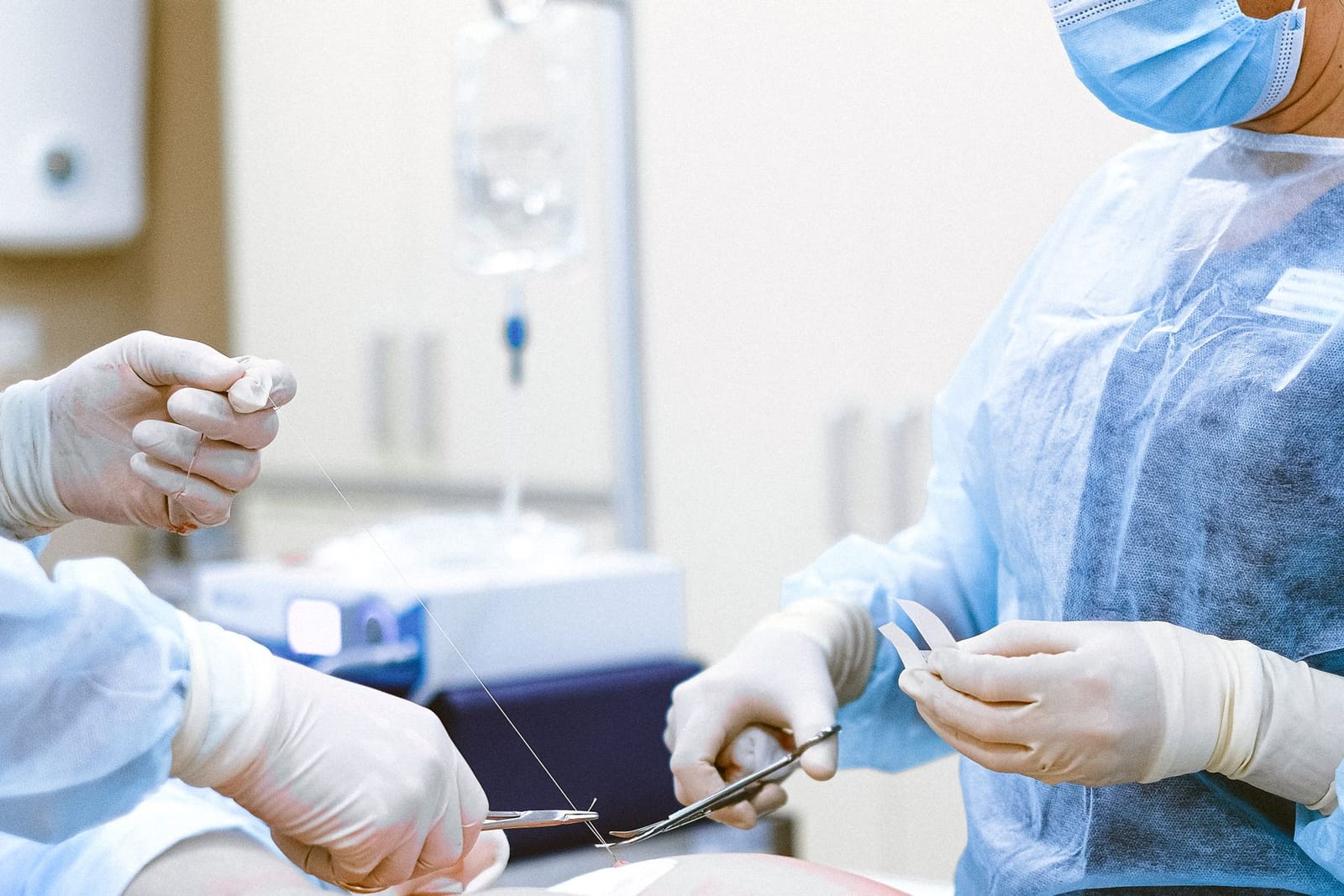
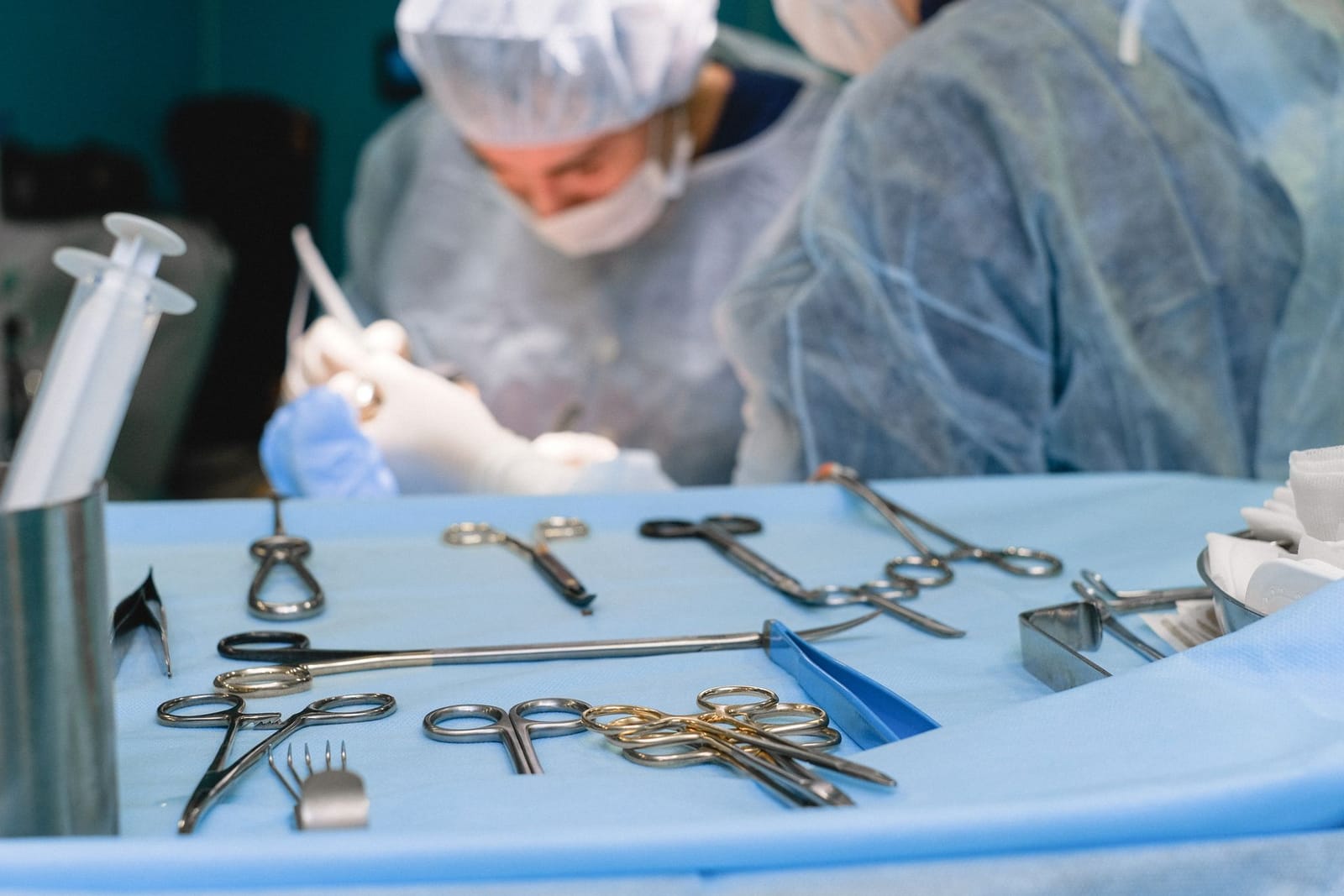
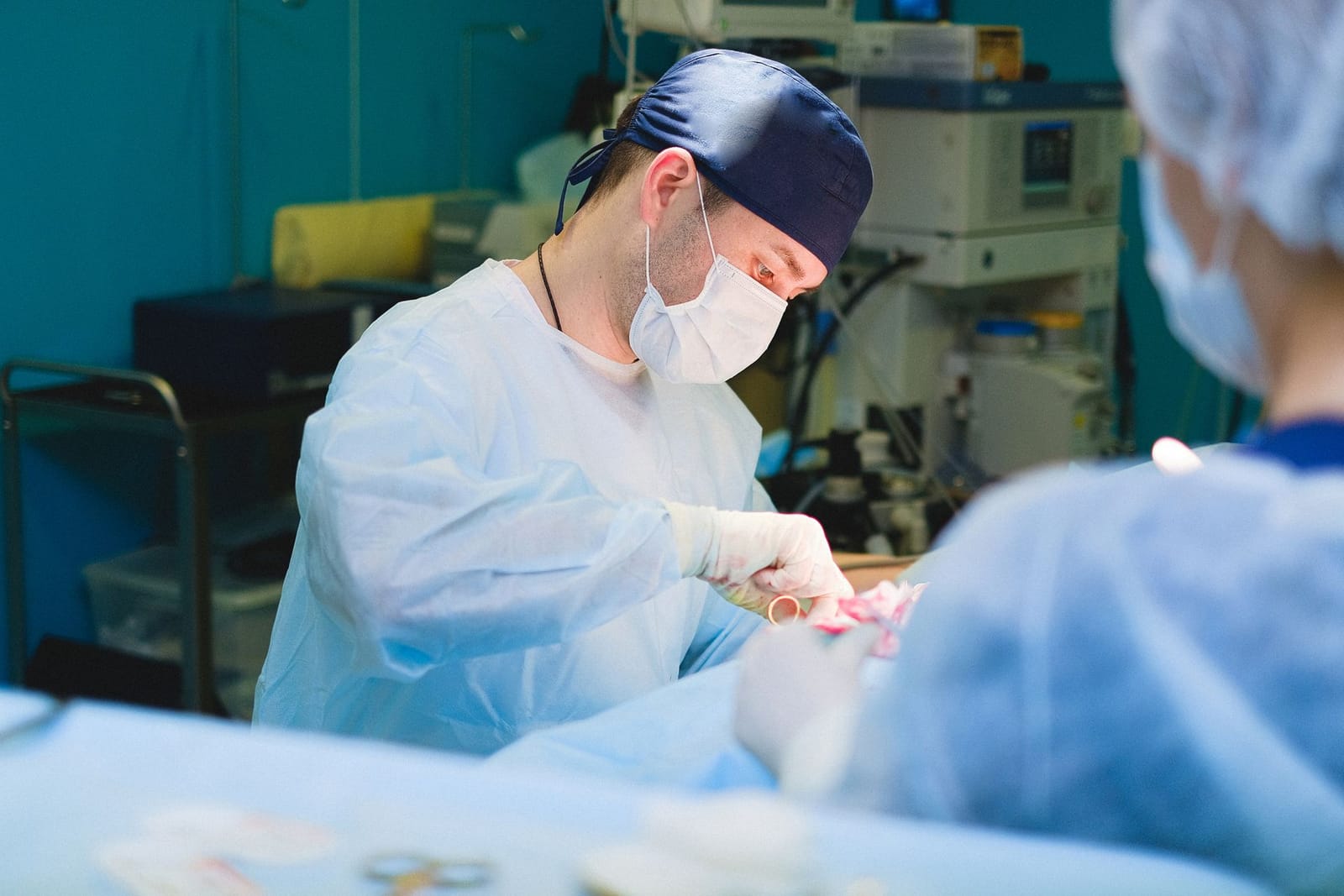
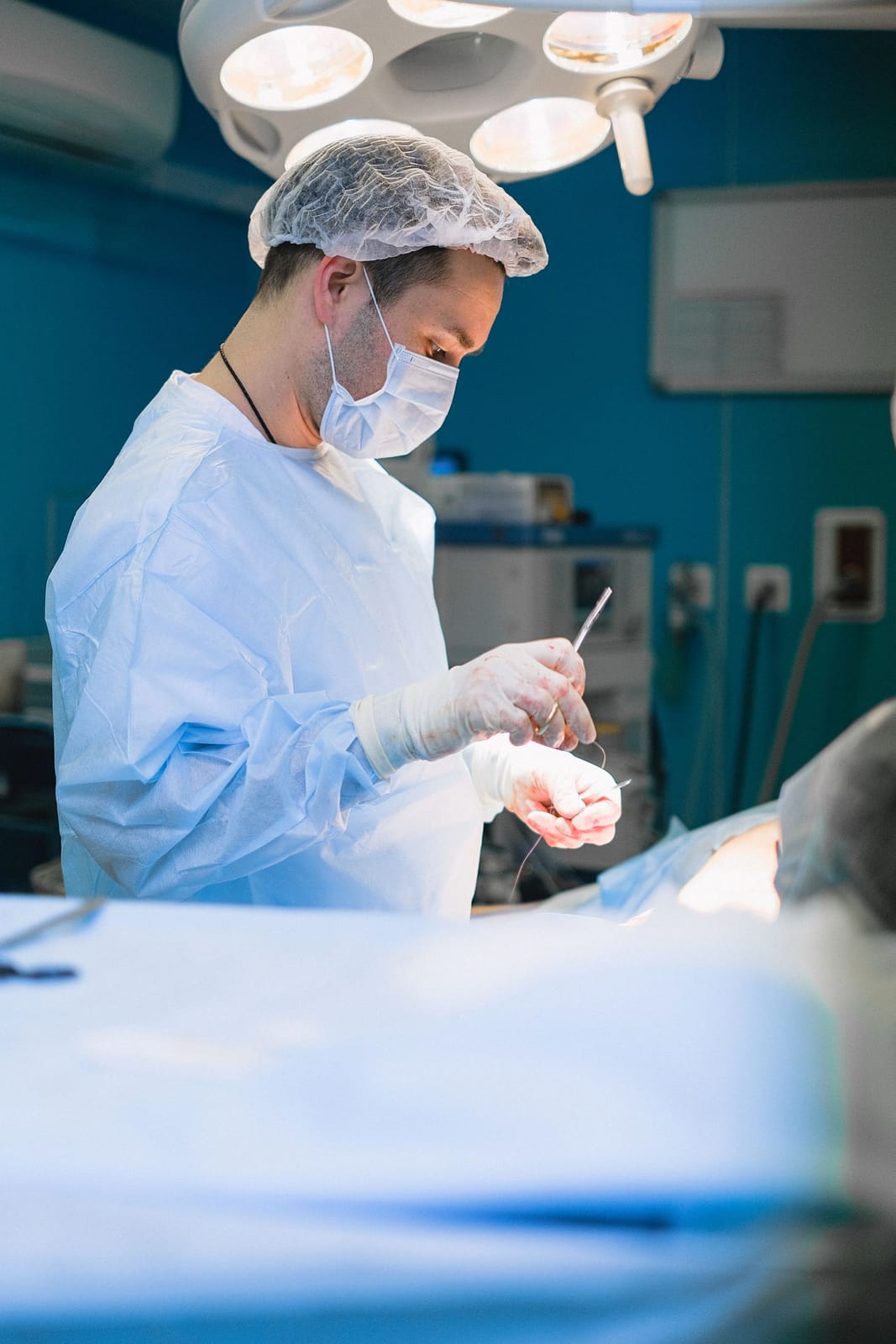
Operating theatres. The CDC’s 1999 surgical site infection guideline recommended that staff “wear a cap or hood to fully cover hair on the head and face when entering the operating room.” (CDC notes that guideline has since been superseded by a 2017 update.) How much coverage is enough is still debated. A 2018 joint statement by surgical, anaesthesia, perioperative nursing and infection prevention bodies, including AORN and The Joint Commission, said the requirement for ear coverage “is not supported by sufficient evidence” and that available evidence does not link the type of hat or extent of hair coverage to infection rates. Hospitals set their own theatre attire policy within that range.
Pharmaceutical cleanrooms. EU GMP Annex 1 (2022) is explicit. In Grade D and Grade C areas, “hair, beards and moustaches should be covered.” In Grade B, “sterile headgear should enclose all hair (including facial hair)” and be tucked into the neck of the sterile suit. WHO’s GMP guidance for sterile products uses almost the same wording. Saudi and GCC pharmaceutical plants working to EU or WHO GMP follow these grades, which is where bouffant caps and balaclava hoods earn their place.
How do you set a hair-restraint policy that passes inspection?
- Map the zones. List every area where food is prepared or stored, or where a cleanroom grade applies.
- Name the people. Food handlers, cleaners, technicians, managers, visitors, delivery drivers.
- Pick the product per zone: hairnet, bouffant or mob cap, plus beard covers or hoods where required.
- Put stock at the entrance to each zone, with a bin for used items on the way out.
- Write it into your HACCP or GMP procedures and train new staff on day one.
WinHyCare is a supplier and exporter of hairnets, caps and hoods to food businesses, hospitals and pharmaceutical plants in Saudi Arabia, the UAE and the wider GCC, supplied to ISO 9001 and ISO 13485 quality standards and packed 100 pieces per bag for high-volume issue. See our supply pages for Saudi Arabia and the UAE, or send us your monthly quantities for a bulk quote.
Frequently asked questions
Who is required to wear a hairnet?+
Food handlers. In Saudi Arabia, workers preparing food in restaurants must keep head hair tightly covered. In Dubai, anyone handling food or entering a food preparation or storage area must cover their hair with a clean hat or hairnet, and visitors follow the same hair-restraint policy. Operating theatre and cleanroom staff also cover their hair under healthcare and GMP rules.
Do waiters and cashiers have to wear hairnets?+
It depends on the jurisdiction and the job. The US FDA Food Code exempts counter staff who serve only beverages and wrapped or packaged foods, hosts and wait staff who present minimal risk. The Dubai Food Code is broader: it applies to anyone handling food and anyone entering a food preparation or storage area. Saudi Arabia's restaurant rule targets workers who prepare food. Check the rule that applies to your outlet.
Do beards need to be covered in food handling?+
In Dubai, beards must be completely covered with beard nets where required, and ADAFSA in Abu Dhabi lists beard covers among food handlers' protective clothing. The US FDA Food Code also requires beard restraints. We found no beard clause in Saudi Arabia's 2025 restaurant requirements, but you can still require beard covers through your own HACCP plan.
Is a bouffant cap the same as a hairnet?+
Both are hair restraints, but they differ. A hairnet is an open mesh, usually nylon, that is light and breathable. A bouffant cap is a pleated non-woven cap with an elastic edge that fully encloses long or thick hair. Regulations generally accept either, so the choice comes down to hair length, heat and how much coverage your HACCP plan requires.
Why do food handlers have to wear hair restraints?+
To keep hair out of food. The US FDA Food Code's annex explains that a hair restraint keeps dislodged hair from ending up in the food and may deter employees from touching their hair, which reduces the chance of transferring contamination from hands to food.
Sources
- Restaurant Requirements (اشتراطات المطاعم), 1446H/2025, Ministerial Decision 4600653138/1, section 5.10, Ministry of Municipalities and Housing, Kingdom of Saudi Arabia
- Food Hygiene Requirements (Annex II, Chapters III and VIII), Saudi Food and Drug Authority (SFDA)
- Food Code (2013), sections 5.3 and 5.5, Dubai Municipality
- Code of Practice No. (29) of 2019: Food Hygiene for Retail Business, Abu Dhabi Agriculture and Food Safety Authority (ADAFSA)
- Food Code 2022, section 2-402.11 Hair restraints, and Annex 3, US Food and Drug Administration
- Recommended International Code of Practice: General Principles of Food Hygiene, CAC/RCP 1-1969, Rev. 3 (1997), Codex Alimentarius Commission (FAO/WHO)
- EudraLex Volume 4, Annex 1: Manufacture of Sterile Medicinal Products, C(2022) 5938 final, section 7.13, European Commission
- WHO good manufacturing practices for sterile pharmaceutical products, TRS 961 (2011), Annex 6, World Health Organization
- Guideline for Prevention of Surgical Site Infection, 1999 (Mangram AJ et al.), US Centers for Disease Control and Prevention / HICPAC
- Recommendations for Operating Room Attire (joint statement, 2018), American College of Surgeons