How to Choose a ULT Freezer: Cascade vs Self-Cascade, -80°C vs -86°C, Sizing and Energy
How to choose a -80°C ULT freezer: cascade vs self-cascade vs dual-system, -80 vs -86°C, capacity sizing, backup and energy use, with sourced data.
Published · 9 min read

Key facts
- A ULT freezer is a laboratory freezer that holds set points between -70°C and -80°C, which is how ENERGY STAR defines the category. -86°C is the lowest temperature most models reach; -80°C is the usual working set point.
- Cascade freezers chain two refrigeration circuits with two refrigerants; self-cascade (auto-cascade) freezers use one compressor and a refrigerant mixture. Dual-system freezers add a second independent system for redundancy.
- Running at -70°C instead of -80°C cut measured energy use by 20–22% (University of Copenhagen) and 28% (University of Edinburgh). ISBER cautions that a warmer set point must still suit the samples.
- ISBER recommends reserve freezer capacity equal to your largest single unit, and WHO notes that only about 50% of a ULT's capacity is usable when sizing for vaccine storage.
- Ambient temperature matters in India: WHO says to install ULT freezers in an air-conditioned room below 30°C, and an NIH study found units ran efficiently below 25°C.
Buying an ultra low temperature (ULT) freezer comes down to five decisions: the refrigeration system (cascade, self-cascade or dual-system), the set point (-70°C, -80°C or the -86°C minimum), the capacity, how the unit will be monitored, and where it will stand. This guide works through each one using published test data and guidance from ENERGY STAR, ISBER, WHO and university energy studies, with WinHyCare model data where it helps to show real numbers.
What counts as an ultra low temperature freezer
ENERGY STAR defines a ULT freezer as “a freezer designed for laboratory application that is capable of maintaining set point storage temperatures between -70 °C and -80 °C” (ENERGY STAR v2.0, §1.A.3). Most models are adjustable further: WinHyCare’s range runs from -40°C to -86°C in 1°C steps.
Typical uses are biological samples, cell lines, enzymes and nucleic acids, long-term frozen blood components, and vaccines that need ultra-cold storage. WHO and UNICEF describe the ultra-cold chain as “-70 °C +/-10 °C”, with ULT freezers storing these vaccines between -80°C and -60°C (WHO/UNICEF logistics guidance, §3 and Annex 2).
If your material is labelled for -20°C to -40°C, a -40°C medical freezer uses less space and power and is the better buy.
Cascade vs self-cascade vs dual-system
ULT freezers use one of two basic refrigeration designs, and some add a second system for redundancy.
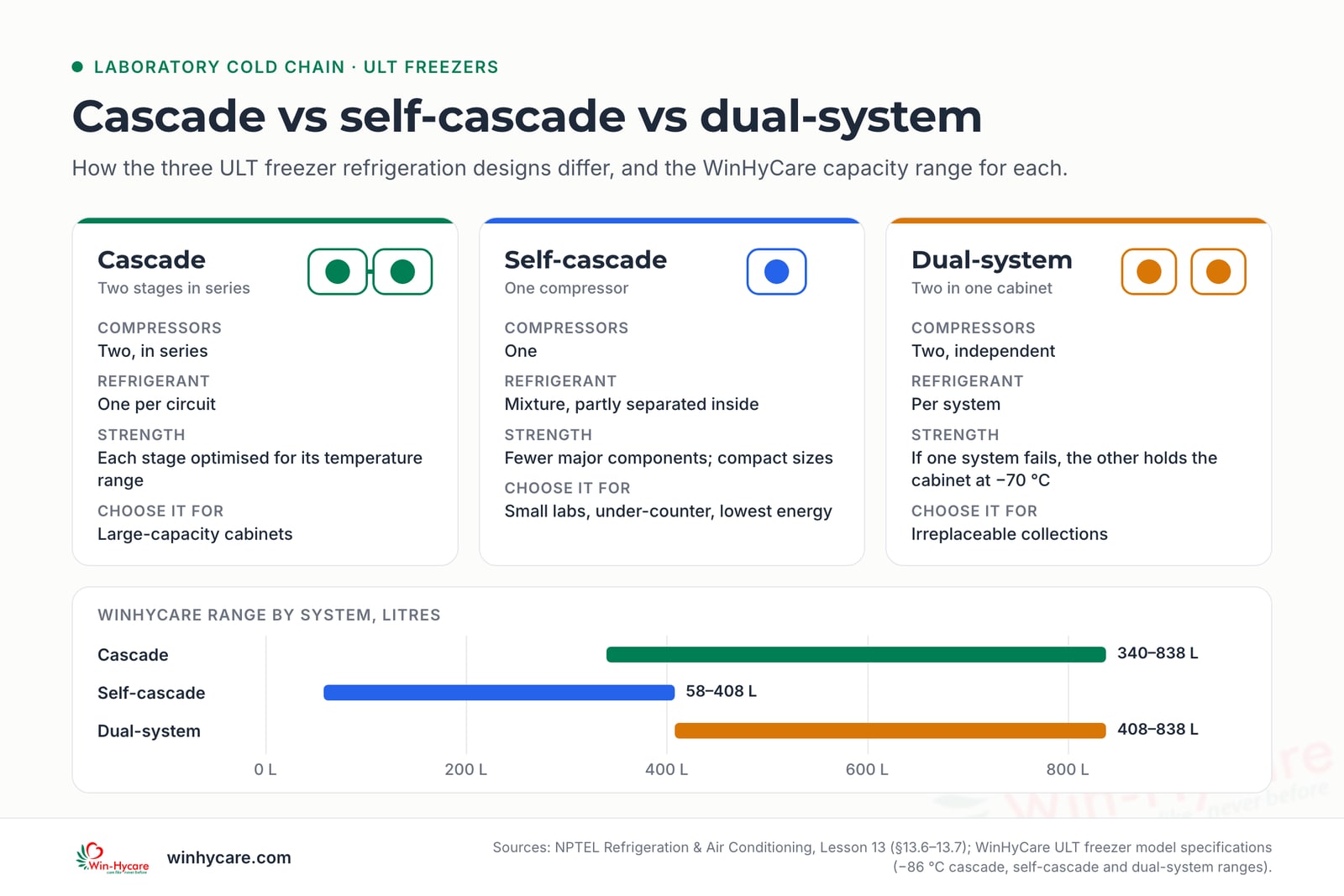
Cascade. “A series of refrigerants with progressively lower boiling points are used in a series of single stage units. The condenser of lower stage system is coupled to the evaporator of the next higher stage system” (NPTEL Lesson 13, §13.6). Each circuit can use “a refrigerant that is best suited for that particular temperature range”, avoiding very high or very low pressures. The trade-offs NPTEL lists are a temperature difference in the cascade condenser, “which leads to loss of efficiency”, and load matching between stages that is “difficult, especially during the system pull-down”.
Self-cascade (auto-cascade). “A variation of cascade system, in which a single compressor is used” with a refrigerant mixture that is partly separated inside the system (NPTEL, §13.7). One compressor means fewer major components and allows compact cabinets, including under-counter units.
Dual-system. Two independent refrigeration systems in one cabinet, so a single failure does not warm the contents to ambient. In WinHyCare’s dual-system models, if one system fails the other holds the cabinet at -70°C. We found no independent published standard for this configuration, so judge it on the supplier’s stated failover temperature and test it during commissioning.
| Cascade | Self-cascade | Dual-system | |
|---|---|---|---|
| Compressors | Two, in series | One | Two, independent |
| Refrigerant | One per circuit | Mixture | Per system |
| Strength | Each stage optimised for its range | Fewer major components; compact sizes | Redundancy if one system fails |
| Choose it for | Large-capacity cabinets | Small labs, under-counter, lowest energy | Irreplaceable collections |
| WinHyCare range | 340L–838L | 58L–408L | 408L–838L |
No independent peer-reviewed comparison we found ranks cascade above self-cascade, or the reverse, for ULT freezers in general. Compare the stated energy use, pull-down and hold-over times of the actual models you are considering.
-80°C vs -86°C vs -70°C
Treat -86°C as headroom, not a set point. The University of Edinburgh notes that ULTs are marketed with a range down to -86°C and that freezers run at -85°C “will consume 15% more energy” than at -80°C (Edinburgh 2015, p. 8).
Raising the set point to -70°C is the most studied energy saving:
| Study | Result |
|---|---|
| University of Copenhagen, 4 freezers at both settings | 20–22% lower energy at -70°C than -80°C |
| University of Edinburgh, 3 new identical units | 28% lower energy at -70°C |
| University of Colorado Boulder, metered units | 12.2 to 9.2 kWh/day (upright); 16.1 to 14.1 kWh/day (chest) |
Sources: Copenhagen, p. 1; Edinburgh, p. 1; CU Boulder.
Edinburgh’s measurements by set point show the curve clearly: 6.0 kWh/day at -70°C, 7.1 at -75°C, 8.4 at -80°C and 9.6 at -85°C, for new freezers in a 17–18°C room (Table 1, p. 5). Copenhagen also found cabinets held within 1°C of a -70°C set point but drifted up to 4.5°C at -80°C. After a power cut, Edinburgh’s -70°C freezers took about 41 hours to warm to 0°C against just under 44 hours at -80°C.
The caveat comes from ISBER: “Use of a higher set temperature to save energy may not be recommended based on the need to fulfill specimen fitness for purpose” (ISBER 5th ed., H3.1, p. 120). Set the temperature from the most demanding sample in the cabinet, not from the energy bill.
Capacity sizing
Start from what you store, not from litres. ULT capacity is usually quoted in 2-inch storage boxes:
| Model | System | Capacity | 2-inch boxes | Energy (stated) | Hold-over |
|---|---|---|---|---|---|
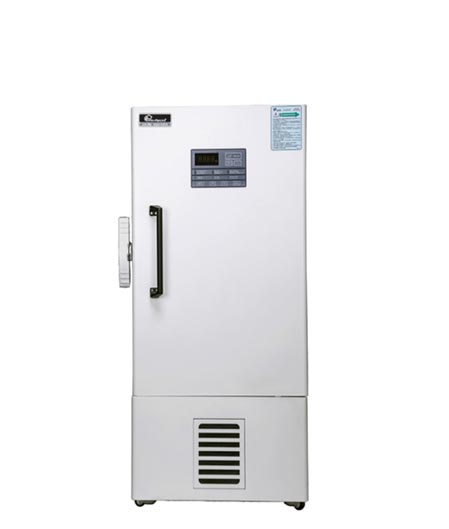 | Self-cascade, 1 compressor | 340L | 192 | 13.09 kWh/24h | 205 min |
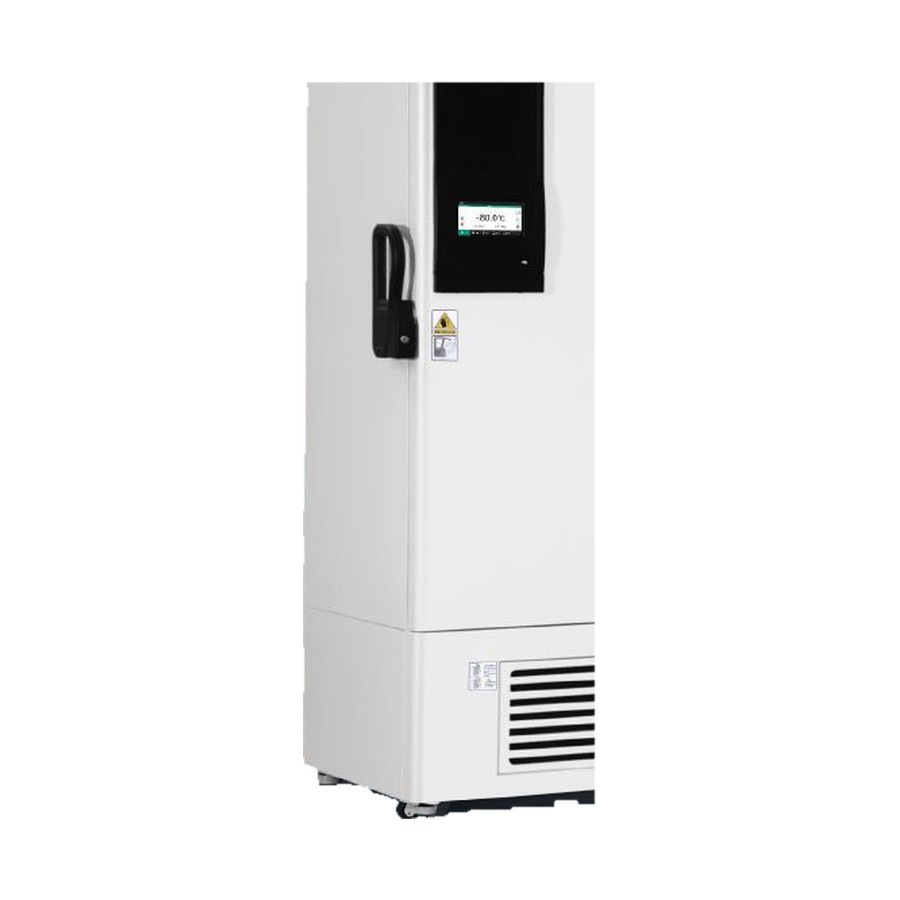 | Self-cascade, 1 compressor | 408L | 288 | 12.82 kWh/24h | 234 min |
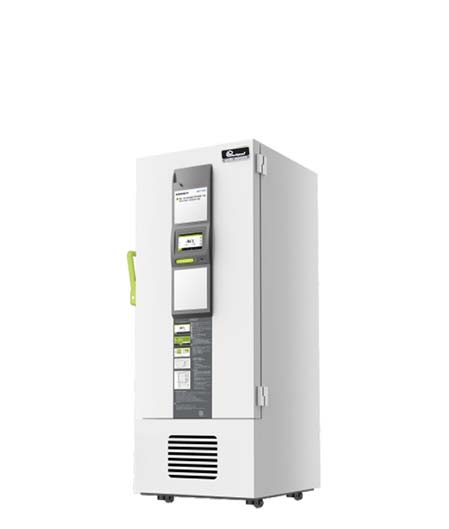 | Cascade, 2 compressors | 588L | 400 | 16.02 kWh/24h | 273 min |
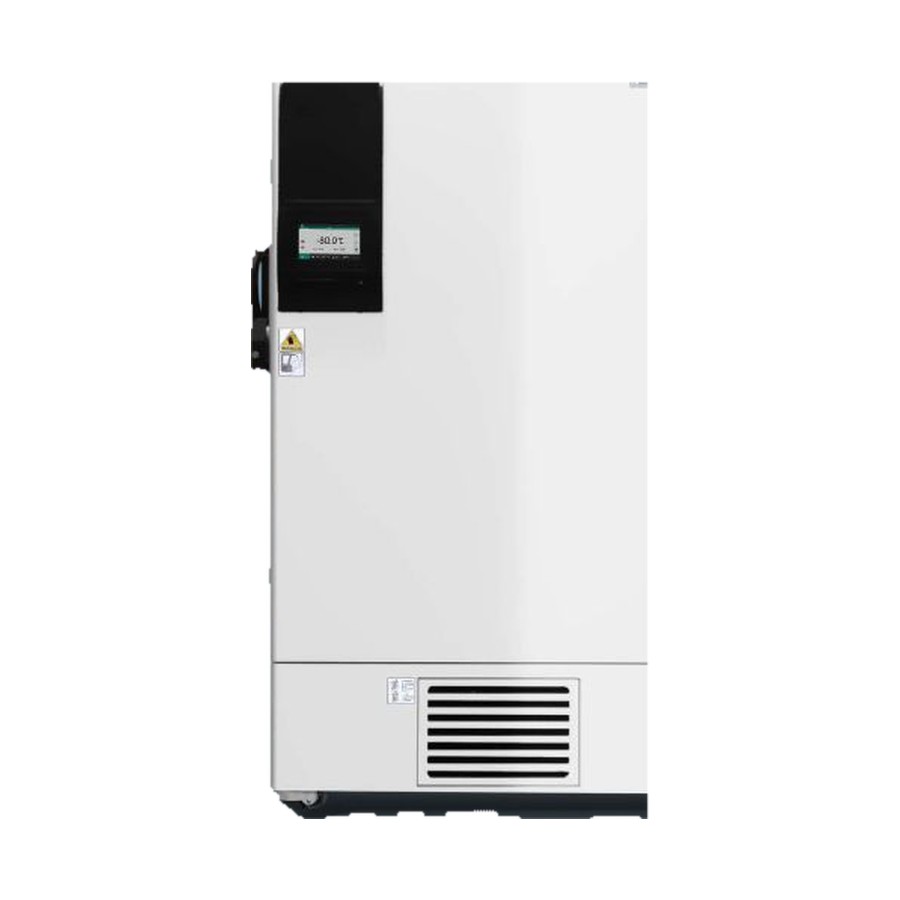 | Cascade, 2 compressors | 728L | 504 | 23.44 kWh/24h | 292 min |
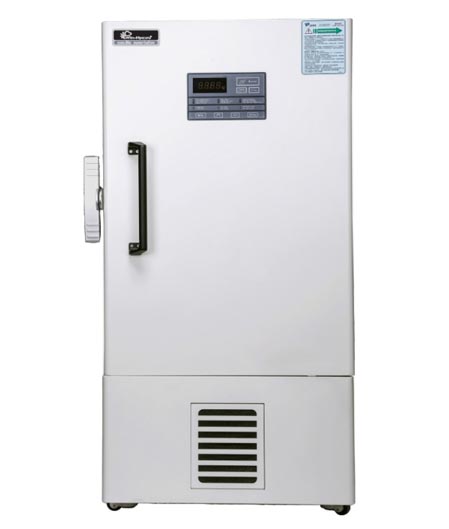 | Cascade, 2 compressors | 838L | 600 | 19.98 kWh/24h | 304 min |
Figures are from WinHyCare’s model specifications; ask for the set point and ambient temperature behind any energy figure before comparing quotations. For the full range, including the 58L under-counter unit and dual-system models, see -86°C ULT freezers.
A practical sizing sequence:
- Count current boxes (or racks) by sample type.
- Add growth for the period you expect the freezer to serve.
- Add reserve capacity. ISBER: “The extra-capacity equipment should be equal to the capacity of the largest single storage unit and should be maintained in reserve” (ISBER H9, pp. 123–124).
- For vaccine cartons, halve the gross volume. WHO: “only about 50% of the storage capacity is used. Therefore, for a ULT freezer of 700 L, only about 350 L would be used” (WHO/UNICEF, Annex 2, p. 54).
Size also affects efficiency. Copenhagen found upright ULTs on average 22% more energy-efficient per litre than chest freezers, and large freezers 13% more efficient per litre than small ones (Copenhagen, p. 1). On those figures, two medium freezers will usually use more energy than one large freezer of the same total volume, but they spread the risk of a breakdown. Decide that trade-off deliberately.
Energy use and how it is measured
Measured consumption varies widely. Copenhagen’s certified lab test of 18 new ULTs at -80°C and about 25°C ambient found 8.5 to 22.2 kWh per day; Edinburgh puts a typical ULT at “anywhere between 9-20 kWh/day”; the US EPA says a conventional ULT can use about 20 kWh per day (Copenhagen, pp. 3–5; Edinburgh, p. 8; EPA).
ENERGY STAR v2.0, in effect from 30 June 2025, rates ULTs in kWh per day per cubic foot at -75°C: 0.46 or less for units under 20 cubic feet and 0.35 or less for 20 cubic feet and above. Units are tested at -70°C and -80°C, in a 24°C ± 1°C room, with six 15-second door openings (ENERGY STAR v2.0, §3.2.5 and test method). A figure measured at 24°C will not hold in a lab running at 32°C, which is why the installation room matters.
Installation in Indian conditions
- Room temperature. WHO says “All ULT freezers to be installed in an air-conditioned room to ensure working ambient temperature < 30 °C” (WHO/UNICEF, Annex 2, pp. 56–57). An NIH field study found ULTs operated efficiently in ambient temperatures below 25°C, and that a poorly maintained freezer in rooms above 32°C produced cabinet temperatures 12.5°C warmer than the set point (Gumapas and Simons, 2013).
- Clearance. ISBER: most ULTs need “at least 6-8 inches (15-20 cm) of space on the sides/top/rear of the unit for heat dissipation”, and up to 33 cm helps in a restricted room (ISBER H3, p. 120).
- Air-conditioning load. The heat a ULT rejects has to be removed by the room’s cooling; plan the AC capacity with the freezers, not after them.
- Power. Use a dedicated, earthed circuit with voltage protection and generator or UPS backup.
Alarms, monitoring and commissioning
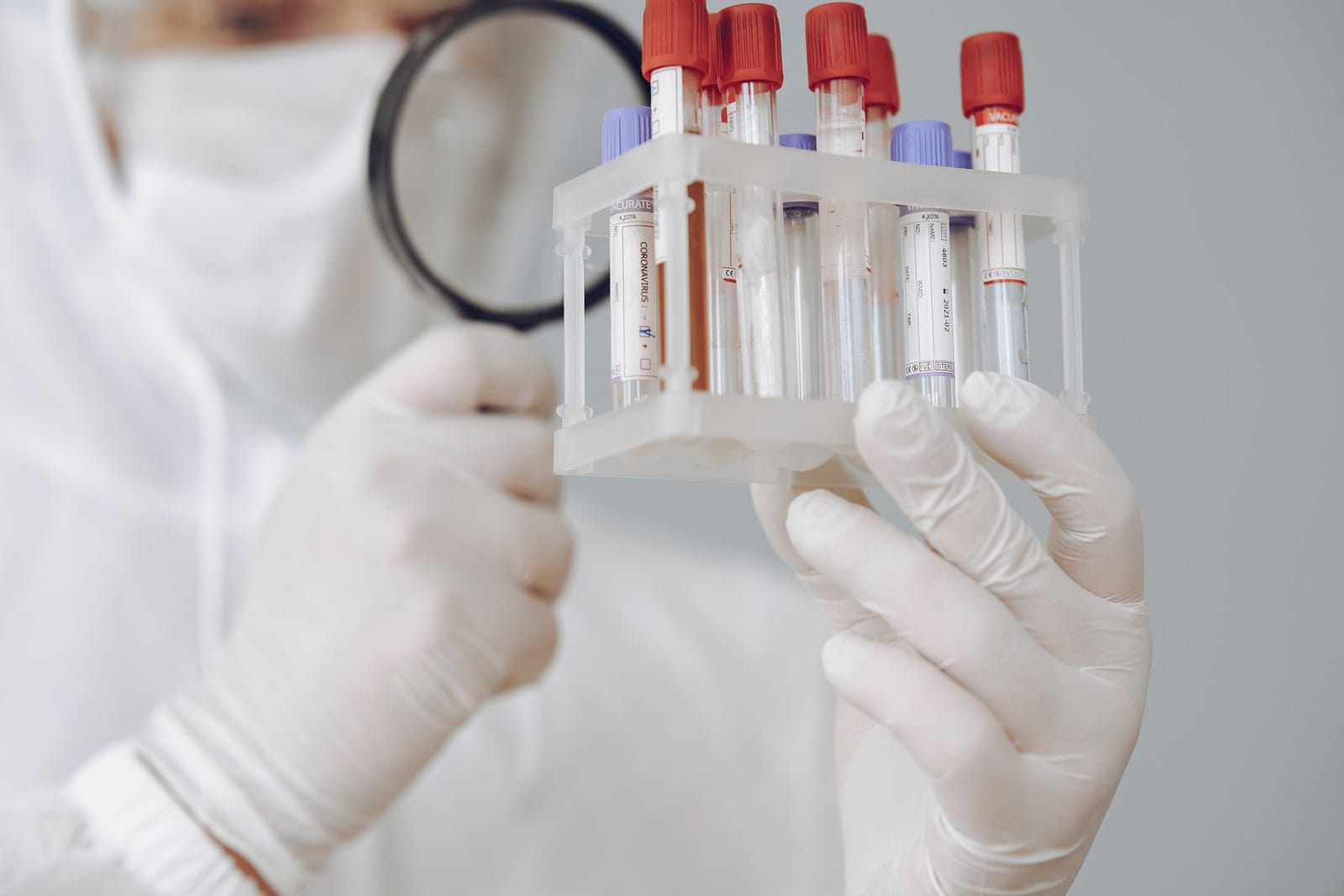
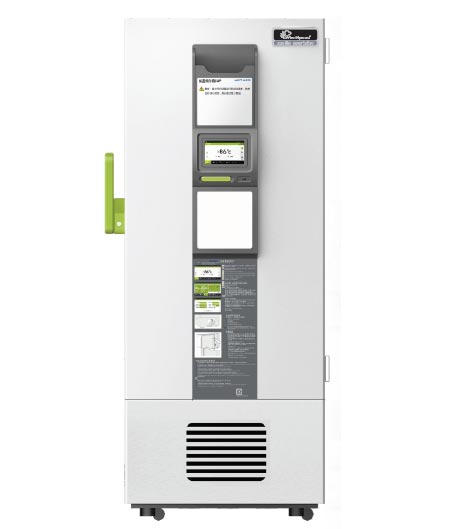
ISBER recommends connecting alarm outputs “to facility-wide monitoring systems to enable remote monitoring”, recording temperatures manually on a daily or weekly basis even where monitoring is automatic, and testing alarms (ISBER H3.1, p. 120). Do not rely on the freezer’s own display alone: Edinburgh found displays can differ from actual internal temperature by as much as 8–10°C (p. 9).
Before loading samples, ISBER asks for qualification by temperature mapping “with multiple temperature readings taken throughout the storage area or unit”; warm spots tend to be at the front of upright freezers and the top of chest freezers (ISBER D3.6.2.3, pp. 80–81).
WinHyCare ULT freezers provide high and low temperature, power failure, sensor and door alarms, USB temperature-data download, and remote alarm contacts on many models; New-Generation models list a 72-hour power-failure backup for the alarm system. They are certified to ISO 9001/13485/14001 standards.
Buyer’s checklist
| Question | Why it matters |
|---|---|
| What is the most demanding sample’s storage temperature? | Sets the set point and whether -40°C is enough |
| How many 2-inch boxes now, and in five years? | Capacity |
| Where is the reserve capacity? | ISBER recommends reserve equal to the largest unit |
| Is the room air-conditioned below 30°C? | Performance and energy (WHO, NIH) |
| What set point and ambient were used for the stated kWh figure? | Comparing quotations fairly |
| Does a single compressor failure put samples at risk? | Dual-system vs cascade vs self-cascade |
| How will alarms reach someone at night? | Remote monitoring (ISBER) |
For a model-wise quotation, send your box count, set point and installation city through our ULT freezer page.
Frequently asked questions
What is the difference between a -80°C and a -86°C freezer?+
Usually nothing: -86°C is the lowest temperature the freezer can reach and -80°C is the normal set point. The University of Edinburgh measured 15% more energy use at -85°C than at -80°C, so running at the minimum costs more without a storage benefit for most samples.
Is a cascade or a self-cascade ULT freezer better?+
Neither is better in every case. A cascade system uses two circuits, each with a refrigerant suited to its temperature range. A self-cascade system uses one compressor with a refrigerant mixture, which means fewer major components. Compare stated energy use, pull-down and hold-over times for the specific models you are considering.
Can I run my ULT freezer at -70°C to save energy?+
Many labs do. Copenhagen measured 20–22% savings and Edinburgh 28%. ISBER's best practices say a higher set temperature may not be appropriate if it affects whether the specimens remain fit for purpose, so check the storage requirement of each sample type first.
How much electricity does a ULT freezer use?+
Measured figures vary widely: 8.5 to 22.2 kWh per day across 18 new freezers tested at -80°C by the University of Copenhagen, and 9 to 20 kWh per day as a typical range in the University of Edinburgh study. Heat rejected into the room adds air-conditioning load on top.
What room temperature does a ULT freezer need?+
WHO guidance says ULT freezers should be installed in an air-conditioned room with ambient temperature below 30°C. Many models, including WinHyCare's New-Generation range, specify an ambient range of 10°C to 32°C.
Sources
- ENERGY STAR Product Specification for Laboratory Grade Refrigerators and Freezers, Version 2.0 (with Final Test Method), US Environmental Protection Agency
- ISBER Best Practices: Recommendations for Repositories, Fifth Edition (2023), International Society for Biological and Environmental Repositories
- COVID-19 vaccination: supply and logistics guidance (interim guidance, February 2021), World Health Organization and UNICEF
- Plug load test for ULT freezers: 20–22% lower energy consumption at -70°C compared to -80°C, University of Copenhagen
- Efficient ULT freezer storage: an investigation of ULT freezer energy and temperature dynamics (2015), University of Edinburgh
- Factors affecting the performance, energy consumption, and carbon footprint for ultra low temperature freezers: case study at the National Institutes of Health, World Review of Science, Technology and Sustainable Development (Inderscience), 2013
- Refrigeration and Air Conditioning, Lesson 13: Multi-evaporator and cascade systems, NPTEL, IIT Kharagpur
- -70°C freezer efforts, University of Colorado Boulder Environmental Center
- Low temperature freezer technology and energy efficiency, US EPA ENERGY STAR