Ice-Lined Refrigerator (ILR) vs Vaccine Refrigerator vs Deep Freezer in India's Cold Chain
Ice-lined refrigerator (ILR), vaccine refrigerator and deep freezer compared: temperatures, holdover and where each is used in India's immunisation cold chain.
Published · 9 min read
Key facts
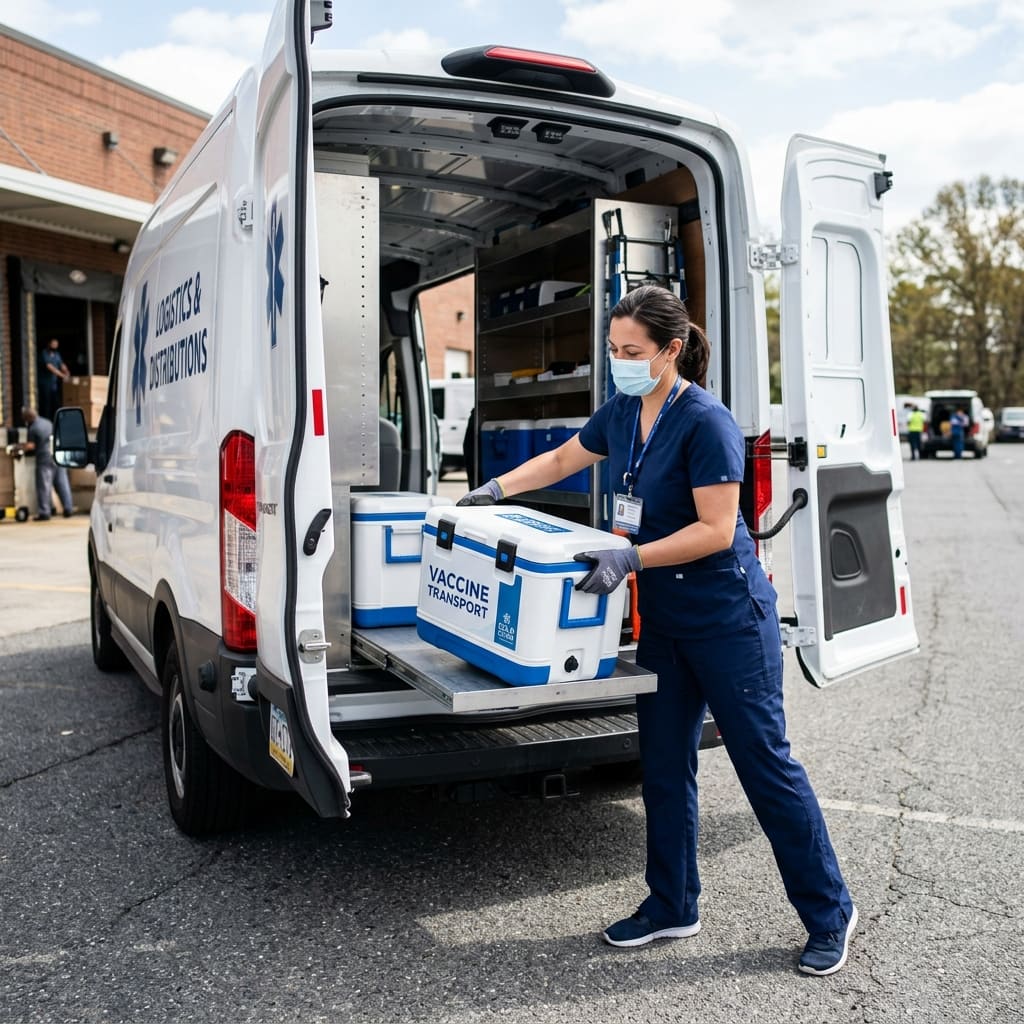
- An ice-lined refrigerator (ILR) is a top-opening refrigerator with a lining of frozen water packs. It keeps vaccines at +2°C to +8°C and can protect them with as little as 8 hours of electricity in 24 hours (MoHFW).
- MoHFW specifies a minimum ILR holdover of 20 hours at 43°C ambient. A deep freezer, which has no ice lining, is specified at 2 hours 30 minutes.
- Deep freezers run at -15°C to -25°C. At PHCs they are used only to freeze ice packs; at district level they also store OPV.
- MoHFW does not recommend domestic refrigerators for the Universal Immunization Programme because their holdover is only about 4 hours; WHO says domestic units should never be used to store vaccines.
- Outside government cold chain points, hospitals, clinics and pharmacies use purpose-built 2–8°C vaccine or pharmacy refrigerators. These are a different product from the WHO PQS-prequalified ILRs procured for the programme.
An ice-lined refrigerator (ILR) is the top-opening, 2–8°C vaccine refrigerator used at cold chain points in India’s Universal Immunization Programme (UIP); its ice lining keeps vaccines safe through long power cuts. A deep freezer runs at -15°C to -25°C and, at PHC level, is used only to freeze ice packs. A vaccine or pharmacy refrigerator is a purpose-built 2–8°C cabinet used by hospitals, clinics and pharmacies, and depends on mains or backup power rather than an ice lining. The three are designed for different jobs and suit different sites.
WinHyCare does not supply ILRs. We supply pharmacy and vaccine refrigerators and portable coolers, and wrote this guide because buyers often search for one when they need another.
Side-by-side comparison
| Ice-lined refrigerator | Deep freezer | Pharmacy / vaccine refrigerator | Domestic refrigerator | |
|---|---|---|---|---|
| Temperature | +2°C to +8°C | -15°C to -25°C | +2°C to +8°C | +2°C to +8°C |
| Holdover in a power cut | 20 h minimum at 43°C (MoHFW spec) | 2 h 30 min minimum at 43°C | Model-dependent; plan backup power | About 4 h (MoHFW) |
| Main use | UIP vaccine storage at PHC and district | Freezing ice packs; OPV at district | Hospital, clinic and pharmacy stock | Not recommended for vaccines |
Sources: MoHFW Immunization Handbook, Table 4.1 and pp. 87–90; WHO PQS E003.
How an ILR works
MoHFW describes the design: “Inside the ILR there is a lining of water containers (ice packs or tubes) fitted all around the walls and held in place by frame”, and “if the electricity supply fails, then the ice lining maintains the inside temperature of the refrigerator at a safe level for vaccines” (Handbook for Vaccine & Cold Chain Handlers, pp. 18–19). The top-opening lid matters too: an ILR “with a top-opening lid prevents loss of cold air during door opening and can keep vaccines safe with as little as 8 hours electricity supply in a 24-hour period” (MoHFW, p. 87).
ILRs come in two sizes, large for districts and small for PHCs (p. 87). MoHFW defines holdover as “the time taken by the equipment to raise the inside cabinet temperature from its cut-off temperature to the maximum temperature limit of its recommended range”, and lists what shortens it: higher ambient temperature, frequent lid opening, how the basket is used, and the condition of the ice lining (p. 85).
WHO treats the ILR as a sub-type of the ordinary vapour-compression refrigerator and states that most ILRs “can maintain acceptable temperatures below +8°C on as little as eight hours of electricity per 24 hours”, with the ice store keeping vaccine cool “for at least 20 hours” when power fails (WHO PQS E003). WHO’s guidance is that ILRs “are the preferred option where there is reliable mains electricity for at least eight hours per day” (Immunization in Practice, Module 2).
The freezing risk at the bottom
The ice lining is also the ILR’s weakness. “During the refreezing process some areas of an ILR can fall below 0°C – e.g. the bottom of the compartment. For non-grade A appliances freeze-sensitive vaccines should NEVER be stored within 150 mm of the base” (WHO PQS E003). Since 2016, WHO grades appliances A, B or C for freezing risk; grade A appliances “are certified as low vaccine freezing risk even if baskets are not used”.
Loading rules
MoHFW’s rules for the ILR (Table 4.2, p. 88):
- Keep all vaccines, including opened vials under the open vial policy, in the basket supplied with the ILR. Never keep vaccines on the floor of the ILR.
- Keep freeze-sensitive vaccines at the top of the basket and heat-sensitive vaccines at the bottom.
- Do not store other drugs or non-UIP vaccines in the ILR, and do not keep food or drinking water in it.
- Connect each ILR or deep freezer to the mains “through its own independent voltage stabilizer with proper earthing” (p. 90).
What the deep freezer is for
“Freezing ice packs in the DF maintains the cabinet temperature between -15°C and -25°C. At the PHC level, DF is used only for preparation of ice packs. At the district headquarters, DFs have been supplied for storage of recommended vaccines such as OPV and preparation of ice packs” (MoHFW, p. 88). MoHFW adds two prohibitions: “Do not keep any vaccine in the DF at sub-district level” and “Never keep diluents in the deep freezer” (Table 4.3).
A deep freezer “does not have holdover time like ILR as it does not have an ice lining inside its wall”, which is why its specified minimum holdover is only 2 hours 30 minutes at 43°C (p. 85). WHO’s storage guidance matches the programme’s split: “With a few exceptions, vaccines should be stored at +2°C to +8°C”, while “OPV should be stored in freezers at -25°C to -15°C in primary and subnational stores” (WHO VMH-E2, §2.2).
A cold chain point combines both: it is “located at a health centre (usually PHC/UHC/CHC) with an Ice Lined Refrigerator for storage of vaccines and a deep freezer for preparation of frozen ice packs” (MoHFW, p. 86).
Where a vaccine or pharmacy refrigerator fits
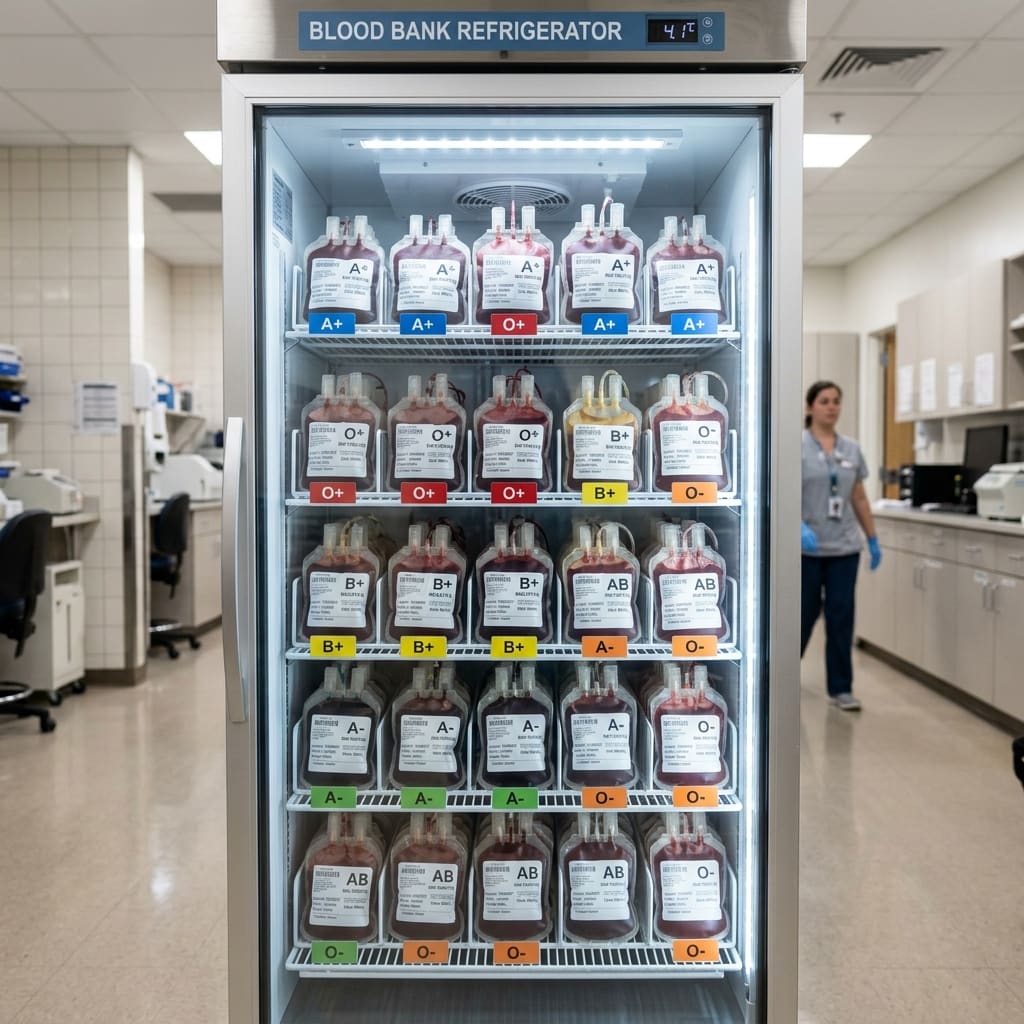
The UIP rule that non-UIP vaccines and other drugs must not go into the ILR means private hospitals, clinics and pharmacies need their own 2–8°C storage. MoHFW notes that urban dispensaries and private practitioners use domestic refrigerators, but these have “a holdover time of only 4 hours. Therefore, they are not recommended for common use in the UIP” (p. 90). WHO is blunter: “Domestic refrigerators and freezers should never be used to store vaccines” (WHO PQS E003), and “WHO recommends that only prequalified refrigerators be purchased” for programme vaccine storage (VMH-E2, §5.2.3).
The US CDC ranks suitable units for clinics: purpose-built and pharmaceutical-grade units ahead of household units, and “Never use dormitory- or bar-style combined refrigerator/freezer units for vaccine storage” (CDC toolkit, Section Three).
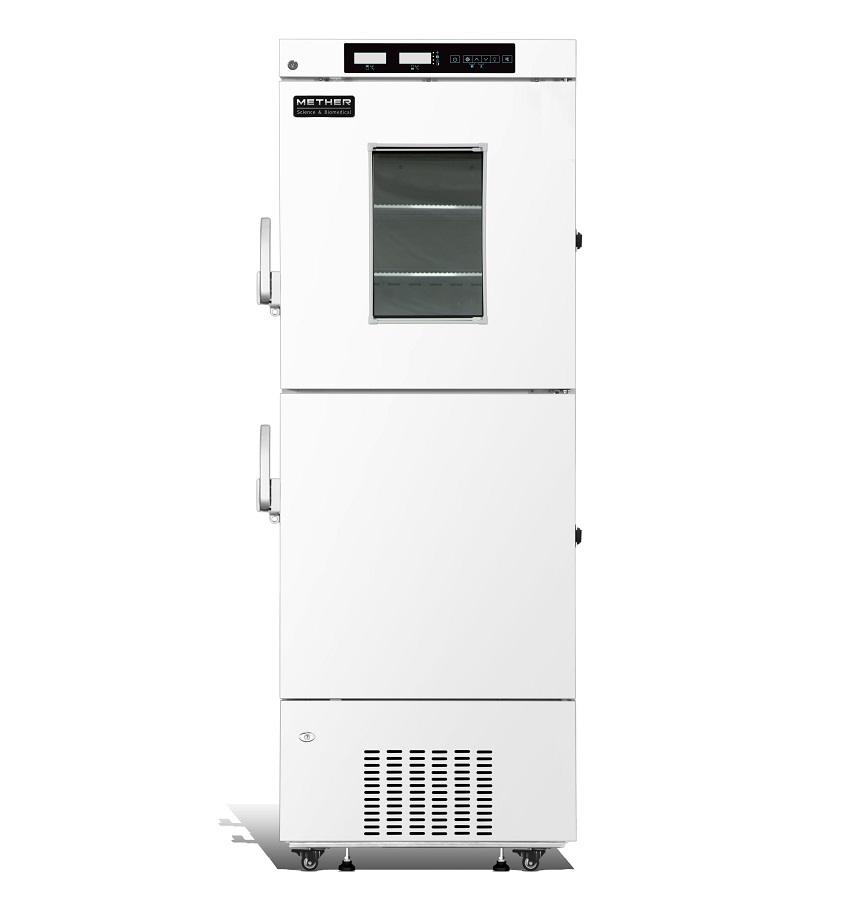
A purpose-built pharmacy refrigerator differs from an ILR in what it optimises. It gives tight temperature control, alarms and records, and front access to large stock; it does not have an ice lining, so long power cuts must be covered by a generator or UPS. WinHyCare’s models are listed below. They are not WHO PQS-prequalified and are not a substitute for the ILRs procured for government cold chain points.
| Model | Capacity | Temperature | Features |
|---|---|---|---|
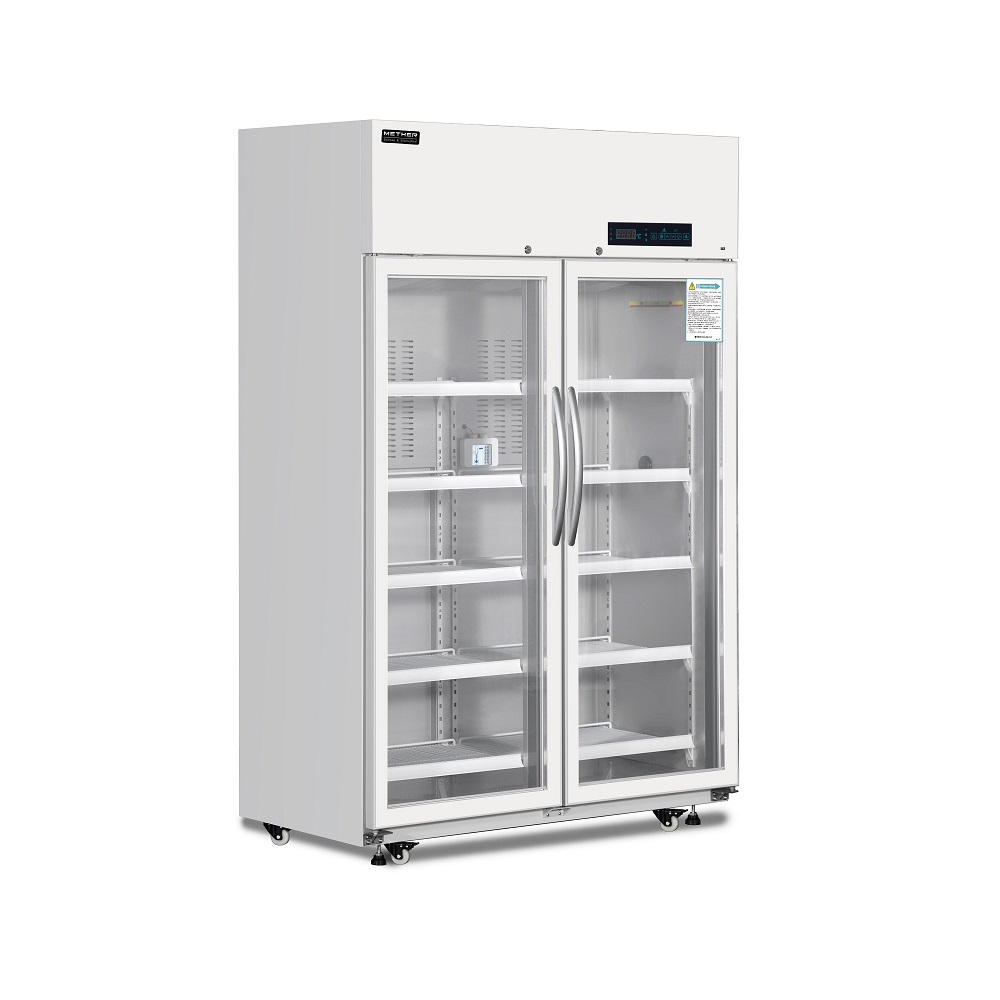 | 730L | 2–8°C, ±0.1°C accuracy | Forced air, self-closing glass door, alarms, USB export |
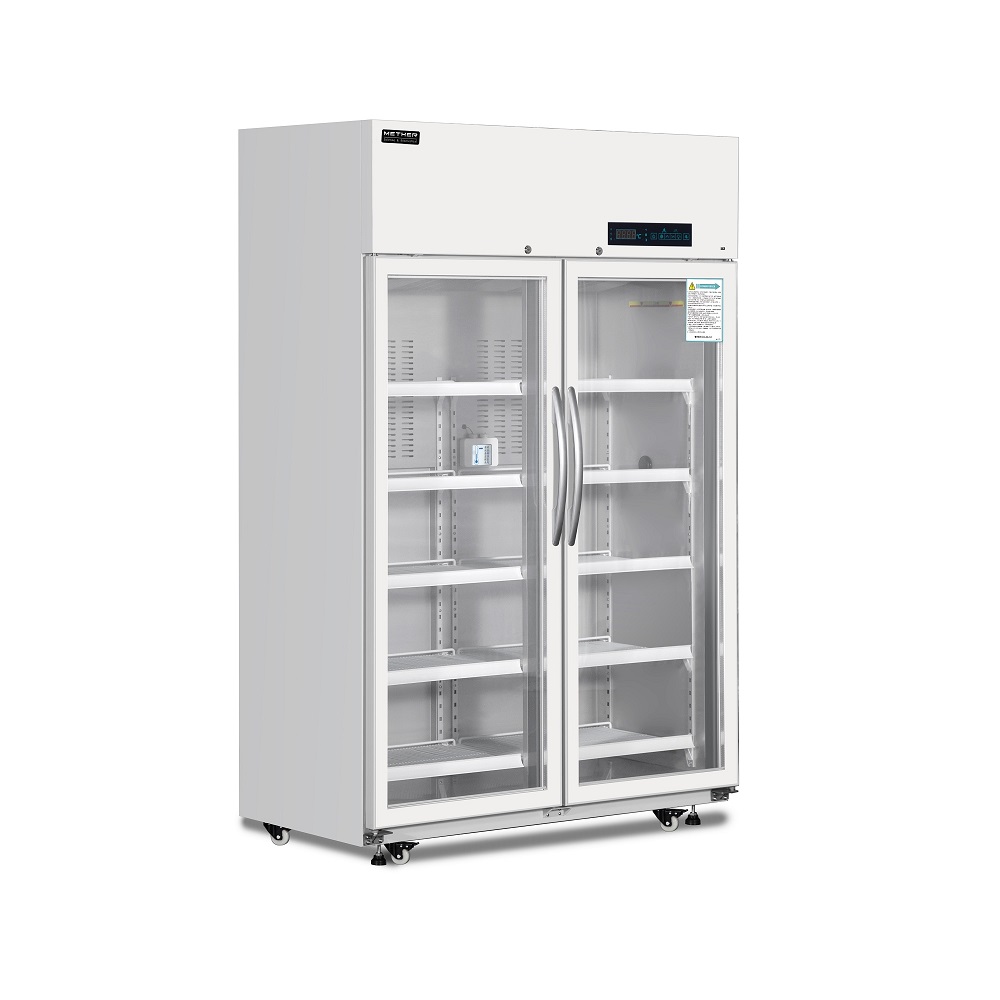 | 1000L | 2–8°C, ±0.1°C accuracy | Forced air, self-closing glass door, alarms, USB export |
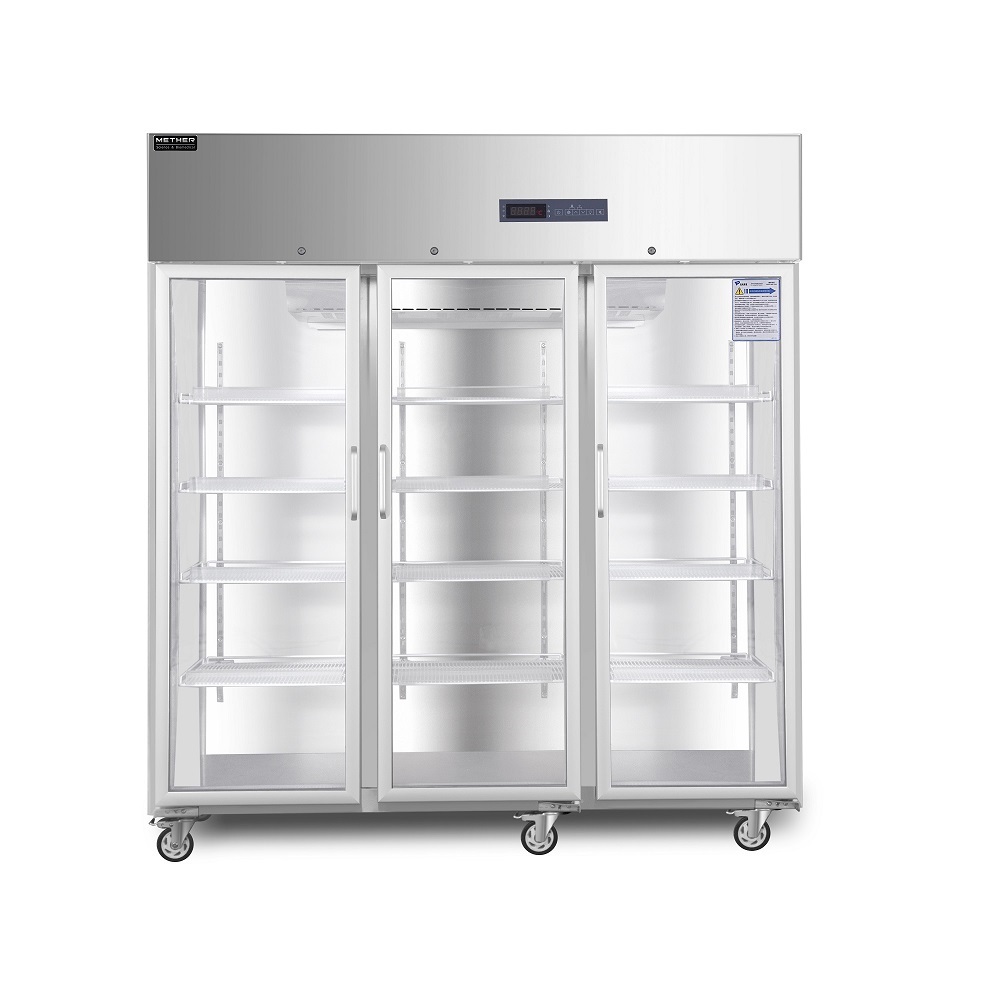 | 1500L | 2–8°C, ±0.1°C accuracy | Three glass doors, 12 shelves, alarms, USB export |
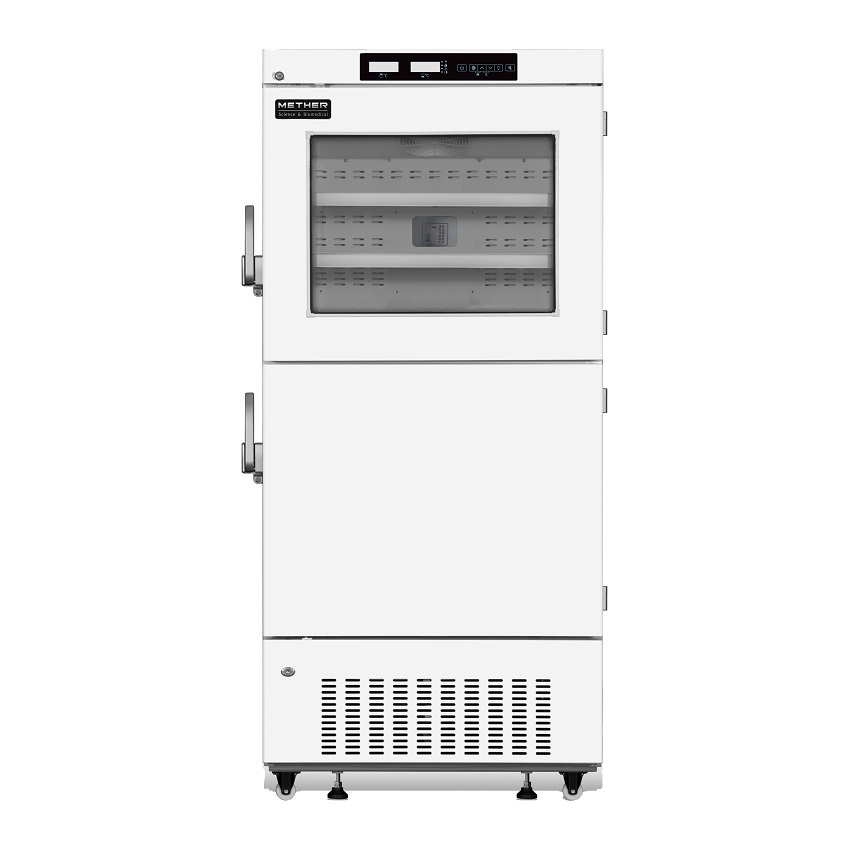 | 273L + 255L | 2–8°C and -10°C to -25°C | Refrigerator and freezer in one cabinet |
Freeze damage and the shake test
Freezing destroys several common vaccines. MoHFW lists HepB, Penta and PCV as freezing at -0.5°C, and IPV, DPT and TT at -3°C, all of which “should not be frozen”; OPV is “not damaged by freezing” (Table 4.5, p. 95). Conditioning ice packs before use “prevents freezing of vaccines (freeze-sensitive vaccines such as Hep B and T series) during transportation” (p. 93).
Where freezing is suspected, the shake test compares a suspect vial against a control vial frozen solid “at -20°C overnight in the DF”. If the suspect vial’s sediment settles at the same rate or faster than the frozen control, “the vaccine is damaged … Do NOT use”. The shake test is not applicable for IPV (pp. 96–97).
Transport: carriers and cold boxes
- Vaccine carrier: “Vaccine carrier (with 4 conditioned ice packs) maintains the inside temperature between +2°C and +8°C for 12 hours, if not opened frequently” (p. 99).
- Cold box: used to “store vaccines for transfer up to 5 days, if necessary for outreach sessions or when there is a power cut”, and to hold vaccines if an ILR breaks down (p. 91).
- Long power cuts: for outages of more than 16 hours a day, MoHFW advises an alternate power source for at least 8 hours a day, or transferring vaccines to a cold box, “which can hold the vaccines for 72 hours if not opened” (Table 4.12, p. 109).
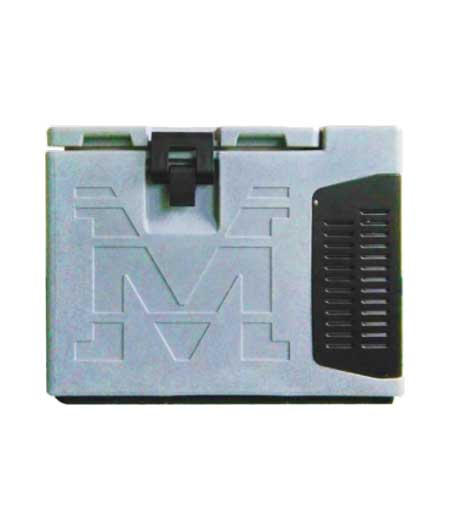
Carriers and cold boxes are passive. For vehicle-based transfers with power available, a compressor-powered portable cooler with a 2–8°C mode is another option for hospitals and private providers.
Temperature monitoring
MoHFW defines a cold chain break as a temperature “above +8°C or falls below +2°C in the ILR and above -15°C in the DF” (p. 100). Temperatures are recorded twice daily, and the logbook is kept for at least three years (Table 4.9, p. 103). WHO’s guidance is similar: manual recording “twice a day, seven days a week in large vaccine stores and at least five days a week in smaller subnational vaccine stores and health facilities” (VMH-E2).
India’s programme also monitors equipment electronically. The Electronic Vaccine Intelligence Network (eVIN), “conceptualized and piloted by the Immunisation Technical Support Unit (ITSU), MoHFW”, uses automated loggers that “monitor and record the storage temperatures of ILRs, DFs, WICs and WIFs” (MoHFW, pp. 121–123). The national cold chain management information system was developed in 2010 by MoHFW with support from UNICEF India (p. 120), and the handbook describes a network of about 27,000 cold chain points (Part 1, p. 6).
Which one do you need?
| Your site | Equipment |
|---|---|
| Government PHC, CHC or district store in the UIP | ILR and deep freezer, procured through the programme |
| Private hospital, clinic or pharmacy storing vaccines | Purpose-built 2–8°C vaccine or pharmacy refrigerator with backup power |
| Site that also needs frozen storage | Combined refrigerator-freezer, or a separate -40°C medical freezer |
| Outreach and transfers | Vaccine carriers and cold boxes; powered coolers for vehicles |
Frequently asked questions
What is an ice-lined refrigerator?+
An ILR is a top-opening vaccine refrigerator with water containers (ice packs or tubes) fitted around its inner walls. The lining freezes while power is on and keeps the cabinet at +2°C to +8°C during power cuts. MoHFW states it can keep vaccines safe with as little as 8 hours of electricity in a 24-hour period.
What temperature does a deep freezer maintain in the immunisation cold chain?+
-15°C to -25°C. At PHCs the deep freezer is used only to prepare frozen ice packs; at district level deep freezers also store recommended vaccines such as OPV.
Can vaccines be stored in a domestic refrigerator?+
MoHFW says domestic refrigerators are not recommended for common use in the UIP because their holdover time is only about 4 hours, and WHO's prequalification guidance warns that domestic refrigerators and freezers should never be used to store vaccines.
Is a pharmacy refrigerator the same as an ILR?+
No. A pharmacy or vaccine refrigerator is usually front-opening, with forced-air cooling, alarms and data logging, and relies on mains or backup power. An ILR is top-opening with an ice lining that provides long holdover during power cuts. Government cold chain points use WHO PQS-prequalified ILRs.
How long does a vaccine carrier keep vaccines cold?+
MoHFW states that a vaccine carrier with 4 conditioned ice packs keeps the inside temperature between +2°C and +8°C for 12 hours if it is not opened frequently.
Sources
- Immunization Handbook for Medical Officers (2016, reprint 2017), Unit 4: Cold chain and vaccine logistics (WHO India mirror), Ministry of Health and Family Welfare, Government of India
- Immunization Handbook for Medical Officers (2016, reprint 2017), Part 1 (WHO India mirror), Ministry of Health and Family Welfare, Government of India
- Handbook for Vaccine & Cold Chain Handlers (2010), Ministry of Health and Family Welfare, Government of India
- E003: Refrigerators and freezers (PQS catalogue category), World Health Organization, Prequalification of Immunization Devices
- Immunization in Practice, Module 2: The vaccine cold chain, World Health Organization
- Vaccine Management Handbook, Module VMH-E2: How to monitor temperatures in the vaccine supply chain (WHO/IVB/15.04), World Health Organization
- Vaccine Storage and Handling Toolkit, US Centers for Disease Control and Prevention