How Long Can Blood Be Stored in a Refrigerator? Shelf Life of Blood and Its Components
How long whole blood, red cells, platelets, plasma and cryo keep: red cells at 2–6°C last 21, 35 or 42 days by bag solution, per Indian rules, WHO and AABB.
Published · 8 min read
Key facts
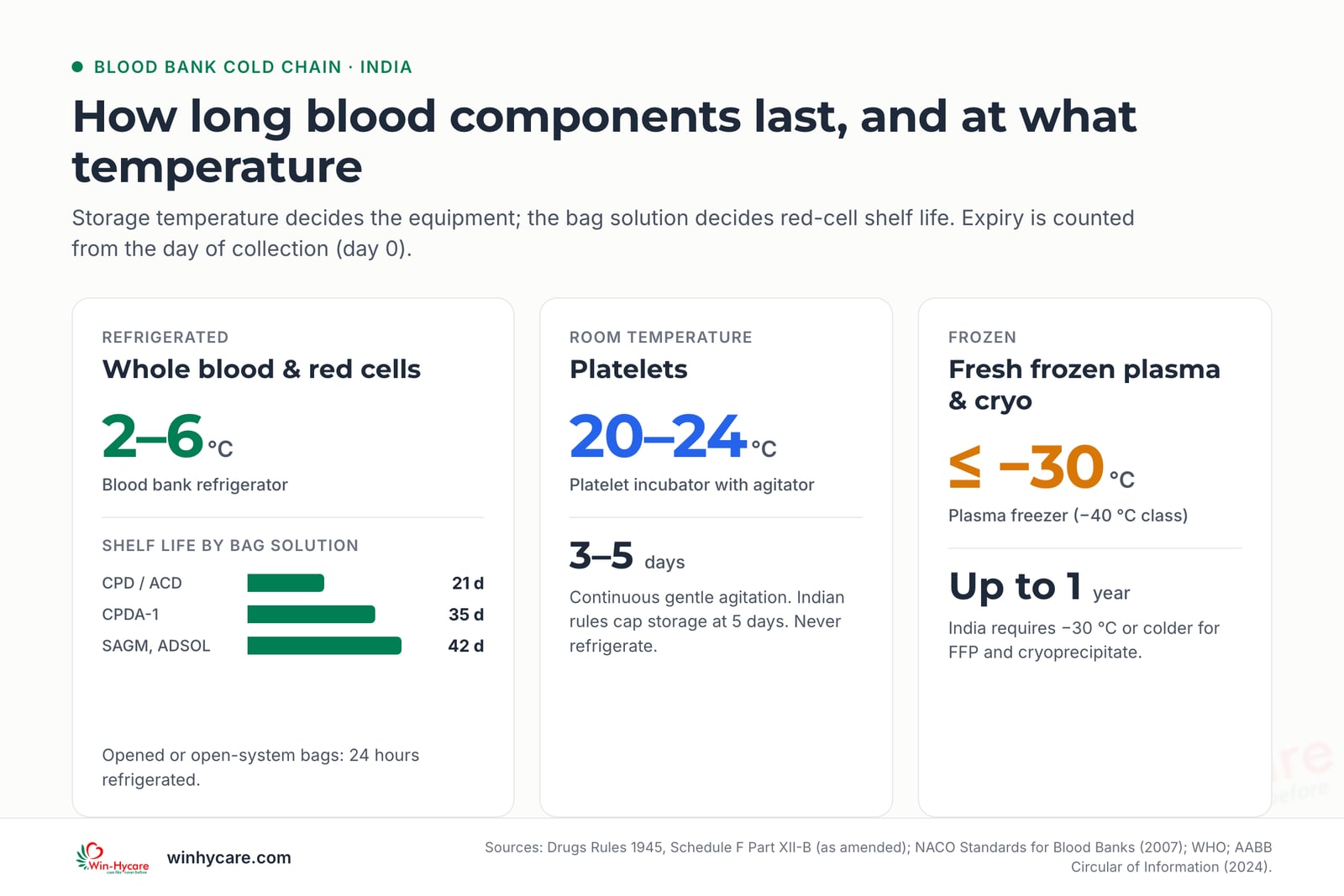
- Whole blood and red cells are stored at 2–6°C. Their shelf life depends on the solution in the bag: 21 days in CPD or ACD, 35 days in CPDA-1, and up to 42 days for red cells in additive solutions such as SAGM, ADSOL or Nutricel.
- Platelets are not refrigerated. They are kept at 20–24°C with continuous gentle agitation for 3 to 5 days, depending on the bag; Indian rules cap storage at 5 days.
- Fresh frozen plasma and cryoprecipitate must be stored at −30°C or colder in India and keep for up to one year.
- Once a red cell bag is opened, or prepared in an open system, the clock shortens to 24 hours refrigerated.
- Expiry is counted with the day of collection as day zero (NACO).
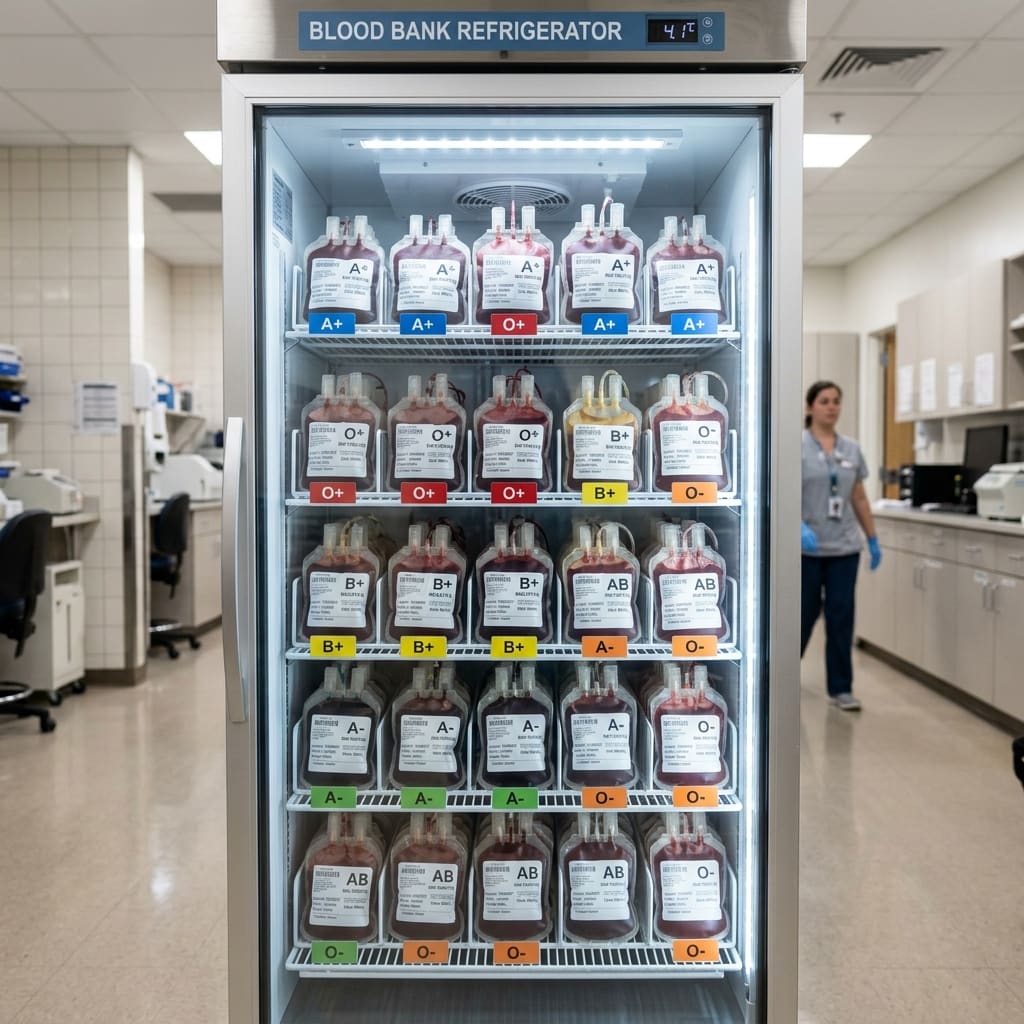
Blood can be stored in a blood bank refrigerator at 2–6°C for 21 to 42 days, depending on the solution in the bag. Whole blood in CPD or ACD keeps for 21 days, whole blood or red cells in CPDA-1 for 35 days, and red cells in an additive solution such as SAGM for up to 42 days. Platelets and plasma follow different rules: platelets stay at room temperature for days, plasma stays frozen for up to a year. All of it assumes a 2–6°C blood bank refrigerator with a recorder and alarm, not a ward or kitchen fridge.
How long can blood be stored in a refrigerator?
Indian law and NACO’s standards line up with WHO and the US FDA on the core numbers. The table gives the Indian requirement first, with the US dating period for comparison.
| Component | Storage temperature | Maximum storage in India | US FDA / AABB |
|---|---|---|---|
| Whole blood, CPD or ACD | 2–6°C (4 ± 2°C) | 21 days | 21 days at 1–6°C |
| Whole blood or red cells, CPDA-1 | 2–6°C | 35 days | 35 days at 1–6°C |
| Red cells in additive solution (SAGM, ADSOL, Nutricel) | 2–6°C | 42 days | 42 days at 1–6°C |
| Red cells prepared in an open system | 2–6°C | 24 hours after separation | 24 hours refrigerated after the bag is entered |
| Washed or deglycerolised red cells | 2–6°C | Transfuse within 24 hours | Up to 24 hours (open system) |
| Frozen red cells (glycerolised) | −80°C to −196°C | 10 years | 10 years at −65°C or colder |
| Platelet concentrate | 20–24°C, continuous gentle agitation | 3 days; 5 days with special bags (5 days maximum in the Drugs Rules) | 5 days; 5 to 7 days depending on bacterial-risk strategy |
| Fresh frozen plasma | −30°C or colder | 1 year | 1 year at −18°C or colder |
| Cryoprecipitate | −30°C or colder | 1 year | 1 year at −18°C or colder |
| Granulocyte concentrate | 20–24°C | 24 hours | Not covered here |
Indian figures come from Schedule F Part XII-B of the Drugs and Cosmetics Rules (as amended in 2020) and NACO’s Standards for Blood Banks & Blood Transfusion Services. US figures come from 21 CFR 610.53 and the June 2024 AABB Circular of Information.
Notice where India is stricter. US rules allow plasma at −18°C; the Drugs Rules require −30°C or colder for FFP and cryoprecipitate. A freezer that is fine for an American blood bank’s plasma may not satisfy an Indian licence.
Why does the anticoagulant decide the shelf life?
The solution in the bag is doing two jobs. Citrate stops the blood clotting. Dextrose (glucose) and, in CPDA-1, adenine feed the red cells so they keep making ATP, the energy molecule that keeps them viable and able to carry oxygen. WHO’s cold chain manual names CPDA-1 as one of the most commonly used anticoagulant-preservatives for exactly this reason.
Adenine is the difference between 21 and 35 days. An additive solution goes a step further: after the plasma is removed, 100 ml of SAG-M, ADSOL or another approved solution “containing saline adenine and glucose (or with mannitol)” is added to the packed cells, in the words of NACO’s standards. AABB’s circular describes additive solutions as a way to extend red cell shelf life, and the Drugs Rules allow red cells in them to be kept for up to 42 days.
So when someone asks “how long does blood last,” the honest answer starts with “which bag?”
Why is blood stored at 2–6°C and not colder or warmer?
Both limits protect the patient. WHO’s manual explains the upper limit first: above +6°C, bacteria that may have entered the unit during collection “may grow to such an extent that transfusion of the contaminated blood could be fatal.” The lower limit matters just as much. Red cells are sensitive to freezing; if they freeze, their membranes rupture and haemoglobin escapes, and transfusing haemolysed blood can also be fatal.
That is a narrow band, and it explains why blood bank refrigerators use fan-forced air rather than the still air of a domestic fridge. A shelf near the evaporator that drops to 1°C, or a top shelf that drifts to 7°C after a door opening, is a problem you cannot see without uniform airflow, a recorder and alarms. WHO lists preset alarm points at +1.5°C and +5.5°C as an ideal design feature, so staff hear about a drift before the blood leaves its range.
How is the expiry date counted?
NACO’s standards count the day of collection as day zero, and a day ends at midnight. Their own example: platelets separated on the first of the month expire at midnight on the sixth. The same convention applies to red cells, so a CPDA-1 unit collected today expires at midnight 35 days from now.
Red cells separated in a closed system keep the expiry date of the whole blood they came from; the time the plasma was removed does not change it. Separate them in an open system and the expiry becomes 24 hours.
How long can blood stay out of the refrigerator?
Not long. WHO’s guidance is built around a 30-minute window: blood issued to a ward is expected to go into the patient within 30 minutes, and if it cannot, it should be kept in an approved, monitored 2–6°C ward refrigerator fitted with a temperature alarm, or sent back to the blood bank. WHO also recommends issuing only one unit of red cells at a time, in a cold box that keeps it under +10°C, unless rapid transfusion of large volumes is needed.
AABB’s circular sets the outer limit for the transfusion itself: red-cell components should not sit at room temperature for more than 4 hours. If a slow infusion would take longer, the unit should be split into smaller aliquots. And once a bag is entered in a way that breaks the closed system, it expires 4 hours later at room temperature, or 24 hours later if refrigerated.
For transport between sites, WHO and NACO both allow processed whole blood and red cells to travel at up to +10°C, for less than 24 hours in WHO’s table. Our portable medical coolers include a 2–8°C mode for that leg.
How long do platelets, plasma and cryoprecipitate last?
Platelets are the outlier. They lose function in the cold, so they are stored at 20–24°C with continuous gentle agitation. NACO gives a shelf life of 3 days for platelets prepared in a closed system, extendable to 5 days with special bags; the Drugs Rules set 5 days as the maximum. WHO’s manual is blunt about equipment: if no platelet agitator is available, platelets cannot be stored and must be transfused immediately, unless the blood bank has a platelet incubator or a monitored room held at 20–24°C. Our guide to platelet storage requirements covers agitation rates and quality checks.
Fresh frozen plasma must be frozen within 6 hours of collection in India and stored at −30°C or colder for up to a year. NACO adds that FFP kept at −60°C or below with continuous monitoring can be used for up to 5 years. The details, including thawed-plasma limits, are in our plasma freezer and FFP storage guide.
Cryoprecipitate is stored at −30°C or colder for up to a year. Once thawed it must be used within 6 hours (NACO); pooled cryoprecipitate made in an open system also has a 6-hour shelf life under the 2020 amendment.
What equipment does each component need?
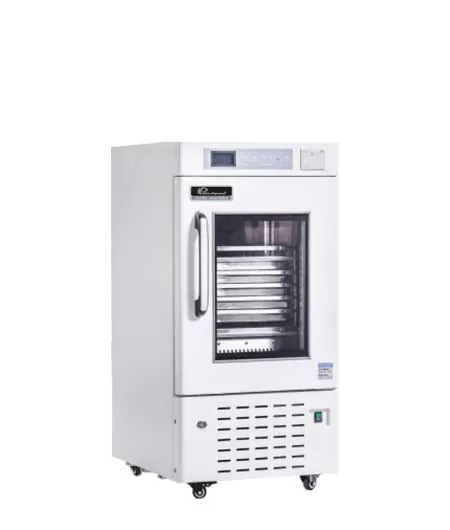
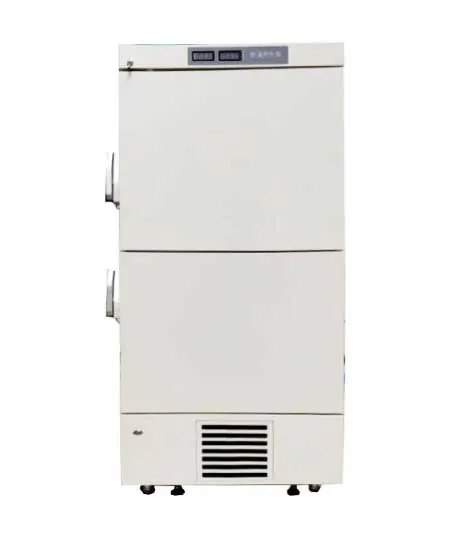
Each storage band needs its own equipment, which is why the Drugs Rules list them separately for a component-processing blood centre:
| Component | Equipment the Drugs Rules list | WinHyCare option |
|---|---|---|
| Whole blood, red cells | Refrigerator at 2–6°C with digital thermometer, recording thermograph and alarm | WBC-4V blood bank refrigerators, 108 to 1,008 L |
| Platelets | Platelet agitator with incubator | WPI-5 and WPI-10 platelet incubators |
| FFP, cryoprecipitate | Deep freezer at −30°C to −40°C | WDF-40V528 plasma freezer |
| Faster freezing, long-term storage | Deep freezer at −75°C to −80°C | ULT freezers, −40°C to −86°C |
Getting the equipment right is what makes the shelf-life numbers in the first table valid. A red cell unit in CPDA-1 is only good for 35 days if it spent all 35 of them between 2°C and 6°C, and only your recorder can prove that it did.
Frequently asked questions
How long can blood be kept in a fridge?+
In a blood bank refrigerator at 2–6°C, whole blood keeps for 21 days in CPD or ACD anticoagulant and 35 days in CPDA-1. Red cells re-suspended in an additive solution such as SAGM keep for up to 42 days. A domestic fridge is not suitable; Indian rules require a 2–6°C refrigerator with a recording thermograph and alarm.
Why is blood stored between 2°C and 6°C?+
Above 6°C, any bacteria that entered the bag during collection can multiply to dangerous levels. Below 2°C, red cells risk freezing, which ruptures their membranes and releases haemoglobin. WHO notes that transfusing either contaminated or haemolysed blood can be fatal.
How long can blood stay out of the refrigerator?+
WHO guidance assumes red cells issued to a ward will be transfused within 30 minutes, or kept in an approved, alarmed 2–6°C ward refrigerator. AABB's circular says red-cell components should not stay at room temperature for more than 4 hours, which is why slow transfusions use smaller aliquots.
Can blood be frozen for longer storage?+
Red cells can be frozen with a cryoprotective agent such as glycerol. NACO's standards allow glycerolised red cells to be stored at −80°C to −196°C for up to 10 years; after thawing and washing they must be transfused within 24 hours.
Why do platelets expire so quickly?+
Platelets lose function in the cold, so they are kept at 20–24°C. At that temperature bacteria grow more easily than in a refrigerator, which is why shelf life is short (3 to 5 days in India) and storage needs continuous agitation and strict collection hygiene.
Sources
- Guidelines for blood bank, merged with G.S.R. 166(E) dated 11.03.2020 (Drugs and Cosmetics Rules, 1945, Schedule F Part XII-B), Central Drugs Standard Control Organisation (CDSCO), Directorate General of Health Services
- Standards for Blood Banks & Blood Transfusion Services (2007), sections C, E and H, National AIDS Control Organisation (NACO), Ministry of Health & Family Welfare (copy hosted by IAPSM)
- Safe blood and blood products: Manual on the management, maintenance and use of blood cold chain equipment (2005), World Health Organization
- Circular of Information for the Use of Human Blood and Blood Components (June 2024), AABB, American Red Cross, America's Blood Centers and Armed Services Blood Program
- 21 CFR 610.53: Dating periods for licensed biological products, US Food and Drug Administration (Electronic Code of Federal Regulations)